If you are looking for a farming business that is genuinely low-cost, low-maintenance, and high in demand, snail farming in Nigeria deserves far more attention than it gets. Most people who hear about snail farming for the first time either laugh it off or underestimate what it can produce.
Both reactions are mistakes that cost people real money, because the people quietly running profitable snail farms across Nigeria are not making noise about it. They are filling orders for restaurants, hotels, supermarkets, and export buyers while others are still debating whether the business is “serious.”
This guide will show you exactly how to start a snail farming business in Nigeria from the ground up.
We will cover what the business involves, the best species to farm, how to build your snailery, how to feed and manage your snails, how to breed and grow your stock, where to sell, how much you can realistically earn, and all the challenges you need to prepare for.
Whether you have a large piece of land or just a quiet corner of your backyard, there is a scale of snail farming that can work for your situation.
Why Snail Farming in Nigeria Makes Business Sense
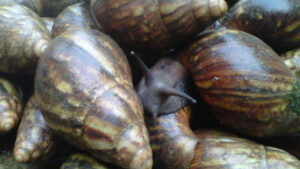
Snail farming, also called heliciculture, is the practice of raising snails in controlled conditions for food and commercial sale.
It is not new in Nigeria. Snails have been part of Nigerian cuisine for generations, particularly in the South-West, South-South, and South-East, where they are prized as “Congo meat” and command premium prices in markets and restaurants.
What is new is the organised, commercial approach to producing them instead of depending on wild collection.
Here is the core business case for snail farming in Nigeria, and it is a strong one.
Demand consistently exceeds supply. Nigeria consumes millions of kilograms of snail meat every year, yet the majority of that supply still comes from wild collection.
As deforestation, bush burning, and climate shifts continue to reduce the wild snail population, the gap between what the market demands and what the wild can provide is growing wider every season. Commercial snail farmers who fill that gap earn well.
The dry season creates a price spike that rewards patient farmers. During the rainy season, wild snails are relatively easy to find and prices are lower. During the dry season, wild snails go into dormancy (aestivation), wild collection drops sharply, and prices for farmed snails jump significantly.
A well-managed snail farm can hold live snails through the dry season by maintaining moisture in their pens, and sell at premium prices when market supply is at its lowest. This seasonal leverage is something no poultry or fish farmer enjoys in the same way.
Startup costs are genuinely low. Unlike poultry farming, which requires significant investment in housing, heating, feed, and medications, a small-scale snail farm can be started with N50,000 to N200,000 depending on scale.
Feed costs are minimal because snails thrive on food items that are cheap and widely available: pawpaw leaves, banana, waterleaf, cassava leaves, cucumber, and kitchen vegetable scraps.
The business can run part-time. Snails do not need to be fed multiple times daily. Once a day in the evening is sufficient, since snails are more active at night. They do not need constant supervision the way livestock like poultry does.
This makes snail farming one of the few agricultural businesses that a working professional, a student, or a stay-at-home parent can run alongside other activities.
Export potential adds a premium income stream. Nigeria’s National Agricultural Extension and Research Liaison Services (NAERLS) has estimated that Nigeria has the potential to earn over 4.4 billion dollars annually from snail farming.
Snail meat, snail slime (used extensively in cosmetics), and processed snail products are in strong demand in European markets, particularly France, Spain, and Italy, as well as in Asian markets. Farmers who process, package, and export open up significantly higher income opportunities than those who only sell locally.
A real Nigerian success story: One Nigerian woman who started with N30,000 in 2016, despite initial failures, grew her snail farm to the point where it generates close to N100 million in annual revenue.
She processes up to 2,000 snails monthly, serves clients across Nigeria and the diaspora, and now trains other farmers.
She describes the model as raising snails in batches and selling at different stages, including growers, point-of-lay, breeders, and jumbos, to keep cash flowing consistently rather than waiting for a single annual harvest.
Understanding the Best Snail Species for Farming in Nigeria
Choosing the right snail species is your first and most important decision. Nigeria has many snail species in the wild, but only three are commercially relevant for farming purposes. Each has different characteristics, and choosing the wrong one for your goals will cost you time and money.
Achatina Achatina (Giant African Land Snail)
This is the largest snail species in the world and the most economically prized in Nigeria. The shell can grow to 18 centimetres in length and the animal can weigh up to 600 grams at full maturity.
Its large meat yield and impressive size make it the highest-priced snail in Nigerian markets and the most sought-after for export.
However, Achatina Achatina is more demanding than other species. It requires specific soil conditions and environmental management to breed successfully. It lays 80 to 350 eggs per clutch, one to three times a year, which makes its reproduction rate moderate compared to other species.
Best for: Experienced farmers aiming for premium local or export markets.
Archachatina Marginata (Giant West African Snail)
This is widely considered the best species for beginners in Nigeria, and it is the recommendation most expert snail farmers give to new entrants. Archachatina Marginata is hardy, adaptable to Nigeria’s varying conditions, produces high-quality meat, and commands strong prices at market.
Its one limitation is reproduction rate. Archachatina Marginata lays only 6 to 14 eggs per clutch, approximately four times per year. This means your stock grows more slowly than with other species, so patience and good stock management are essential.
Best for: Beginners and intermediate farmers focused on quality meat production.
Achatina Fulica
Achatina Fulica is the fastest-reproducing of the three commercial species in Nigeria. It lays 100 to 400 eggs per clutch, up to six times per year, making it the most productive species in terms of sheer numbers.
It grows to a decent size, though smaller than the other two species, and its meat is still commercially acceptable in most markets.
Its rapid reproduction makes it excellent for building stock quickly, but because it is smaller than the other species, its per-unit market price tends to be lower.
Best for: Farmers focused on volume production and fast stock expansion.
The expert recommendation: Start with Archachatina Marginata. It is the best balance of hardiness, adaptability, meat quality, and market price for a Nigerian beginner. As your farm management skills grow, you can diversify your stock with Achatina Achatina to target premium buyers.
Step One: Choose and Prepare Your Location
Snails have very specific environmental needs, and your location directly determines whether your snails survive and grow or struggle and die. Getting the environment right from day one prevents the most common beginner disasters.
What snails need from their environment:
Snails cannot tolerate direct sunlight for extended periods. Heat causes dehydration, which slows their movement, stops feeding, and eventually kills them.
They thrive in cool, shaded, moist conditions that mimic their natural forest floor habitat. Wind is also an enemy because it accelerates moisture loss from both the snails’ bodies and the soil.
The ideal temperature range for snail farming in Nigeria is 21°C to 28°C. The humidity should be maintained between 75% and 90%. Nigeria’s southern states, particularly the South-West and South-East, naturally offer conditions close to this range for much of the year.
The North’s harmattan season and higher temperatures make moisture management harder but not impossible with the right pen design.
Choosing your site:
Select a location with natural shade from trees, walls, or roofing. An area sheltered from prevailing winds is ideal.
Your backyard, a section of your compound, or a small piece of rented land all work. You do not need large acreage to start. A 5 by 5 metre area is sufficient for a beginner snailery of 100 to 200 snails.
Avoid areas with stagnant water, as flooding destroys snail pens and drowns eggs. Also avoid areas with heavy foot traffic from children or animals.
Soil preparation:
The soil inside your snail pen is critical. Snails bury their eggs in soft, moist soil, and the wrong soil type means eggs will not hatch properly or will be damaged. Loamy soil is the best choice, as it retains moisture without becoming waterlogged and has the right texture for egg burial.
Before introducing snails, treat the soil by watering it for two consecutive days and mixing in organic matter like compost or decomposed leaves.
Some farmers treat the soil with boiling water to kill insect larvae and soil pathogens, then allow it to cool and settle before introducing snails. Soil treatment should be repeated every six months.
Step Two: Build Your Snailery (Snail Pen)
Your snailery, the structure that houses your snails, can be built in several ways depending on your budget, scale, and available space. There is no single correct design. What matters is that your pen keeps snails contained, protects them from predators and extreme weather, maintains the right humidity, and allows for easy management.
Here are the main housing options available to Nigerian snail farmers:
Hutch Box (Wooden Pen)
A hutch box is a rectangular or square wooden enclosure made from timber planks and wire gauze (mesh). It is the most popular option for small-scale and backyard farmers because it is affordable, easy to build, and can be constructed in any size.
The wooden frame provides structure while the wire gauze allows ventilation and visibility. The top should have a solid cover that protects from rain while still allowing airflow. Wire gauze covering all sides prevents snails from escaping while keeping predators like rats out.
A standard hutch box for 50 snails might measure 60cm by 90cm by 50cm deep. You fill the bottom 20cm to 25cm with prepared loamy soil, place in your snails, cover with the mesh top, and you are ready.
Cost to build: N15,000 to N40,000 depending on timber prices in your area and the size you build.
Concrete Block Pen
A concrete pen is more permanent and appropriate for medium to commercial-scale farming. It is built from hollow blocks raised 3 to 4 courses above the ground. A small gutter filled with water surrounds the base of the pen to prevent ants and other predators from climbing in. The top is covered with wire mesh.
Concrete pens are easier to clean, more durable in the long term, and better at temperature regulation. Their higher upfront cost is justified when you are managing hundreds or thousands of snails.
Cost to build: N50,000 to N150,000 depending on size and location.
Trench Pen (In-Ground Pen)
A trench pen is dug into the ground, approximately 50cm to 60cm deep, with sides reinforced by blocks or strong timber. The in-ground design naturally maintains cooler temperatures and better humidity because the earth around it acts as insulation. A wire mesh roof prevents escape and provides some protection from birds.
Trench pens work particularly well in areas with naturally loamy soil and moderate temperatures.
Cost to build: N20,000 to N50,000 depending on size.
Free-Range Pen (Extensive System)
This is the large-scale commercial approach, where a substantial piece of land is fenced, shaded with planted vegetation, and managed to resemble a natural snail habitat. Snails move freely within the fenced area, feeding on planted vegetation and natural food sources supplemented by the farmer.
This system requires significant land and more complex management but is the most natural environment for snails and can support very large populations at relatively low per-unit cost.
Cost: Varies widely based on land size and fencing materials. Not recommended for beginners.
Anti-predator measures for all pen types: Ants are among the most dangerous predators for snails, especially eggs and hatchlings. A shallow gutter of water around the perimeter of your pen creates a moat that ants cannot cross. Termites, rats, lizards, and frogs also pose risks. Ensure your pen’s wire gauze is properly secured with no gaps larger than 1cm.
Step Three: Source Your Foundation Stock
Your foundation stock is the group of snails you start your farm with. These are your breeders, the snails that will reproduce and grow your population. The quality and health of your foundation stock determines the health and productivity of your entire operation.
Where to source snails:
Reputable snail farms and agricultural platforms are your best sources. Afrimash, a well-known Nigerian agricultural marketplace, connects buyers with certified snail farmers and offers point-of-lay snails for purchase.
Agricultural universities and research institutes also sell quality snail stock. Local experienced snail farmers in your state can be valuable sources and mentors.
Avoid sourcing snails from the open market for your foundation stock. Market snails may have been stressed by transport, may be of unknown health status, and are often already at harvest maturity rather than being young breeders. Market snails are fine to eat, not to breed with.
What to look for when buying foundation stock:
Healthy snails should be active and responsive to touch. Their shells should be whole, undamaged, and show no cracks. Examine the shell lip carefully: a thickened, curled lip at the shell opening indicates sexual maturity in Archachatina Marginata and Achatina Achatina. If you want breeding snails that will reproduce quickly, look for the presence of this shell lip.
The shell should feel solid, not thin or fragile. Avoid any snail that appears sluggish when touched, has a broken or chipped shell, or shows discharge from its body that appears abnormal.
How many to start with:
For a genuine beginner who wants to learn the ropes properly before scaling, 50 to 100 snails is ideal.
This gives you enough population to observe breeding patterns, test your pen design and feeding routine, and learn management without the risk that comes with managing hundreds of animals as a first-time farmer.
For a commercial-scale entry, 250 to 500 snails is the minimum that expert farmers recommend. A well-managed 500-snail foundation can expand significantly within the first year through natural reproduction.
Current market price for foundation stock:
Point-of-lay Archachatina Marginata snails currently sell for approximately N800 to N1,500 each depending on size and source. Mature Achatina Achatina breeders can cost N1,000 to N2,500 each. Factor this into your budget calculation from the start.
Step Four: Feeding Your Snails the Right Way
Feeding is where many beginner snail farmers make costly mistakes. Snails are strict vegetarians. They do not eat animal products, and certain foods that seem harmless are actually harmful or even lethal to them.
What to feed your snails:
The good news is that snails will eat a wide variety of affordable, readily available plant material.
Their favourites include pawpaw (papaya) leaves and fruit, waterleaf (Talinum triangulare), cocoyam leaves, cassava leaves, banana leaves and fruit, pumpkin leaves (ugu), cucumber, lettuce, cabbage, okra leaves, and overripe fruits of most varieties.
Calcium is critical. It is what builds and maintains their shells. Without adequate calcium, shells become thin and brittle, making snails vulnerable to damage and slowing their growth significantly.
Calcium sources to include alongside their vegetable diet include crushed eggshells, ground limestone (chalk), oyster shell powder, and bone meal. Scatter these in the pen and around feeding spots.
Water is equally important. Provide a shallow water dish filled with clean water at all times. Do not allow the water to become stagnant. Change it daily.
Feeding schedule:
Feed your snails once daily, in the evening. Snails are nocturnal, which means they are most active between dusk and early morning. Evening feeding ensures they eat their meal during their most active period, which means more food consumed and faster growth.
The following morning, remove all leftover food from the pen. Decaying food attracts flies, ants, and bacteria that can cause disease in your snail population. Do not allow rotting food to accumulate in the pen under any circumstances.
What never to give snails:
Salt is poisonous to snails. Even a small amount of salt on food or in water can kill them quickly. Avoid all salted or heavily seasoned food. Also avoid spoiled food, chemically treated plants, and plants that have been sprayed with pesticides.
Step Five: Breeding and Reproduction Management
One of the most fascinating things about snail farming is that snails are hermaphrodites. Every snail has both male and female reproductive organs. However, they still need to mate with another snail to fertilise eggs. When two snails mate, both of them can subsequently lay eggs.
When snails begin to breed:
Snails reach sexual maturity at 8 to 12 months of age, or when their body weight reaches approximately 110 to 125 grams. For Archachatina Marginata, this maturity stage is indicated by the fully formed, thickened shell lip. Do not attempt to breed snails that have not yet reached this stage, as they will not produce viable eggs.
The egg-laying process:
After mating, snails bury their eggs in soft, moist soil. This is why the soil in your pen must always be kept soft and well-moistened. A hard or dry soil surface prevents egg burial, which causes egg mortality.
Achatina Achatina lays 80 to 350 eggs per clutch, one to three times per year. Achatina Fulica lays 100 to 400 eggs per clutch, up to six times per year. Archachatina Marginata lays 6 to 14 eggs per clutch, approximately four times per year.
Eggs hatch within 21 to 35 days depending on temperature, humidity, and soil conditions. The optimal hatching conditions are consistent moisture, a soil temperature of 24°C to 28°C, and protection from direct light.
Nursery management:
When eggs hatch, the baby snails (hatchlings) are extremely fragile and must be separated into a nursery pen away from adult snails. Adult snails can crush hatchlings simply by moving over them.
The nursery pen should have very fine soil, soft food items like tender leaves and soft fruit, and carefully controlled moisture levels.
Transfer hatchlings to the nursery as soon as you observe them emerging from the soil. Keep them in the nursery until they grow large enough (typically 2 to 4 months) to be introduced into the main pen without risk.
Managing overcrowding:
Overcrowding is one of the most damaging management mistakes in snail farming. When too many snails are crowded into a pen, they produce stress secretions that reduce their feeding, slow their growth, increase disease susceptibility, and lead to higher mortality. The recommended stocking density is 10 to 20 snails per square metre.
As your population grows through reproduction, expand your pen capacity rather than forcing more snails into an existing space. Overcrowding is a false economy that costs you growth rate and market weight.
Step Six: Routine Snail Farm Management
Day-to-day management is what separates a profitable snail farm from a failing one. The work is not heavy, but it must be consistent.
Daily tasks:
Every evening, provide fresh food and check water supply. Every morning, remove all leftover food and inspect the pen for any dead snails, broken shells, or signs of pest intrusion. Remove any dead snails immediately to prevent disease spread.
Every three days:
Clean snail waste from the pen surface. Monitor soil moisture levels and sprinkle water to maintain humidity if the environment is dry. Check for signs of pest activity, particularly ant trails, and reinforce anti-predator barriers if needed.
Weekly:
Do a thorough inspection of all snails. Look for any showing signs of abnormal behaviour, unusual discharge, or shell damage. Separate any suspected sick snails immediately into an isolation pen. Check egg-laying activity by gently disturbing the soil surface in specific areas.
Every six months:
Conduct a full soil treatment to prevent soil contamination and disease buildup. Remove snails temporarily, treat the soil, allow it to rest for three to five days, then reintroduce your snails.
Record keeping:
Keep a simple farm diary. Record the number of snails in your pen, eggs laid, hatchlings counted, snails sold, income received, and any disease or mortality events. This record-keeping practice is what allows you to track growth, identify problems early, and plan your harvest and selling schedule accurately.
Step Seven: Harvesting
Harvesting too early is one of the most common and costly mistakes beginner snail farmers make. An immature snail that is harvested small and light earns significantly less per unit than a fully matured snail. Patience during the growth phase directly translates to higher income at harvest.
How to know when a snail is ready for harvest:
The most reliable sign of snail maturity is the shell lip. In Archachatina Marginata and Achatina Achatina, the edge of the shell opening develops a distinct, outwardly turned, thickened rim when the snail reaches full maturity.
This is called the lip, and its presence confirms that the snail has stopped growing and is at maximum size. A snail with a fully formed lip is your harvest candidate.
The growth timeline from hatchling to full maturity is typically 12 to 24 months for Archachatina Marginata and Achatina Achatina. Achatina Fulica matures faster, typically within 6 to 12 months, which is part of why it is useful for short-cycle farming.
Harvesting method:
Snails are harvested by hand. The best time to collect them is in the early morning when they are still active after a night of feeding, or after rain when they come to the surface in numbers.
Gently pick each mature snail by hand, checking for the shell lip before including it in your harvest batch. Leave immature snails to continue growing.
Holding snails before sale:
One significant advantage of snail farming over crops is that snails can be held alive for weeks without significant losses, provided they are kept moist and at the right temperature. This allows you to wait for the best market price rather than being forced to sell at whatever price the market offers on a single harvest day.
During the dry season, when wild snail supply drops and market prices spike, farmers with stored live stock can sell at prices two to three times the rainy-season rate.
To hold snails before sale, keep them in a ventilated container or basket with damp leaves. Do not feed them heavily during this period as it creates waste management challenges in the holding container.
How Much Does It Cost to Start Snail Farming in Nigeria?

Here is a realistic, current breakdown of startup costs at different scales.
Small-scale farm (50 to 100 snails):
- Pen construction (hutch box or trench pen): N20,000 to N50,000
- Foundation stock (50 to 100 Archachatina Marginata): N40,000 to N100,000
- Initial feed, calcium supplements, and water equipment: N10,000 to N20,000
- Basic tools (sprayer, hand trowel, feeding trays): N5,000 to N10,000
- Soil preparation materials: N5,000 to N10,000
Total small-scale startup: N80,000 to N190,000
Medium-scale farm (200 to 500 snails):
- Pen construction (concrete or expanded hutch system): N60,000 to N150,000
- Foundation stock (200 to 500 Archachatina Marginata): N180,000 to N750,000
- Feed, calcium, and water infrastructure: N30,000 to N60,000
- Tools, nursery pens, and management equipment: N20,000 to N40,000
- Soil materials and treatment: N15,000 to N25,000
Total medium-scale startup: N305,000 to N1,025,000
Monthly running costs are low. Feed costs are minimal since snails eat vegetables, fruits, and leaves that are either grown locally or purchased cheaply from markets. Your biggest ongoing investments are time and attention, not money.
How Much Can You Earn From Snail Farming in Nigeria?
Snail prices in Nigeria vary by species, size, season, and location. Currently, mature snails sell for N500 to N2,000 per snail at market, depending on size and the time of year. Jumbo-sized Achatina Achatina snails in cities like Lagos and Abuja can sell for N1,500 to N2,000 each. Medium-sized Archachatina Marginata snails sell for N800 to N1,500 at mature market weight.
Profit projection for 500 Archachatina Marginata breeders:
On average, each Archachatina Marginata breeder lays approximately 30 eggs per production cycle, four times per year. With 500 breeders:
500 snails × 30 eggs = 15,000 eggs per cycle At 80% hatchability: approximately 12,000 hatchlings After 15% hatchling mortality: approximately 10,200 surviving juvenile snails
At market maturity (12 to 18 months later), if 10,200 snails sell at an average of N800 each: 10,200 × N800 = N8,160,000 in gross revenue from one production cycle
After deducting feed, pen maintenance, soil treatment, labour, and other operating costs, net profit at this scale can be substantial. Even a more conservative estimate, accounting for higher mortality and slower reproduction in a beginner operation, shows that a properly managed snail farm can return well over double the initial investment within the first production cycle.
A farmer in Ogun State who started with 200 snails reportedly earned over N1,000,000 in a single year. The snail farmer profiled by Zikoko reports average monthly revenue of N700,000 to N1,000,000 on a mature farm, even during slower periods.
Where to Sell Your Snails
Finding buyers is not difficult in Nigeria, but building reliable, repeat relationships with buyers who take consistent volume is what makes snail farming a predictable income source rather than a seasonal windfall.
Local food markets. Every major market in Nigeria with a meat section has some level of snail trade. Approach market women who already sell snails and offer to supply them at wholesale prices. Start small, supply consistently, and build trust before negotiating higher volumes.
Restaurants and hotels. This is the highest-value local market for snails. Restaurants that serve peppered snail, peppersoup, or other snail dishes are regular buyers who need consistent supply in quantity.
Visit restaurants in your area and ask to speak with the chef or purchasing manager. Offer a sample batch, price it competitively, and deliver on time. A single restaurant client who orders 200 snails weekly is worth more than twenty one-time market sales.
Supermarkets and grocery stores. Establishments like Shoprite, Spar, and well-stocked independent supermarkets sometimes stock live snails or processed snail products. For this channel, your product needs to meet basic hygiene and quality standards. Packaging matters.
Owambe events and catering services. Snails are a popular party food in Nigeria. Building relationships with event caterers who regularly need snails for events gives you access to bulk, predictable orders tied to Nigeria’s ever-present celebration culture.
Online and social media. Instagram, WhatsApp Business, and Facebook are powerful channels for selling directly to consumers in your city.
Post quality photos of your snails, educate your audience about their nutritional benefits, and take advance orders. Many snail farmers who have built strong social media audiences now receive more orders than their farm can currently fill.
Export market. For those who scale beyond local demand, processed and packaged snails can be exported to Europe, particularly to countries with large West African diaspora populations.
This requires proper processing, packaging, phytosanitary certification, and compliance with import regulations in the destination country. It is a longer-term ambition for established farms, but the income premium over local prices makes it worth planning toward.
Challenges of Snail Farming in Nigeria and How to Overcome Them
No business is without challenges, and being honest about the obstacles in snail farming from the start is what separates farmers who sustain their operation from those who quit after the first setback.
Slow growth rate. Snails are not chickens. You will not see your investment return in six weeks. The patience required to wait 12 to 24 months for full maturity is something many people underestimate.
Overcome this by selling at multiple stages. Sell juveniles, point-of-lay snails, and mature snails as different products to different buyer segments. This keeps cash flowing during the long growth cycle rather than forcing you to wait for a single harvest.
Dry season management. During the harmattan, maintaining the moisture and humidity your snails need requires active management: regular misting of the pen, use of shade materials, mulching of the soil, and careful monitoring.
Snails that go into aestivation (a dry-season dormancy state) stop eating and growing, which delays your harvest timeline. Good moisture management keeps them active year-round and actually allows you to hold fully mature stock for sale during the peak dry-season price spike.
Predators. Ants, termites, rats, lizards, frogs, and birds all prey on snails and eggs. The water moat barrier around your pen is your most effective anti-ant tool. Ensure there are no gaps in your wire gauze mesh. Conduct regular pest checks as part of your weekly management routine.
Disease. Snail disease is less common than in poultry or fish, but it does occur when hygiene is poor. The most common issues are fungal and bacterial infections caused by decaying food waste and wet, unclean pen conditions.
Strict hygiene, daily food removal, periodic soil treatment, and immediate isolation of sick snails are your primary disease prevention tools. There are no widespread commercially available medications for snail diseases, so prevention is everything.
Market access. Building a reliable buyer base takes time and consistent effort. Many new snail farmers produce good stock but struggle to find buyers quickly enough when harvest arrives.
Solve this by building buyer relationships months before your first harvest. Visit restaurants, talk to market traders, and build your social media presence during the farming phase, not after.
Patience and consistency. Snail farming rewards farmers who show up consistently, manage their pens daily, and take the long view. Farmers who treat it as a set-and-forget operation see high mortality, poor growth rates, and disappointing returns.
Treat it as a real agricultural business that requires real daily attention, even if that attention is only thirty minutes per day.
Key Takeaways
Snail farming in Nigeria is a legitimate, profitable agricultural business that is significantly underexploited relative to its market demand.
The supply gap between wild snail collection and what Nigerian consumers, restaurants, hotels, and exporters want to buy is real and growing. Farmers who fill that gap earn well.
Start with Archachatina Marginata. It is the best species for Nigerian beginners: hardy, adaptable, well-priced at market, and forgiving of the management imperfections that come with learning the business.
Your environment determines your snails’ survival. Shade, moisture, and predator protection are the three non-negotiable pillars of a functioning snailery. Get these right before you spend a single naira on snails.
Feed once a day in the evening, remove all leftover food every morning, and maintain calcium supply at all times. These three feeding habits cover most of what separates healthy, fast-growing snails from sluggish, stunted ones.
Never rush the harvest. A mature snail with a fully formed shell lip is worth two to three times more than an immature one sold early. Patience is not just a virtue in this business; it is a direct income multiplier.
Build your buyer relationships before your first harvest. A restaurant that commits to taking 200 snails weekly is worth more to you than ten different market sales. Go out and identify those buyers while your snails are still growing.
Use the dry season as your pricing opportunity, not your quiet period. Farmers who hold live stock through the harmattan and sell during peak dry-season scarcity earn significantly higher prices than those who rush to sell at the first opportunity in the rainy season.
Snail farming is not a get-rich-quick scheme. But for someone willing to manage a farm properly, feed consistently, protect against predators, and build reliable buyer relationships, it is one of the most sustainable and scalable low-capital agricultural businesses available in Nigeria today.
Disclaimer
The information in this article, including cost estimates, income projections, species characteristics, and market pricing, is based on current publicly available research, published market data, and information from experienced snail farmers in Nigeria at the time of writing.
Actual results will vary significantly depending on your location, management quality, species selection, market access, environmental conditions, and other factors specific to your situation. Income figures referenced from individual farmers reflect their specific circumstances and are not guarantees of what any individual farmer will earn.
Snail farming, like all agricultural businesses, involves risk including stock loss, market price fluctuations, and environmental challenges.
This article is for general informational purposes only and does not constitute agricultural, financial, or business advice. Always consult experienced farmers and agricultural extension services before committing capital to any farming operation.
What You Need to Check Before Starting
Before spending money, compare the requirements, starting costs, ongoing expenses, risks, and realistic earning or investment potential. Figures can vary by location, provider, market conditions, and the size of the operation, so treat examples as planning estimates rather than guaranteed results.
A Practical Way to Get Started
Start with a small, measurable plan. List what you need, estimate the total cost, identify your first customers or users, and decide how you will track income and expenses. Review the results before committing additional money.
Risks and Mistakes to Avoid
Do not assume that a business, investment, platform, or strategy will produce guaranteed returns. Check important claims against official or authoritative sources, keep financial records, and avoid paying anyone who promises effortless or guaranteed profits.
Related MoneyX Guides
Continue with these related guides for practical information that can help you make a better-informed decision:
- How to Start Affiliate Marketing in Nigeria: A Practical Beginner's Guide
- 25 Profitable Business Ideas in Nigeria: Startup Costs, Demand and How to Choose
- 20 Businesses to Start With ₦500,000 in Nigeria: Costs, Profit Potential and Risks
- 18 Businesses to Start With ₦200,000 in Nigeria: Practical Startup Guide
