
If you want to know how to start blogging in Nigeria as a beginner, you have come to the right place. Blogging is not a theory or a promise. It is a real, working business model that has produced some of Nigeria’s most recognisable digital entrepreneurs.
Linda Ikeji started typing on a free Blogspot platform in 2006, earned nothing for the first four years, and built what is now one of Africa’s most visited blogs.
Uche Pedro started BellaNaija around the same time as a personal interest project and grew it into a lifestyle and wedding media company that attracts international brand partnerships and Forbes recognition.
Makinde Azeez built Naijaloaded from scratch into one of the highest-traffic websites in the country.
These are not exceptional people with exceptional privileges. They are Nigerians who chose a topic, showed up consistently, and refused to quit before the results came. The internet rewards that combination more than any other.
This guide is going to show you exactly how to start blogging in Nigeria as a beginner, covering everything from choosing your niche and building your blog to writing great content, driving traffic, and making real money from your blog.
We will be honest about timelines, realistic about income, and practical about every step. Nothing is left vague.
Is Blogging Still Profitable in Nigeria?

This is the first question many beginners ask, and it deserves a direct answer. Yes, blogging is profitable in Nigeria, and the opportunity is genuinely growing.
More Nigerians are coming online every year. Mobile internet access has expanded dramatically as data becomes more affordable and smartphone penetration rises.
Google remains the primary way Nigerians search for information, answers to everyday questions, product comparisons, job opportunities, health advice, how-to guides, and everything in between.
Every one of those search queries is a potential reader looking for content that your blog could provide.
The global blogging industry is estimated to be worth over $400 billion, and Nigeria is an active part of that market.
Top Nigerian bloggers earn between N1 million and N50 million monthly from advertising revenue, sponsored posts, affiliate marketing, and digital products. Even intermediate bloggers with consistent traffic earn between N50,000 and N300,000 per month.
That said, there is an important truth to understand from the beginning: blogging is not a fast business. The data is consistent on this. Bloggers who have been at it for one to three years earn an average of around $205 per month.
Those who have been blogging for five to ten years earn an average of $2,621 per month. The people who build significant blogging income are the ones who treated it as a long-term business, not a quick scheme.
This does not mean you will earn nothing in your first year. It means your expectations need to be calibrated honestly. Build for the long game. The foundations you lay in the first six months determine what your blog looks like in year three.
Step One: Find Your Goal and Choose Your Niche
The single most damaging mistake Nigerian beginner bloggers make is starting without a clear goal and a specific niche. Too many blogs in Nigeria try to cover everything: news today, entertainment tomorrow, recipes next week, and tech gadgets the week after.
This scattered approach confuses search engines, confuses readers, and makes it nearly impossible to build authority in any specific area.
What is a niche?
A niche is a specific, focused topic area that your blog covers. It is not “lifestyle” or “tech” or “finance.” Those are categories.
A niche is a focused angle within a category. “Personal finance for Nigerian university graduates,” “catfish farming in Nigeria,” “JAMB and WAEC preparation,” “Nigerian food recipes for working mothers,” or “remote jobs for Nigerians” are niches.
They are specific enough to define an audience, answer real questions, and rank in search results.
How to choose the right niche:
Choose the intersection of three things: what you know or can learn, what people are actively searching for, and what has monetisation potential. A niche that only satisfies one or two of these conditions will struggle. You need all three.
Here are the most profitable and consistently high-traffic niches for Nigerian bloggers right now:
Education content is one of Nigeria’s most consistently searched categories. JAMB, WAEC, NECO, NYSC, Common Entrance, school news, scholarship information, and result checking guides attract enormous traffic because millions of Nigerian students and parents search for this information every single year. The audience is enormous and the repeat search volume is predictable.
Finance and money covers personal finance, savings apps, investment options, how to send money, loan applications, digital banking guides, cryptocurrency explanations, and small business finance.
Nigerians are increasingly financially active and searching for guidance constantly. Finance content also attracts high-paying advertisers and affiliate products.
Technology and gadgets including phone reviews, data plan comparisons across MTN, Airtel, Glo and 9mobile, app tutorials, software guides, and internet tools. Nigeria’s tech-savvy young population drives enormous search volume in this space.
Business and entrepreneurship covering side hustle ideas, how to start various businesses, marketing tips, e-commerce guidance, and digital income strategies. This guide you are reading right now is an example of this niche at work.
Health and wellness is consistently high-traffic because people search for health information endlessly. Nigerian-specific health content (malaria treatments, common local ailments, maternal health, mental wellness) is significantly underserved compared to Western health content.
Food and Nigerian recipes is reliable because people never stop searching for how to cook their favourite dishes. Egusi soup, jollof rice, suya, pepper soup, banga soup and hundreds of other Nigerian dishes have enthusiastic search audiences.
Entertainment and celebrity news is the Linda Ikeji model. High traffic, high competition, and very dependent on speed and daily publishing. Not ideal for beginners who cannot publish multiple times daily, but the audience demand is enormous.
Career and jobs covering job search strategies, resume writing, how to prepare for interviews, government recruitment news, and professional development advice. The youth unemployment situation in Nigeria keeps this category perpetually relevant.
The golden rule of niche selection: go narrower than you think you need to. “Finance” is too broad. “How to save money on a Nigerian salary” is better.
“Personal finance for NYSC corps members” is even better. Narrow niches face less competition, rank faster in search results, and build more loyal readers who feel you are speaking directly to them.
Step Two: Choose a Blogging Platform
Your blogging platform is the technology system that powers your blog. This is a decision that has significant long-term consequences, and the answer for anyone serious about making money from their blog is clear.
WordPress.org (self-hosted WordPress) is the right choice for serious bloggers.
WordPress powers more than half of all websites on the internet. It is flexible, SEO-friendly, has thousands of free and premium design themes, a massive library of plugins that extend functionality, and a global community of developers and support resources. It gives you complete ownership and control of your content, your audience data, and your monetisation.
The distinction between WordPress.org (self-hosted) and WordPress.com (hosted, free plan) is important. WordPress.org requires you to buy your own hosting and domain (explained in the next step), but it gives you full ownership and control.
WordPress.com’s free plan restricts customisation, limits monetisation, and keeps you on a subdomain (yourname.wordpress.com) rather than your own domain. Do not confuse the two.
What about free blogging platforms?
Blogger (Blogspot) is free and was the starting point for many successful Nigerian bloggers including Linda Ikeji. It is genuinely functional and free, but it has significant limitations: weaker SEO control, limited design customization, Google can delete your blog without warning,
and professional advertisers often prefer to work with self-hosted blogs with custom domains. Blogger can work as a starting point if budget is genuinely zero, but plan to migrate to WordPress as soon as you can afford hosting.
Medium, Substack, and other platforms have their uses for building an audience and distributing content, but they are not blog ownership. You do not own your audience on someone else’s platform. Build your primary blog on a platform you control.
Step Three: Get Your Domain Name and Web Hosting
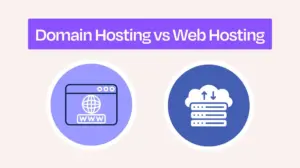
Your domain name is your blog’s address on the internet. Your web hosting is the server where your blog lives. Both are essential, and together they cost far less than most beginners fear.
Choosing your domain name:
Your domain name should be short, easy to spell, easy to remember, and relevant to your niche or brand. Avoid hyphens and numbers in domain names as they are confusing and harder to share verbally.
A .com extension is the gold standard internationally, but .com.ng is a credible option for Nigerian-focused blogs and costs slightly less.
Think of your domain name as a business brand. Lindaikejisblog.com, BellaNaija.com, Naijaloaded.com.
These are all memorable, clean domain names that clearly suggest what the site is about or who runs it. Spend time getting this right because changing your domain name later is a significant disruption.
Keep your domain name available and check it on domain registrars like Namecheap, Whogohost, or Truehost before you commit to a blog name. Search for exact matches and check that the social media handles are also available for the name you choose.
Choosing your web hosting:
Web hosting is what keeps your blog available 24 hours a day, 7 days a week. The quality of your hosting directly affects how fast your blog loads, which directly affects both user experience and your ranking in Google search results.
A slow blog loses readers and ranks lower in search results. A fast blog keeps visitors engaged and gets rewarded by Google.
For beginners in Nigeria, reliable and affordable hosting options include Hostinger, which is widely recommended for its speed, affordability, and beginner-friendly interface. Namecheap and Whogohost are also solid choices.
Whogohost is Nigeria-based and offers local support and naira-based billing, which makes payment and customer service more accessible.
Most hosting companies offer beginner plans that include a free SSL certificate (the security padlock that makes your blog display as https), one-click WordPress installation, and a free domain name for the first year.
Typical annual costs for a beginner hosting plan are N20,000 to N60,000 depending on the provider and plan.
SSL certificate is not optional. Google flags websites without SSL certificates as “Not Secure,” which destroys visitor trust and hurts your search rankings. Ensure your hosting plan includes a free SSL certificate and activate it from the beginning.
Step Four: Install and Set Up WordPress
Once you have your domain and hosting, installing WordPress is now a straightforward process that most hosting providers have simplified to a few clicks.
Installing WordPress:
Log in to your hosting control panel (cPanel or hPanel depending on your provider). Find the “Auto Installer” or “Softaculous” option. Select WordPress from the list. Fill in your blog name, admin username, and password. Click install. Within seconds, WordPress is installed and ready.
Setting up your WordPress blog:
After installation, log in to your WordPress dashboard at yourdomain.com/wp-admin using the credentials you created during installation.
The first things to configure are:
Install a clean, fast theme. Your blog’s design is powered by a theme. Many excellent free themes are available in the WordPress theme library.
For beginners, Astra, Kadence, and GeneratePress are widely recommended because they are lightweight, fast, and highly customisable. Avoid heavy, complex themes with flashy animations as they slow your blog down significantly.
Install essential plugins. Plugins add functionality to your WordPress blog. The essential plugins every beginner should install are:
Rank Math or Yoast SEO for search engine optimisation guidance as you write each post. These plugins show you how to optimise your titles, meta descriptions, and content structure for search engines.
WP Super Cache or W3 Total Cache for website speed optimisation by storing and serving cached versions of your pages.
Akismet for spam comment protection.
UpdraftPlus for automated backups of your blog.
MonsterInsights or Site Kit by Google for connecting your blog to Google Analytics and Google Search Console, which show you where your traffic comes from and which posts are performing.
Set up your essential pages. Every blog needs an About page that explains who you are and what your blog covers, a Contact page with a form for readers and brands to reach you, and a Privacy Policy page which is required by Google AdSense and most affiliate programmes. Many free Privacy Policy generators are available online.
Configure your permalink structure. In WordPress Settings under Permalinks, change your permalink structure to “Post name” (yourdomain.com/post-title instead of yourdomain.com/?p=123). This makes your URLs clean and readable, which is better for both readers and search engines.
Step Five: Connect Google Search Console and Google Analytics
Before you publish your first post, set up the two free Google tools that will track your blog’s performance from day one.
Google Search Console shows you which search queries bring people to your blog, how many people your blog appears for in search results, which pages are indexed by Google, and any technical errors Google has found on your site. This is your most direct window into your SEO performance.
To set it up, go to Google Search Console, add your domain, verify ownership using the HTML tag method (paste a small code into your WordPress theme header), and submit your sitemap (yourdomain.com/sitemap.xml). Your SEO plugin (Rank Math or Yoast) generates this sitemap automatically.
Google Analytics shows you how many people visit your blog, which pages they read, how long they stay, where in the world they are from, and what device they use. This information is essential for understanding what content your audience loves and what does not work.
Both tools are free and take about 20 minutes total to set up. Starting with them from day one means you will have months of historical data by the time you begin monetisation negotiations with advertisers.
Step Six: Write Your First Blog Posts

Content is the foundation of everything. Your blog posts are what bring readers from Google, keep them engaged long enough to trust you, and eventually motivate them to click ads, buy affiliate products, or pay for your services.
Writing great content is not about fancy language. It is about genuinely answering the questions your target reader is asking.
Understanding SEO content writing for beginners:
SEO stands for Search Engine Optimisation. When someone types a question into Google, Google scans millions of pages and decides which ones best answer that question.
If your blog post is well-written, covers the topic thoroughly, loads fast, and uses the words people actually search for, Google rewards it with a higher ranking in search results. More ranking means more readers. More readers means more income.
The keyword is the phrase people type into Google. If someone types “how to open a PiggyVest account in Nigeria,” that entire phrase is a keyword.
Writing a blog post that thoroughly answers that question, with the keyword in your title, first paragraph, and naturally throughout the post, tells Google that your page is relevant to that query.
Keyword research:
Before writing any post, research what keywords your target readers use. Free tools for keyword research include Google’s own search bar (type your topic and see the autocomplete suggestions), Google’s “People Also Ask” sections, and AnswerThePublic.com. Paid tools like Semrush and Ahrefs provide much more detailed data, but beginners should start with free tools.
Choose keywords that have genuine search volume (people actually search for them) but are not impossibly competitive. A new blog trying to rank for “how to make money online” will fail because thousands of established sites already dominate that keyword.
A new blog targeting “how to make money online as a student in Nigeria” has a more realistic chance because it is more specific and less competitive.
Structure your blog posts properly:
Every blog post should have a clear H1 title that includes your target keyword, an introduction that immediately tells the reader what they will learn and why it matters, H2 and H3 subheadings that organise the content into scannable sections, paragraphs of 2 to 4 sentences (long paragraphs lose readers), a conclusion that summarises the key points and includes a call to action, and a featured image.
Blog posts that rank well in Google are typically between 1,000 and 3,000 words for most topics. Longer posts that thoroughly cover a subject tend to outrank shorter posts on the same topic.
This does not mean padding your content with repetition. It means covering the subject completely enough that the reader has no reason to go back to Google to search for more information.
Consistency matters enormously. Publish new posts on a predictable schedule. Two to three high-quality posts per week is an excellent pace for a beginner. Never publish for quantity at the expense of quality. A thoroughly researched, well-written 1,500-word post will outperform five shallow 300-word posts every time.
Step Seven: Drive Traffic to Your Blog

Writing excellent content is necessary but not sufficient. You also need to actively distribute that content to build your initial audience while your SEO rankings are still growing.
Search Engine Optimisation (long-term, most valuable):
Ranking in Google is the most powerful and sustainable traffic source for blogs. It takes time, typically three to twelve months for new blogs to see meaningful search traffic, but the traffic it produces is consistent, free, and targeted.
Every post you optimise for relevant keywords is a permanent asset that can bring readers for years. Focus on SEO from your very first post and understand it as a long-term investment.
Social media promotion:
Share every new blog post on all relevant platforms. For Nigerian bloggers, Facebook groups are particularly powerful because millions of Nigerians participate in Facebook groups around topics like finance, education, business, and lifestyle.
Share your posts in relevant groups where your content genuinely adds value. Do not spam links without context. Write a brief introduction explaining what the post covers and why group members should read it.
WhatsApp is Nigeria’s most active social platform. Build a WhatsApp broadcast list of people who have expressed interest in your niche and send them your new posts when they go live. WhatsApp Status is also an effective promotional tool for reaching your existing contacts.
Instagram works particularly well for lifestyle, food, fashion, and entertainment blogs where visual content supports the written material. Pinterest drives significant traffic to certain blog niches, particularly recipes, home decoration, fashion, and DIY content.
Twitter (X) and LinkedIn are valuable for professional, business, and technology-focused blogs where the audience is more professionally oriented.
The Velvet Rope approach to community traffic:
Rather than dropping links in Facebook groups and hoping people click, participate genuinely first. Join communities relevant to your niche. Answer questions thoroughly and helpfully with no link.
After providing real value in several comments, when you write a post that directly addresses a common question in the community, you can share it with context. Because you have already established yourself as a helpful member, people trust your recommendation and click through. This approach builds a reputation that creates traffic for months.
Repurpose each post across platforms:
One blog post can become a Twitter thread using its main subheadings, a LinkedIn article using the introduction and conclusion, a TikTok or Instagram Reel summarising the key points, and a WhatsApp broadcast message. This multiplies your content output without multiplying your writing workload.
Email marketing from day one:
Building an email list is one of the most overlooked tools by Nigerian beginner bloggers and one of the most valuable long-term assets a blogger can own.
When someone subscribes to your blog via email, you have a direct line to them regardless of algorithm changes on Google or social media platforms.
Use a free email marketing tool like Mailchimp or ConvertKit’s free plan, add a subscription form to your blog, and offer a simple free resource (a checklist, a short guide, or a template related to your niche) as an incentive to subscribe.
Send a newsletter each time you publish a new post. Keep it short and direct. Over time, your email list becomes a traffic engine you fully control.
Step Eight: How to Make Money from Your Blog
Monetisation is the point where blogging transforms from a hobby into a business. There are multiple income streams available to Nigerian bloggers, and the most successful ones combine several rather than depending on just one.
Google AdSense:
AdSense is the most common starting point for monetising a Nigerian blog. It is Google’s advertising network that displays ads on your blog and pays you whenever visitors view or click them.
Getting approved for AdSense requires a well-designed blog with original content, a Privacy Policy page, an About page, and enough published posts to demonstrate real content (typically 15 to 20 solid posts).
AdSense income for Nigerian-traffic blogs is lower than for blogs with primarily US, UK, or Canadian traffic because advertisers pay more to reach audiences in those countries.
The realistic AdSense income for a Nigerian blog with 10,000 monthly pageviews is typically $20 to $80 per month. To earn meaningfully from AdSense alone, you need high traffic, which takes time to build.
As your traffic grows, upgrade to premium ad networks that pay significantly more than AdSense.
Ezoic accepts blogs from around 10,000 monthly pageviews. Mediavine accepts blogs with 50,000 monthly sessions. These premium networks pay considerably more per thousand page views than AdSense and are the goal for blogs serious about advertising income.
Affiliate Marketing:
Affiliate marketing is promoting other companies’ products or services through unique tracking links on your blog.
When a reader clicks your link and makes a purchase or signs up, you earn a commission. This is often more lucrative per visitor than display advertising and requires far less traffic to generate meaningful income.
Strong affiliate programmes for Nigerian bloggers include Jumia’s affiliate programme for e-commerce product recommendations, Konga’s affiliate programme, Amazon Associates for international product recommendations, PiggyVest and Cowrywise referral programmes for personal finance blogs, Binance and Luno affiliate programmes for cryptocurrency blogs, web hosting affiliate programmes (Hostinger, Namecheap) which pay excellent commissions for technology and blogging content, and software-as-a-service affiliate programmes for business and productivity tools.
The key to successful affiliate marketing is only promoting products you genuinely believe in and that are directly relevant to your audience. Readers trust you to recommend quality products. Recommending poor products for commission destroys that trust permanently.
Sponsored posts:
As your blog grows in traffic and authority, brands will pay you to write posts featuring their products or services. Sponsored posts for established Nigerian blogs pay between N50,000 and N500,000 per post depending on the blog’s traffic, audience engagement, and the brand’s budget.
To attract sponsorships, your blog needs professional design, consistent traffic, a defined niche audience, and an attractive media kit (a document describing your blog’s audience, traffic statistics, and advertising rates).
Do not wait for brands to find you. Once your blog has meaningful traffic, proactively reach out to brands in your niche with a professional email and your media kit.
Selling digital products:
Digital products have the highest profit margin of any blogging income stream because you create them once and sell them repeatedly with no additional production cost.
Ebooks, online courses, templates, printables, planners, and guides are all digital products that Nigerian bloggers successfully sell.
To create a digital product, identify the most common problem your readers face, build a solution in digital format, and sell it directly from your blog using payment platforms like Selar.co (which is Nigeria-friendly and accepts local and international payments), Paystack, or Flutterwave.
A well-positioned ebook priced at N5,000 sold to 50 readers per month generates N250,000 in passive income without requiring any additional traffic or effort beyond what you are already doing.
Offering paid services:
Your blog can double as a portfolio and lead generation platform for paid services. A blogger who writes well about SEO can offer SEO consulting. A blogger who covers digital marketing can offer social media management.
A blogger who covers business topics can offer business plan writing or consulting. The blog establishes your authority and the service converts that authority into higher-margin income.
Sponsored social media content and brand partnerships:
As your blog’s authority grows and your social media following builds alongside it, brands may approach you for content partnerships that extend beyond your blog to include social media posts, product reviews, and event appearances.
This is an additional income stream that Nigerian lifestyle, entertainment, and finance bloggers in particular benefit from.
How Much Can You Realistically Earn from Blogging in Nigeria?
Honest income expectations are essential for every beginner, because unrealistic expectations cause most people to quit before the results arrive.
Beginner bloggers in their first three to six months typically earn between N0 and N30,000 per month. This is the foundation-building phase.
You are writing posts, building domain authority, and waiting for Google to index and rank your content. This phase requires patience and consistency without financial reward.
Intermediate bloggers who have been consistent for six months to two years and have built solid content libraries and meaningful traffic typically earn between N50,000 and N300,000 monthly from a combination of AdSense, affiliate marketing, and sponsored content.
Established bloggers with multiple years of consistent publishing, high-quality content, strong SEO rankings, and multiple income streams earn N500,000 to several million naira monthly. Nigeria’s top bloggers earn between N1 million and N50 million monthly.
The income curve in blogging is not linear. It is slow for a long time and then accelerates sharply once traffic reaches a tipping point.
Many bloggers describe earning almost nothing for twelve months and then seeing income double or triple in months thirteen through twenty-four as SEO results compound.
Common Beginner Mistakes to Avoid
Choosing the wrong niche. Picking a topic you neither know nor care about purely because you think it will make money quickly leads to poor content and fast burnout. Pick a niche you can write about enthusiastically for two years before you see significant income.
Using free platforms for serious blogging. Starting on Blogger is understandable if you have genuinely no budget. But planning to stay on a free platform indefinitely limits your SEO control, your monetisation options, and your professional credibility.
Ignoring SEO from the start. Many bloggers write post after post without any keyword research, proper title structure, or on-page optimisation.
These posts simply do not rank and do not get discovered through search. Learn the basics of SEO before you publish your first post, not after you wonder why nobody is reading.
Publishing thin, shallow content. A 300-word post that barely touches a topic is not useful to anyone and will not rank on Google. Write to genuinely help. Cover topics thoroughly. Answer every question your reader might have on the subject.
Trying to monetise too early. Bloggers who apply for AdSense with 5 posts and 200 monthly visitors are setting themselves up for rejection and disappointment. Build your content library and traffic first. Monetisation works when there is an audience to monetise.
Quitting before the tipping point. This is the most common and most costly mistake. Blogging has a lag between effort and reward that discourages most people.
The bloggers who succeed are almost exclusively the ones who kept writing and promoting consistently when they could see no financial result. If your content is good and you are consistent, results come. The question is only when.
Copying other bloggers’ content. Plagiarism destroys your SEO permanently. Google penalises duplicate content and can de-index your entire blog if it identifies widespread copying. Write everything in your own voice from your own research and experience.
Key Takeaways
Blogging in Nigeria is a real, proven business model with documented success stories that started from exactly where you are right now.
The opportunity is not shrinking. More Nigerians are coming online, more businesses are searching for digital audiences, and the demand for practical, locally-relevant content continues to grow.
Choose a specific niche, not a broad category. The narrower your focus, the faster you build authority and the more loyal your readers become.
Build on a self-hosted WordPress blog with a custom domain. Own your content and your platform from the beginning.
Learn basic SEO before you write your first post. Understanding how to target keywords, structure posts, and build internal links will make every piece of content you write significantly more effective.
Publish consistently. Two to three well-researched, thorough posts per week is sustainable and compounds powerfully over time.
Do not rely on a single income stream. Combine AdSense or display advertising with affiliate marketing and at least one direct revenue stream such as digital products or services. The bloggers who earn well are almost always earning from multiple sources.
Build your email list from day one. It is the only audience you fully own and control.
Expect slow early growth and plan for it financially. The first six to twelve months of blogging are an investment in a digital asset, not a immediate income stream.
The patience you bring to this phase determines whether you benefit from the compounding that happens in year two and beyond.
Treat your blog like a business from the first post. Set goals, track your analytics, study your best-performing content, and make data-driven decisions about what to write next.
Disclaimer
Income figures mentioned in this article, including earnings attributed to individual Nigerian bloggers and income range estimates for beginner and intermediate bloggers, are sourced from publicly available information, industry surveys, and published estimates at the time of writing.
Actual blogging income varies dramatically based on niche selection, content quality, consistency, SEO performance, monetisation strategy, and many other individual factors. Blogging is not a guaranteed income source and results are not typical for all bloggers.
The timelines and income ranges provided are general guidance based on industry data and should not be taken as a promise or guarantee of financial results.
This article is for informational and educational purposes only and does not constitute financial or business advice. The author and publisher accept no liability for outcomes resulting from decisions made based on this content.
What You Need to Check Before Starting
Before spending money, compare the requirements, starting costs, ongoing expenses, risks, and realistic earning or investment potential. Figures can vary by location, provider, market conditions, and the size of the operation, so treat examples as planning estimates rather than guaranteed results.
A Practical Way to Get Started
Start with a small, measurable plan. List what you need, estimate the total cost, identify your first customers or users, and decide how you will track income and expenses. Review the results before committing additional money.
Risks and Mistakes to Avoid
Do not assume that a business, investment, platform, or strategy will produce guaranteed returns. Check important claims against official or authoritative sources, keep financial records, and avoid paying anyone who promises effortless or guaranteed profits.
Related MoneyX Guides
Continue with these related guides for practical information that can help you make a better-informed decision:



Comments 1
[…] How to Start a Blog in Nigeria: A Practical Guide to Building and Monetising It […]
Leave a Comment
Your email will not be published.