
If you have been sitting on N500,000 and wondering what business to start with 500k in Nigeria, you are asking exactly the right question at exactly the right time. Nigeria’s economy is showing real signs of stabilisation.
Inflation has eased to around 14.45%, the naira is trading between N1,360 and N1,420 to the dollar with significantly less volatility than previous years, and foreign exchange reserves have climbed above $45 billion.
What this means for ordinary Nigerians looking to start a business is simply this: the playing field is more predictable than it has been in years. N500,000 may not feel like a fortune, but in the right hands, directed toward the right business, it is more than enough to build something that generates consistent income.
This article is not a random list of ideas copied from the internet. Every business covered here is something real Nigerians are actively running profitably right now.
We have broken down exactly how each one works, what your N500,000 should cover, realistic income expectations, and the honest challenges you will face. No sugar-coating. No fluff. Just practical information you can act on.
Understanding the Nigerian Business Environment

Before you put a single naira into any business, you need to understand the environment you are operating in. Nigeria’s SMEs contribute approximately 48% of national GDP and represent around 96% of all businesses in the country.
The market is enormous, the demand for goods and services is constant, and the gap between what the market needs and what is being adequately supplied remains wide.
According to PwC’s Economic Outlook, 90% of Nigerian CEOs expect economic improvement this year, up sharply from 64% the previous year. That renewed confidence is trickling down to the small business level. People are spending again, they are building again, and they are consuming again.
At the same time, challenges remain. Debt servicing pressure on the federal government limits infrastructure development. Security concerns persist in several regions. And the cost of doing business remains high due to energy costs, logistics, and multiple taxation at state level.
The businesses that succeed in this environment are those that are lean, high-demand, and do not depend on stable infrastructure they cannot control.
N500,000 forces you to be smart. You cannot waste money on a big office, flashy branding, or inventory you have not validated.
That constraint is actually your advantage, because it pushes you toward businesses with genuine, immediate demand and fast return on investment. Let us get into them.
Business to Start With 500k in Nigeria

Here are the list of the 20 Lucrative Business to Start With 500k in Nigeria:
1. POS (Point of Sale) Agent Business
If you want to know what business to start with 500k in Nigeria that generates daily income from day one, a POS agent business is at the top of the list. Over N18 trillion was processed through POS terminals in Nigeria in a single year, and that number continues to grow.
Banks remain overcrowded. ATMs frequently run out of cash or break down. People in almost every neighbourhood in the country need daily access to financial services, and POS agents fill that gap every single day.
The model is straightforward. You partner with a mobile money and agent banking provider such as Moniepoint, Opay, Palmpay, or Baxi. They provide or facilitate the acquisition of a POS terminal.
You maintain a working float, which is the cash you use to pay out customer withdrawals. For every transaction, you charge a fee, typically N100 for amounts below N5,000 and N150 to N200 for amounts between N5,000 and N10,000, increasing progressively above that.
In a genuinely busy location, a POS agent handles between 50 and 150 transactions per day. Even at the conservative end, that translates to N5,000 to N15,000 in daily revenue, or N150,000 to N450,000 per month before expenses.
Budget breakdown for N500,000:
- POS terminal acquisition: N30,000 to N60,000 (some providers offer terminals at subsidised rates)
- Working float: N250,000 to N300,000 (this stays in your possession and is not a cost)
- Shop rent or kiosk setup for three to six months: N60,000 to N100,000
- Branding and signage: N20,000 to N30,000
- Miscellaneous: N30,000
The most critical factor: Location. A busy market, bus stop, hospital corridor, school gate, or residential area with limited bank access is everything. A poor location will kill this business regardless of how well you run it.
Realistic monthly income: N100,000 to N400,000 depending on location and transaction volume.
Key challenge: You need strong float management. Running out of cash during peak periods means lost revenue and frustrated customers who will find another agent.
2. Mini Importation Business
Mini importation remains one of the most consistently profitable businesses you can start with 500k in Nigeria, and in 2026 the model has matured significantly.
Nigerian entrepreneurs who have been doing this for several years have refined the process, and the tools available to a newcomer today are far better than they were even two years ago.
The concept is simple. You source products from international suppliers, primarily from China through platforms like Alibaba, 1688.com, AliExpress, and DHgate, ship them to Nigeria using logistics companies like GIG Logistics or direct cargo agents, and sell them locally at a significant markup through social media, WhatsApp, and online marketplaces.
Products that consistently sell well through mini importation include phone accessories (chargers, screen guards, cases, earphones), kitchen gadgets, beauty tools, hair accessories, baby products, fashion items, and small electronics.
The sweet spot is products that are light, small, in high demand, and not easily available locally at affordable prices.
Budget breakdown for N500,000:
- First inventory order: N200,000 to N250,000
- Shipping and customs clearance: N50,000 to N80,000
- Marketing (Instagram ads, WhatsApp, TikTok): N50,000 to N70,000
- Packaging and branding materials: N30,000
- Reserve for second order: N80,000 to N100,000
Realistic monthly income: N150,000 to N500,000 depending on product selection and marketing quality.
Key challenge: Customs delays and occasional product quality issues are real. Building a relationship with a reliable freight agent and ordering samples before committing to large volumes reduces both risks significantly.
3. Food Business (Cooked Meals, Snacks, and Small Chops)
Food is the one business in Nigeria that never experiences a slow season. People eat every day, celebrations happen every weekend, and offices need catering.
Whether you set up a small bukateria, run a home-based food delivery service, or focus on supplying small chops and pastries for events, a food business gives you one of the fastest paths from N500,000 to consistent monthly income.
The food delivery model is particularly strong right now in urban areas. You cook quality Nigerian meals at home, market them on WhatsApp Status, Instagram, and through word of mouth, and deliver within your immediate area.
Many busy professionals in Lagos, Abuja, and Port Harcourt are genuinely happy to pay N1,500 to N3,000 per meal for good, homemade food delivered to their office or home.
The small chops and snacks angle is equally powerful. Events are constant in Nigeria, and every event needs puff puff, samosas, spring rolls, and meat pies.
A reliable small chops supplier with great taste and consistent quality can build a base of repeat clients quickly.
Budget breakdown for N500,000:
- Cooking equipment (fryer, blender, pots, gas cooker): N100,000 to N150,000
- Packaging materials and branding: N30,000 to N50,000
- Initial ingredients and supplies for the first month: N100,000
- A small cooking or display space (if needed): N80,000 to N100,000
- Marketing and delivery logistics: N50,000
- Reserve working capital: N80,000 to N100,000
Realistic monthly income: N150,000 to N350,000 for a home-based operation. Event-focused small chops suppliers often earn significantly more during peak celebration seasons.
Key challenge: Consistency of taste and timely delivery are everything. One bad batch or a late delivery to an event can damage your reputation before it is fully built.
4. Poultry Farming (Broilers)
Poultry farming has been on Nigeria’s list of profitable small businesses for decades, and it remains there for one simple reason: Nigerians eat a lot of chicken and eggs, and they will not stop.
A well-managed small-scale broiler farm with 150 to 200 birds is comfortably achievable with N500,000, and a single cycle of 6 to 8 weeks can return good profit when you buy from reputable hatcheries and manage feed and medication properly.
Day-old chicks from established hatcheries like Zartech, Agrited, or Obaseki cost between N350 and N600 each depending on the breed. A batch of 150 birds at N500 per chick is N75,000.
Your biggest recurring cost is feed, which you should budget at approximately N100,000 for a cycle of 150 birds using quality brands like TopFeed, Chikun, or Hybrid Feeds.
Add housing setup, medications (Newcastle, Gumboro, Marek’s vaccinations), and a modest marketing budget for selling dressed or live birds.
Budget breakdown for N500,000:
- 150 day-old chicks: N75,000 to N90,000
- Feed for full cycle: N100,000 to N130,000
- Housing construction or adaptation: N60,000 to N100,000
- Medications, vaccines, and supplements: N30,000 to N40,000
- Brooding equipment, feeders, drinkers: N50,000
- Reserve and contingency: N80,000 to N100,000
Realistic monthly income: Variable by cycle, but a well-managed batch of 150 birds can yield N80,000 to N150,000 net profit per cycle. Running two overlapping cycles increases income significantly.
Key challenge: Bird disease is the primary risk. Biosecurity practices, prompt vaccination, and maintaining dry, well-ventilated housing dramatically reduce mortality losses.
5. Laundry and Dry Cleaning Business
Urban Nigeria is producing more dual-income households, more single working professionals, and more busy people who simply do not have time to wash and iron their own clothes. This is precisely why a laundry business is one of the smartest things you can start with 500k in Nigeria right now.
You can operate this from a residential space, positioning yourself as a neighbourhood laundry provider. Add door-to-door pickup and delivery, which is the feature that commands premium pricing and builds the most loyal customer base.
Two washing machines, quality detergents, a good iron and ironing board, drying racks, and decent packaging for returned items are your primary equipment needs.
Customer acquisition in this business happens fastest through direct marketing to residential estates, hostels, and corporate housing complexes within your area.
Budget breakdown for N500,000:
- Two washing machines (fairly used or new budget models): N150,000 to N200,000
- Industrial steam iron and ironing equipment: N30,000 to N50,000
- Detergents, fabric softeners, and cleaning supplies (first three months): N40,000
- Packaging, bags, and hangers: N20,000
- Shop or space rent (if needed, first three months): N60,000 to N80,000
- Marketing (flyers, estate notices, social media): N20,000
- Reserve: N80,000
Realistic monthly income: N80,000 to N250,000 depending on customer volume and whether you offer premium dry cleaning alongside standard washing.
Key challenge: Power supply for washing machines is a genuine concern. A small inverter system or solar-powered solution might be worth incorporating into your budget if your area has severe electricity problems.
6. Grocery and Food Supply (WhatsApp Delivery Model)
The WhatsApp grocery delivery model has become one of the most talked-about and profitable businesses you can start with 500k in Nigeria, especially in middle-class residential areas and gated estates.
The concept is simple: you source fresh food items and groceries in bulk from wholesale markets like Mile 12 in Lagos, Bodija in Ibadan, or Wuse Market in Abuja, then sell and deliver directly to households at competitive prices with the convenience of home delivery.
Customers place orders through WhatsApp or a simple catalogue you share on social media. You aggregate the orders, buy in bulk, sort, and deliver. The margin on each item is modest, but volume and repeat customers build a reliable income.
Products that move consistently include tomatoes, peppers, onions, crayfish, palm oil, rice, beans, seasoning cubes, cooking oil, and fresh produce. Packaging matters in this business. Clean, well-organised deliveries build the kind of trust that turns first-time buyers into permanent customers.
Budget breakdown for N500,000:
- Initial inventory for the first week: N150,000 to N200,000
- Delivery logistics (motorcycle or van hire initially): N30,000 to N50,000 per month
- Packaging bags, boxes, and sealing materials: N20,000
- WhatsApp Business setup and simple catalogue design: N10,000 to N20,000
- Marketing and social media promotion: N30,000
- Reserve for restocking: N150,000 to N200,000
Realistic monthly income: N100,000 to N350,000 depending on your customer base size and how well you manage supplier relationships.
Key challenge: Perishable inventory management is critical. Buy only what you have orders or strong demand signals for, especially with tomatoes, peppers, and fresh vegetables.
7. Mini Bakery (Bread, Pies, and Pastries)
Bread is not a luxury in Nigeria. It is a daily staple consumed at breakfast tables across every income level. A mini bakery that produces fresh bread, meat pies, doughnuts, and pastries taps into one of the most resilient daily spending habits in the country.
You do not need to compete with industrial bakeries. Your competitive advantage is freshness, neighbourhood access, and the personal touch that large commercial bakeries cannot replicate. Supplying fresh bread to households in your estate, offices nearby, and small shops creates a steady base of revenue.
Budget breakdown for N500,000:
- Industrial oven (fairly used): N80,000 to N120,000
- Dough mixer: N60,000 to N100,000
- Baking tins, trays, and accessories: N30,000
- Ingredients for the first month (flour, butter, sugar, yeast): N80,000 to N100,000
- Packaging and branding: N20,000
- Delivery setup: N30,000
- Working capital reserve: N80,000 to N100,000
Realistic monthly income: N100,000 to N300,000 for a small neighbourhood-focused operation.
Key challenge: Electricity for the oven is the biggest recurring headache. A small generator or inverter backup is often necessary and should be factored into your setup costs.
8. Fashion and Clothing Business (Okrika Online Boutique)
Nigeria’s second-hand clothing market, popularly known as Okrika or bend-down-select, has undergone a fascinating transformation.
What was once associated exclusively with open-air markets has moved strongly online, rebranded as thrift fashion, and attracted a massive, style-conscious young audience who want affordable, quality clothing without the new-clothing price tag.
An online Okrika boutique can be started entirely from home with N500,000 or less. You buy bales or carefully curated pieces from wholesale Okrika suppliers, photograph them professionally against clean backgrounds, and sell through Instagram, TikTok, and WhatsApp.
The difference between a struggling thrift seller and a thriving one comes down almost entirely to curation and presentation.
A single bale of grade-A clothing purchased at N60,000 to N120,000 can yield N200,000 to N400,000 in individual piece sales when properly sorted and marketed. The margin is substantial.
Budget breakdown for N500,000:
- First two to three bales of clothing: N150,000 to N250,000
- Photography setup (backdrop, lighting, phone stand): N20,000 to N40,000
- Packaging (branded bags, tissue paper): N20,000 to N30,000
- Instagram and TikTok marketing: N40,000 to N60,000
- Logistics for deliveries: N30,000 to N50,000
- Reserve for restocking: N80,000
Realistic monthly income: N100,000 to N400,000 depending on your niche, marketing quality, and how fast you move inventory.
Key challenge: Knowing your audience well is essential. Knowing whether to target corporate wear, streetwear, children’s clothing, or women’s fashion determines how you source and present your pieces.
9. Phone Accessories and Repair Shop
Nigerians spend an average of four to six hours daily on their mobile phones. Every one of those phone users will, at some point, need a cracked screen replaced, a charger, earphones, a screen guard, or a phone case. Phone accessories and repair is a business with daily, non-negotiable demand.
With N500,000, you can set up a small shop or kiosk in a busy location stocked with accessories and equipped to handle basic repairs like screen replacements, charging port fixes, and battery swaps.
Adding repair services alongside accessories significantly boosts your daily revenue and makes your shop more essential to regular customers.
A basic training course in phone repair can be completed in one to four weeks at relatively low cost. Many successful phone repair technicians in Nigeria are entirely self-taught through YouTube tutorials and practical experience.
Budget breakdown for N500,000:
- Shop rent or kiosk setup for three to six months: N80,000 to N120,000
- Initial accessories inventory: N150,000 to N200,000
- Repair tools and basic equipment: N40,000 to N60,000
- Repair parts (screens, batteries, charging ports): N50,000 to N70,000
- Branding and signage: N15,000 to N20,000
- Reserve: N30,000 to N50,000
Realistic monthly income: N100,000 to N300,000 depending on location and whether you offer repair services.
10. Event Decoration Business
Nigeria celebrates constantly. Weddings, birthdays, naming ceremonies, graduations, corporate events, and anniversaries happen every weekend in every city across the country. Event decoration is one of the most visually rewarding and financially generous businesses you can enter with N500,000.
The key investment is in quality, reusable decoration materials. Balloon decoration is currently one of the most popular and requested services because it is versatile, colourful, and relatively affordable.
Beyond balloons, investing in backdrops, fairy lights, fabric draping, centrepiece items, and table decoration accessories gives you the range to handle events of different budgets and sizes.
Build a portfolio by offering discounted or free decoration to a few family events initially. Photograph everything professionally. Share that portfolio on Instagram and your WhatsApp Status consistently. Event decoration clients nearly always hire through referrals and visual proof of your work.
Budget breakdown for N500,000:
- Balloon stock (assorted sizes, colours, and latex types): N80,000 to N100,000
- Balloon pump, arch frames, and installation tools: N30,000 to N40,000
- Backdrop stands and fabrics: N60,000 to N80,000
- Fairy lights, table centrepieces, and decorative items: N80,000 to N100,000
- Storage bags and transport: N20,000
- Photography for portfolio: N20,000
- Marketing: N30,000 to N50,000
- Reserve: N50,000 to N80,000
Realistic monthly income: N100,000 to N400,000 depending on event volume. Peak wedding and party seasons drive significantly higher income.
11. Beauty Salon or Home Service Beauty Business
Nigerians spend serious, consistent money on looking good. Women visit salons for braiding, fixing wigs, relaxing hair, manicures, pedicures, facials, and makeup. This is not occasional spending; it is regular, budgeted spending that happens regardless of economic conditions.
A home service beauty model has become especially popular. You travel to clients’ homes or offices and provide beauty services on their schedule, charging a premium for the convenience. This eliminates shop rent from your expenses and allows you to serve multiple clients per day across a wider geographic range.
If you prefer a fixed location, a small, aesthetically pleasing salon in a residential area or market with steady female foot traffic is your foundation.
Budget breakdown for N500,000 for a home service model:
- Professional braiding, hair, and beauty tools: N80,000 to N120,000
- Makeup kit (if offering makeup services): N80,000 to N120,000
- Skincare and treatment products for clients: N50,000 to N70,000
- Nail equipment (if offering nail services): N40,000 to N60,000
- Marketing, Instagram content creation, and photography: N40,000 to N60,000
- Transport: N30,000 to N50,000
- Reserve: N50,000 to N80,000
Realistic monthly income: N100,000 to N350,000 for a home service beauty professional with consistent clients.
12. Logistics and Dispatch Rider Business
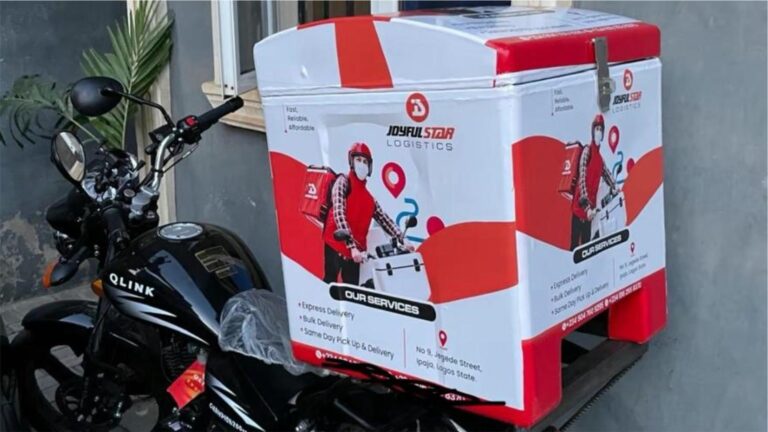
The growth of e-commerce in Nigeria has created explosive demand for last-mile delivery services. Every Instagram vendor, WhatsApp business, and online store needs someone reliable to deliver orders to customers. This is your opportunity.
With N500,000, you can acquire a fairly used motorcycle, register with logistics platforms like Kwik Delivery, or position yourself as an independent delivery partner for local businesses in your area.
The advantage of working with local businesses directly is that you build repeat contracts, which means predictable weekly income rather than the variability of platform gigs.
As revenue grows, a second bike and a hired rider doubles your income without doubling your personal work.
Budget breakdown for N500,000:
- Fairly used motorcycle in good condition: N200,000 to N300,000
- Registration, insurance, and rider permit: N20,000 to N30,000
- Delivery bags, reflective vest, and safety gear: N15,000 to N25,000
- Phone and data for dispatch management: N20,000
- Marketing and business client acquisition: N20,000 to N30,000
- Reserve: N80,000 to N100,000
Realistic monthly income: N80,000 to N250,000 depending on whether you ride yourself or manage a rider while running client relationships.
13. Cleaning Services Business
Post-construction cleaning, office cleaning, and residential deep cleaning are all genuinely underserved in most Nigerian cities.
Many construction projects complete finishing and immediately need thorough professional cleaning before occupancy. Offices need regular cleaning contracts. Estates and residential properties need periodic deep cleaning.
Starting a cleaning business with N500,000 is entirely feasible because the core equipment, while specific, is not expensive. A pressure washer, industrial mops, vacuum cleaner, cleaning chemicals in bulk, and protective gear for your team are your foundational needs.
Budget breakdown for N500,000:
- Pressure washer (fairly used): N60,000 to N100,000
- Industrial vacuum cleaner: N40,000 to N60,000
- Mops, buckets, brooms, scrubbers: N20,000 to N30,000
- Cleaning chemicals and detergents in bulk: N50,000 to N70,000
- Protective gear (gloves, boots, overalls) for a small team: N20,000
- Transportation for equipment and team: N40,000 to N60,000
- Marketing, branded uniforms, and business cards: N30,000 to N50,000
- Reserve and working capital: N80,000 to N100,000
Realistic monthly income: N100,000 to N400,000 depending on contracts secured. A single post-construction cleaning contract for a medium-sized property can pay N50,000 to N150,000.
14. Tutoring and Educational Services
Education spending in Nigeria is one of the most resilient categories of household expenditure. Parents sacrifice enormously to give their children the best academic preparation, which means tutors for WAEC, NECO, JAMB, and Common Entrance examinations are always needed.
With N500,000, you can set up a small tutoring centre that serves students in your neighbourhood or operate entirely as a home visiting tutor, which eliminates all space-related costs. Online tutoring through Zoom or Google Meet eliminates geography entirely, allowing you to reach students across the country.
Creating structured study guides or exam preparation materials and selling them digitally through Selar.co or WhatsApp is an additional income stream that runs passively alongside your tutoring sessions.
Budget breakdown for N500,000:
- Furniture and whiteboard for a small tutoring space (if applicable): N80,000 to N100,000
- Teaching materials, past question booklets, and stationery: N30,000 to N50,000
- Laptop and data subscription for online sessions: N80,000 to N100,000
- Marketing in your local area (flyers, estate notice boards): N20,000
- Digital content creation tools for online courses: N30,000 to N50,000
- Reserve: N150,000 to N200,000
Realistic monthly income: N80,000 to N300,000 depending on student volume and whether you tutor individually or in small groups.
15. Egg and Foodstuff Distribution (Mini Depot)
Running a mini egg and foodstuff depot is one of the quietest and most consistent profitable businesses you can start with 500k in Nigeria.
The model involves bulk-buying eggs and dry foodstuffs like crayfish, stockfish, dried pepper, and palm oil from wholesale markets, storing them, and supplying to small retailers, canteens, and households in your area.
Eggs alone are bought and consumed daily by millions of Nigerians. A mini egg depot that buys from farms or wholesale distributors at slightly below market retail price and sells to shops and households around you operates on thin per-unit margins, but high daily volume creates meaningful income.
Budget breakdown for N500,000:
- Initial egg inventory (multiple crates): N100,000 to N150,000
- Dry foodstuff inventory: N100,000 to N150,000
- Storage shelves and space setup: N30,000 to N50,000
- Delivery transport (motorcycle or tricycle hire initially): N30,000 to N50,000
- Working capital reserve for restocking: N120,000 to N150,000
Realistic monthly income: N80,000 to N200,000 depending on customer volume and whether you expand into supplying restaurants and canteens.
16. Graphic Design and Printing Services
Every business needs flyers, banners, business cards, and social media content. In Nigeria, where new businesses are launched daily and political activity is ongoing, demand for design and printing is constant.
If you have basic design skills or are willing to learn tools like Canva or Adobe Express, you can build a profitable design and printing brokerage with N500,000.
As a broker, you take orders from clients, outsource the actual printing to a commercial press, and earn a markup on every job. As your revenue grows, you invest in your own printer for smaller jobs.
Budget breakdown for N500,000:
- Laptop or desktop computer: N150,000 to N200,000
- Design software subscriptions: N20,000 to N30,000
- Marketing and client acquisition: N40,000 to N60,000
- Small laminator and finishing equipment for basic work: N30,000 to N50,000
- Portfolio development and branding: N20,000
- Reserve working capital: N120,000 to N150,000
Realistic monthly income: N80,000 to N300,000 depending on client volume and whether you handle design and printing or just one side.
17. Car Wash Business
Millions of vehicles navigate Nigeria’s dusty, muddy, and poorly maintained roads every day. Every one of those vehicles needs washing, and most car owners prefer to pay for the service rather than do it themselves.
A well-located car wash with good service is one of the most cash-flow-positive businesses you can start with 500k in Nigeria.
A manual car wash setup requires surprisingly little equipment. A pressure washer, hoses, sponges, car wash soap, interior cleaning tools, and a reliable water source are your foundation. Location beside a busy road, near an estate, or close to an office cluster is critical.
Premium detailing services, engine bay cleaning, interior steam cleaning, and waxing all command higher prices and can be added as your skills and equipment improve.
Budget breakdown for N500,000:
- Pressure washer: N70,000 to N100,000
- Vacuum cleaner for interiors: N30,000 to N50,000
- Hoses, sponges, towels, and cleaning chemicals: N30,000 to N50,000
- Water storage tank: N20,000 to N30,000
- Canopy or shade structure for the work area: N40,000 to N60,000
- Space rental for three to six months: N60,000 to N100,000
- Signage and basic branding: N15,000 to N25,000
- Reserve: N80,000
Realistic monthly income: N100,000 to N300,000 depending on vehicle volume and whether you offer premium detailing.
18. Freelance Digital Services (Writing, Design, Social Media Management)
This is the business to start with 500k in Nigeria if you have a marketable digital skill and the discipline to build an international client base. Nigeria’s currency situation actually works in a freelancer’s favour.
Earning $500 per month from a single international client is equivalent to N700,000 or more at current exchange rates, far exceeding what most physical businesses generate at the 500k starting capital level.
Skills in high demand include content writing, copywriting, social media management, SEO, graphic design, video editing, and virtual assistance. Platforms like Upwork, Fiverr, Toptal, and PeoplePerHour connect Nigerian freelancers with international clients who pay in dollars, euros, and pounds.
Your N500,000 investment in this case goes primarily toward skill development, a reliable laptop, high-speed internet, and a professional profile setup. The remaining capital is your runway while you build your portfolio and land your first clients.
Budget breakdown for N500,000:
- Laptop in excellent condition: N200,000 to N250,000
- Skill courses (Udemy, Coursera, or specialist platforms): N20,000 to N50,000
- High-speed internet subscription for four to six months: N40,000 to N60,000
- Professional profile setup and portfolio website: N20,000 to N30,000
- Living expenses buffer while building client base: N100,000 to N130,000
Realistic monthly income: $200 to $3,000+ depending on skill level and client base. The income ceiling in freelancing is determined almost entirely by skill.
19. Liquid Soap and Cleaning Products Manufacturing
Home-based production of liquid soap, antiseptic, floor cleaner, and other household cleaning products is one of those quietly profitable businesses that many overlook because it sounds too simple.
The raw materials are affordable and widely available, the production process is learnable in a short time, and demand from households, offices, schools, hotels, and hospitals is continuous.
You can start producing and selling directly to individuals in your area, to schools, to offices, and to small shops. As quality and consistency improve, you can target institutional buyers who place large recurring orders.
Budget breakdown for N500,000:
- Raw materials for first three to four production batches: N80,000 to N120,000
- Containers, bottles, and packaging: N50,000 to N80,000
- Production equipment (mixing drums, pumps, measuring tools): N30,000 to N50,000
- Training (short production course if needed): N10,000 to N20,000
- Labelling and branding design: N20,000 to N30,000
- Marketing and client acquisition: N30,000 to N50,000
- Reserve for restocking and scaling: N120,000 to N150,000
Realistic monthly income: N80,000 to N250,000 depending on production volume and whether you sell retail or supply to institutions.
20. Football Viewing Centre
Nigeria’s passion for football is unlike almost anything else in the country. The English Premier League, UEFA Champions League, and African football competitions draw massive, enthusiastic audiences.
A well-located viewing centre where fans can watch matches with fellow supporters is a business that monetises that passion directly.
You make money through entrance fees, sales of drinks, snacks, and small chops during matches, and by hosting viewing events for major matches where you can charge higher entrance rates. Weekend matches and Champions League nights are your peak revenue periods.
Budget breakdown for N500,000:
- Large screen TV or projector and screen setup: N150,000 to N200,000
- DSTV Compact or Premium subscription plus decoder: N50,000 to N80,000
- Plastic chairs and basic seating: N40,000 to N60,000
- Generator or inverter for power backup: N80,000 to N120,000
- Space rental for three to six months: N60,000 to N100,000
- Drinks and snack inventory for opening stock: N30,000 to N50,000
Realistic monthly income: N100,000 to N300,000 in a good location with consistent match weekends.
How to Make the Most of Your N500,000 Starting Capital
Knowing what business to start is only part of the equation. How you manage that N500,000 determines whether the business survives its first six months. Here are the most important principles to apply from day one.
Validate before you fully invest. Before spending the full N500,000, test your idea at a smaller scale. Sell five products before ordering fifty. Cook meals for ten customers before renting a commercial kitchen. The market will tell you whether your product or service has real demand before you commit all your capital.
Keep overhead extremely low in the beginning. Your first enemies are fixed costs you cannot eliminate: shop rent you cannot afford in slow periods, staff salaries before revenue is established, and expensive equipment when cheaper alternatives exist. Stay lean until revenue justifies expansion.
Track every naira. Poor financial record-keeping is one of the top reasons small businesses in Nigeria fail in their first year. Know exactly how much you are spending, what your revenue is, and what your actual profit is each week. Even a simple notebook or free mobile app is enough to start.
Reinvest early profits aggressively. The temptation to enjoy your first profits is understandable and human. But businesses at the N500k starting point grow fastest when profits are plowed back into inventory, better equipment, and marketing. Delay personal rewards until the business is genuinely stable.
Build your online presence from day one. Whether your business is physical or service-based, an Instagram page, WhatsApp Business account, and basic digital presence is non-negotiable in today’s Nigerian market. People search online before they buy offline. Your presence there determines whether they find you or your competitor.
Do not try to do everything alone. Nigeria’s informal support networks are powerful. Find mentors who have already done what you are trying to do. Join WhatsApp groups, attend trade associations, and connect with other entrepreneurs in your sector. The shortcuts others have discovered through trial and error are freely shared when you approach people with genuine respect and curiosity.
Key Takeaways
N500,000 is genuinely enough to start a profitable business in Nigeria in 2026. The key is choosing a business model that matches your available capital, your skill set, and the real demand in your specific location.
The Nigerian economy in 2026 is more stable than it has been in several years. Inflation is easing, the naira has stabilised significantly, and business confidence among Nigerian entrepreneurs is at a measurably higher level than the previous year. This is a good time to start.
Daily income businesses like POS, food, and laundry give you the fastest path to covering your costs and reaching profitability.
Skill-based businesses like freelancing and tutoring have lower physical capital requirements but demand significant time investment in building reputation and clients.
Product-based businesses like mini importation and okrika have the highest margin potential but require good product selection and marketing.
The businesses that fail are not usually failing because of bad ideas. They fail because of poor location choice, underestimating the time required to build a customer base, mismanaging capital in the early months, and quitting before the business has had enough time to grow.
The businesses that succeed do so because the owner showed up consistently, kept costs low, listened to customer feedback, and kept improving until they found what worked.
Your N500,000 is a starting point, not a guarantee. What you do with the time, energy, and discipline you bring alongside that capital is what determines the outcome.
Disclaimer: All income projections and budget breakdowns in this article are estimates based on current market research, publicly available data, and information from Nigerian business communities.
Actual results will vary significantly depending on individual skill level, location, market conditions, business management practices, and many other factors specific to your situation. The naira exchange rates and economic data referenced reflect conditions at the time of writing and are subject to change.
This article is provided for general informational purposes only and does not constitute financial, legal, or investment advice.
Before committing capital to any business, conduct your own thorough research, seek professional advice where appropriate, and ensure full compliance with relevant Nigerian federal and state regulations.
The author and publisher accept no liability for any financial outcomes resulting from decisions made based on this content.
What You Need to Check Before Starting
Before spending money, compare the requirements, starting costs, ongoing expenses, risks, and realistic earning or investment potential. Figures can vary by location, provider, market conditions, and the size of the operation, so treat examples as planning estimates rather than guaranteed results.
A Practical Way to Get Started
Start with a small, measurable plan. List what you need, estimate the total cost, identify your first customers or users, and decide how you will track income and expenses. Review the results before committing additional money.
Risks and Mistakes to Avoid
Do not assume that a business, investment, platform, or strategy will produce guaranteed returns. Check important claims against official or authoritative sources, keep financial records, and avoid paying anyone who promises effortless or guaranteed profits.
Related MoneyX Guides
Continue with these related guides for practical information that can help you make a better-informed decision:
- How to Start Affiliate Marketing in Nigeria: A Practical Beginner's Guide
- 25 Profitable Business Ideas in Nigeria: Startup Costs, Demand and How to Choose
- 18 Businesses to Start With ₦200,000 in Nigeria: Practical Startup Guide
- How to Start a POS Business in Nigeria: Costs, Location, Profit and Common Risks
What Matters Before You Act
Evaluate startup cost, customer demand, operating expenses, competition, location, and expected cash flow before starting. A business can generate sales and still lose money if costs are poorly controlled. Test demand on a small scale where possible and keep separate records for business income and expenses.



Comments 0
No comments yet
Be the first to share your thoughts.
Leave a Comment
Your email will not be published.