
The most profitable businesses in Nigeria right now are not the ones everybody is talking about. They are the ones nobody is talking about, sitting quietly in the gaps between what millions of people need every day and what is currently available to meet those needs.
Most entrepreneurs in Nigeria are chasing the same crowded ideas: food vending, mini importation, POS, fashion, and content creation. These businesses work, but they are also saturated, making it harder to stand out and more expensive to acquire customers.
Hidden business opportunities in Nigeria exist in the corners that the crowd ignores: in demographic shifts that most people have not noticed, in infrastructure failures that are actually business invitations, in cultural habits that nobody has figured out how to monetise properly yet, and in global trends that are transforming how people live but have not yet been applied to Nigerian daily life.
This guide is built for entrepreneurs who are willing to think more carefully than the average person. Every hidden business opportunity covered here is anchored in a real, verifiable gap in the Nigerian market.
Some require skill development. Some require patience. All of them are significantly less competitive than the businesses most people are starting, and that lower competition is precisely what makes them worth your attention.
Nigeria’s GDP is projected to expand to approximately 4.3% in the current year, driven primarily by services, finance, and a recovering oil sector.
The economy is stabilising after years of turbulence. Inflation has eased significantly from its peak of over 34% to around 14.45%. The naira has steadied at the official rate.
What this stabilisation means for entrepreneurs is that customers are beginning to plan more deliberately, businesses are investing again, and the infrastructure of digital commerce is more reliable than it has been in years.
These are the conditions in which hidden opportunities become visible to those paying attention.
Let us go through them one by one.
AGRICULTURAL AND FOOD SYSTEM OPPORTUNITIES
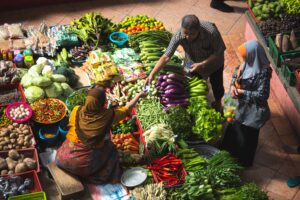
1. Cold Chain Logistics and Aggregation for Smallholder Farmers
Nigeria’s post-harvest food losses are estimated at 40% to 50% of production annually. Tomatoes, peppers, yams, leafy vegetables, fruits, and fish rot before they reach buyers because the cold storage and refrigerated transport infrastructure that should connect farmers to urban markets simply does not exist at the scale needed.
The hidden opportunity here is not in owning massive cold rooms, which requires enormous capital. It is in building a coordination business that connects multiple smallholder farmers to shared cold storage facilities, refrigerated transport, and urban buyers. You act as the aggregator who organises existing assets rather than building everything from scratch.
This is what successful logistics entrepreneurs in Nigeria’s food sector have identified: most cold rooms in the country operate below capacity because they lack reliable supply from organised farmers. Most farmers lose produce because they lack access to cold storage. The gap in the middle is the business.
An aggregator with strong farmer relationships in a produce-heavy area like Kaduna, Benue, or Ogun can negotiate bulk cold room access, coordinate transport, and build supply relationships with supermarkets, restaurants, and urban wholesale markets. The margin is in the coordination, not the infrastructure.
Why it is hidden: The business looks unsexy. Most entrepreneurs want to build apps or run trendy e-commerce stores. Aggregating tomatoes and coordinating cold rooms does not sound glamorous. That is exactly why the margin is still there.
2. Specialty Crop Farming (Mushrooms, Herbs, and Organic Produce)
While everyone is rushing into catfish farming and broiler poultry because these are the most talked-about agricultural businesses in Nigeria, specialty crops like oyster mushrooms, culinary herbs (basil, thyme, rosemary, parsley), organic vegetables, and specialty peppers are quietly underserved in the Nigerian market.
Hotels, restaurants serving international clientele, supermarkets targeting middle and upper-income consumers, and expatriate households all struggle to source consistent, quality specialty produce locally. Much of it is currently imported, at significant cost. A local producer who can supply reliably and at competitive pricing has a clear market with almost no local competition.
Mushroom farming, particularly oyster mushrooms, is especially attractive as a hidden opportunity because production cycles are short (harvest in three to four weeks), the setup can begin in a small space, input costs are low (mushrooms grow on agricultural waste like rice straw and sawdust), and market prices are strong.
Why it is hidden: Nigerian farming discourse is dominated by catfish, poultry, and cassava. Specialty crops sound unusual and foreign. But the buyers are there, paying premium prices, and finding it difficult to source locally.
3. Value-Added Agro-Processing (Tomato Paste, Plantain Flour, Pepper Paste)
Nigeria imports billions of naira worth of tomato paste, plantain flour, packaged pepper paste, and other processed agricultural products every year, products that could easily be made from Nigerian raw materials by Nigerian entrepreneurs.
The gap between our agricultural production and our food processing capacity is one of the largest hidden business opportunities in the entire Nigerian economy.
A small-scale tomato processing operation that buys fresh tomatoes from farmers during peak harvest season, when prices crash due to oversupply, and processes them into paste, sauce, or powder for sale during the dry season when prices spike, earns on both ends of the cycle.
The buy-low-process-sell-high model is powerful when applied to a crop that is produced in abundance but badly handled at both the production and processing ends.
Plantain flour is currently imported from West African neighbours and international markets despite Nigeria being one of the world’s largest plantain producers.
A small-scale drying and milling operation targeting bakeries, health food retailers, and food manufacturers earns in a market where domestic supply is almost zero.
Why it is hidden: Processing sounds industrial and capital-intensive. But small-scale processing equipment is affordable, and the market for locally processed products is eager and growing.
4. Beekeeping and Honey Production
Nigeria consumes enormous quantities of honey, yet the vast majority of it is imported or adulterated. Pure, locally produced Nigerian honey with proper branding and certification commands strong premium pricing in health-conscious urban markets, specialty stores, and export channels.
Beekeeping is a low-capital agribusiness with minimal daily labour requirements. Bees do the work. A beekeeper manages hive conditions, harvests honey periodically, and focuses on marketing and distribution. The startup cost for a small apiary of ten to twenty hives is modest, and honey production can begin within months.
The export market for premium Nigerian honey is largely untapped. European and international buyers pay significantly higher prices for traceable, certified honey from West Africa.
Why it is hidden: Most Nigerians consider beekeeping foreign or impractical. The idea is almost never discussed in mainstream Nigerian business circles. That is exactly why the market is open.
INFRASTRUCTURE GAPS AS BUSINESS OPPORTUNITIES
5. Solar Energy Solutions for Small Businesses and Markets
The electricity situation in Nigeria, while slowly improving, remains a genuine daily crisis for small businesses. Market traders, artisans, food vendors, welding shops, and small manufacturers spend enormous sums on generator fuel every month.
A significant and underserved market exists for affordable solar energy systems designed specifically for small business needs rather than full household setups.
Solar lanterns, mini solar panels paired with batteries for powering fans, phone charging stations, and lighting, and small solar inverter systems appropriate for kiosks and market stalls are all products that small business owners would buy if the pricing and distribution were right. The market exists. The supply chain is the opportunity.
An entrepreneur who builds distribution and installation expertise in solar micro-systems for small Nigerian businesses, targeting markets, artisan clusters, and informal business areas, is addressing a need that large solar companies are not optimally serving.
Why it is hidden: Most solar business discussions focus on residential and commercial installations. The micro-business solar market is overlooked.
6. Ice Block Production and Distribution
The ice block business is not new, but it is significantly undersupplied in most Nigerian cities and towns outside major urban centres. With unreliable electricity and a hot climate, demand for ice is constant from restaurants, event caterers, cold drink vendors, hospitals, fish sellers, meat traders, and individuals organising outdoor events.
An entrepreneur who sets up ice production using a freezer powered by an inverter system or generator and builds reliable distribution routes to commercial buyers creates a business with daily, predictable income and very little organised competition outside the largest cities.
Why it is hidden: The business looks simple and physical. It lacks the prestige of a tech startup or digital business. But prestige does not pay bills. Cash flow does.
7. E-Waste Collection and Processing
Walk into any Nigerian office, home, or school and you find old phones, dead laptops, broken printers, and discarded electronic equipment piling up because nobody knows what to do with it. This e-waste contains valuable recoverable materials including copper, gold, aluminium, and rare earth elements. It also poses significant environmental hazards if improperly disposed of.
An e-waste collection business that systematically gathers electronic waste from offices, schools, hospitals, and households and sells it to certified processors creates revenue from what is currently treated as garbage. Some entrepreneurs in Lagos have pioneered this model and found both institutional and individual clients eager to hand over their e-waste rather than dealing with it themselves.
Corporate social responsibility requirements increasingly push Nigerian companies to properly dispose of electronic waste, creating a premium market segment willing to pay for formal collection.
Why it is hidden: Picking up old electronics does not sound like a sophisticated business. But the raw material value in e-waste is significant, and the institutional market is underserviced.
8. Niche Logistics for Underserved Routes and Communities
Nigeria’s logistics sector has seen genuine improvement from companies like GIG Logistics, Kwik Delivery, and others. But enormous gaps remain in the middle: short-distance but high-density routes, secondary cities, rural communities with agricultural produce but no reliable outbound logistics, and specialist logistics for fragile, perishable, or high-value items.
An entrepreneur who builds a structured micro-logistics operation for a specific underserved route or community, with transparent pricing, tracking, and insurance options, is entering a market where the informal alternatives are unreliable and the formal players have not yet arrived.
Secondary cities like Aba, Onitsha, Kano, Sokoto, Maiduguri, and smaller commercial towns have enormous commercial activity but remain significantly underserved by professional logistics. The entrepreneurs who establish themselves in these markets now are positioning for enormous long-term advantage.
Why it is hidden: Most logistics startup attention goes to Lagos and Abuja. The real opportunity for differentiation is everywhere else.
DEMOGRAPHIC AND SOCIAL SHIFT OPPORTUNITIES
9. Elder Care and Retirement Support Services
Nigeria’s popular narrative focuses entirely on its youth population, and with good reason given that over 60% of Nigerians are under 25. But a quiet demographic shift is underway. The middle-class cohort that was young and professionally active in the 1980s and 1990s is now approaching or in retirement. Former civil servants, professionals, and Diaspora returnees are becoming a growing senior population with specific needs that Nigeria has almost no formal services to address.
Structured retirement lifestyle planning, non-medical elder care, companionship and social programming for seniors, home safety modification services, and assisted daily living support for elderly Nigerians who live alone or whose adult children are abroad represent an enormous underserved market.
This is not a temporary niche. It is a growing one. The Diaspora element is particularly significant: Nigerians abroad who have elderly parents in Nigeria and cannot provide daily support themselves are willing to pay for reliable, professional elder care services that give them peace of mind.
Why it is hidden: Elder care is not considered a business opportunity in Nigerian culture, where family care of the elderly is assumed. But the reality of economic migration, nuclear family structures, and urbanisation is changing this assumption quietly and irreversibly.
10. Pet Care and Pet Products Market
Pet ownership in Nigeria is growing rapidly, particularly among the young urban middle class, professionals, and expatriate communities in Lagos, Abuja, and Port Harcourt. But the pet care industry has barely begun to formalise. Grooming services, boarding facilities, pet food retail, veterinary care, pet accessories, and even pet photography are all significantly underserved.
Pet owners in Nigerian cities currently struggle to find quality food for their animals, trustworthy grooming services, or boarding options when they travel. The gap between what urban pet owners need and what is available to them is enormous and growing wider every year as pet ownership continues to expand.
Why it is hidden: Pet culture is seen as exclusively Western. But behaviour is changing faster than perception, and the entrepreneur who builds a trusted pet care brand in a major Nigerian city now will be the category leader when the market fully matures.
11. Local Language Content Production and Licensing
Nigeria has over 500 languages, yet almost all digital content, educational materials, and media is produced in English or a small number of major languages. Radio stations, EdTech platforms, NGOs, government programmes, and health communication initiatives are all struggling to reach grassroots audiences because the content does not exist in the languages those audiences actually speak.
A business that produces educational content, health information, agricultural guidance, or entertainment in underrepresented Nigerian languages and licenses it to organisations that need it creates intellectual property with recurring revenue potential. Hausa, Yoruba, and Igbo have partial coverage. Hundreds of other languages have almost none.
This opportunity sits at the intersection of Nigeria’s linguistic richness and the growing recognition that impact and reach require local language engagement.
Why it is hidden: Content production for minority languages sounds like charity work. It is not. The buyers (NGOs, government programmes, EdTech companies, radio stations, health agencies) are real and they have budgets for this.
12. Dental and Oral Care Services in Underserved Areas
Dental care in Nigeria is catastrophically underserved outside major urban centres. There is approximately one dentist for every 25,000 Nigerians, compared to the WHO recommended ratio of one per 7,500. The majority of dental professionals are concentrated in Lagos, Abuja, and a handful of other cities.
A mobile dental care business or a community dental clinic in a secondary city, a satellite town, or an underserved area of a major city addresses genuine, daily pain that millions of Nigerians currently manage with painkillers and prayers because professional care is either unavailable or unaffordable.
The business model can be adjusted for different capital levels: a fully equipped dental clinic, a mobile dental unit that visits communities on a schedule, or a partnership with existing health facilities to provide dental services.
Why it is hidden: Healthcare businesses require professional qualifications and regulatory navigation, which deters casual entrepreneurs. But for qualified dental professionals, the market is enormous and competition is practically absent outside city centres.
DIGITAL AND TECHNOLOGY-ADJACENT OPPORTUNITIES
13. SME Compliance and Regulatory Support Services
Thousands of small and medium-sized businesses in Nigeria are trying to operate legally but find the compliance landscape bewildering. CAC registration, tax filing, annual returns, industry-specific permits, data protection compliance under the Nigeria Data Protection Act, pension remittance, and regulatory requirements from sector-specific agencies like NAFDAC, NESREA, and others are all genuine obligations that many business owners simply do not have the knowledge or time to manage properly.
A digital-first compliance support business that offers simplified dashboards, automated reminder systems, bundled advisory packages, and affordable one-time compliance services to Nigerian SMEs serves a market that is growing as the regulatory environment becomes more complex and enforcement increases.
This business does not require legal qualifications at the advisory level, though partnerships with licensed lawyers and accountants enhance credibility. It requires deep knowledge of Nigerian business compliance requirements and the ability to package and explain them clearly to non-specialist business owners.
Why it is hidden: Compliance sounds boring. Nobody starts a business because they are excited about annual returns. But the pain this service relieves is real, consistent, and growing as the government increases enforcement activity.
14. Drone Services for Agriculture, Real Estate, and Events
Commercial drone operations in Nigeria are still in their infancy. Agricultural survey drones that help farmers monitor crop health and irrigation coverage across large farms, real estate aerial photography for property listings and developer marketing, event videography from aerial angles, and infrastructure inspection for construction companies are all services with paying clients and almost no organised supply.
A drone services business requires initial investment in quality equipment and certification from the Nigerian Civil Aviation Authority (NCAA), which is a regulatory hurdle that keeps the competition low. But the clients are there: real estate developers, commercial farms, event companies, engineering firms, and agricultural development organisations.
Why it is hidden: Most people think of drone flying as a hobby rather than a professional service business. The regulatory barrier discourages casual entry. But for those willing to obtain proper certification, the market is wide open.
15. Digital Skills Training for Market Women and Informal Traders
Millions of Nigerian market women and informal traders operate their businesses entirely on WhatsApp and their phones. Most of them have smart devices but use them at a fraction of their potential. Simple digital skills, how to use WhatsApp Business properly, how to create attractive product photos with a phone camera, how to manage orders and customer follow-ups digitally, and how to accept digital payments correctly, could transform their income.
A business that delivers practical, affordable, local-language digital skills training specifically designed for the informal sector, rather than for corporate professionals or tech-savvy young people, addresses a massive underserved audience.
This can be delivered through WhatsApp groups (ironically), market association partnerships, church and mosque-based community programmes, and brief in-person workshops at market locations.
Why it is hidden: Digital skills training is usually pitched at educated young professionals. The informal sector is ignored despite being the largest economic segment. The training content itself needs to be simpler and more immediately practical than what is typically offered.
16. Podcast Production and Audio Content for Nigerian Audiences
The Nigerian podcast market is growing but remains significantly underserved in terms of production quality, discoverability, and monetisation infrastructure. Many Nigerian voices have things to say and potential audiences to reach, but lack the technical production knowledge, equipment, or post-production skills to create listenable audio content.
A podcast production service that provides recording space or mobile recording, editing, episode structuring, cover art design, and platform distribution as a package service to Nigerian thought leaders, business owners, coaches, and organisations serves a market that is actively trying to enter podcasting but struggling with the technical elements.
The growth of audio content consumption through platforms like Spotify, Apple Podcasts, and local alternatives means this market is expanding. The production infrastructure is not keeping pace.
Why it is hidden: Podcasting sounds like something wealthy influencers do. The production service angle, serving other people’s podcasts rather than running your own, is even less obvious.
OVERLOOKED SERVICE BUSINESS OPPORTUNITIES
17. Professional Home Organisation and Decluttering
Urban Nigerian professionals with dual incomes, demanding careers, and children, are drowning in the chaos of unorganised homes. Wardrobes that need systematic sorting, kitchens that need functional layout redesign, children’s rooms that need age-appropriate organisation systems, and home offices that need functional setups are all pain points that professionals in Lagos, Abuja, and Port Harcourt will pay to have solved.
Professional home organisation as a standalone service business is effectively nonexistent in Nigeria despite enormous demand from exactly the demographic that has both the need and the financial means to pay for it. The service is popular and profitable in Europe, the US, and parts of Asia, where organised decluttering businesses command premium fees.
Why it is hidden: In Nigeria, home organisation is something you do yourself or tell your house help to do. The concept of paying a professional to systematically organise your home has not entered the mainstream consciousness yet, which means first movers have an uncrowded market.
18. Teeth Whitening and Cosmetic Dental Aesthetics
Nigeria’s growing middle class is increasingly interested in personal aesthetics, including oral aesthetics. Teeth whitening services, which can be offered by certified professionals in professional settings or through take-home kit programmes supervised by qualified practitioners, represent an almost entirely untapped cosmetic service in the Nigerian market.
The equipment and materials are available internationally, the procedures are non-invasive compared to most dental treatments, and the client interest exists among the same demographic that spends heavily on skincare, makeup, and hair. The gap is simply that nobody has positioned and marketed this service properly for the Nigerian urban market.
Why it is hidden: Most dental service discussions focus on pain relief and basic oral health. The cosmetic dentistry angle for a beauty-conscious urban market has not been widely explored.
19. Shared Coworking and Study Spaces Outside Lagos and Abuja
Coworking spaces have become established in Lagos and Abuja. But the same category of person who needs a coworking space in Lagos also exists in Ibadan, Benin City, Enugu, Kano, Owerri, Calabar, and dozens of other cities. Freelancers, remote workers, small business owners who cannot afford their own office, and students who need better study environments than their homes or campuses offer are present everywhere.
A well-designed coworking and study space in a secondary Nigerian city with reliable internet, stable power (solar or inverter), comfortable furniture, printing services, and a community atmosphere serves an underserved market that is growing as remote work becomes more normalised.
Why it is hidden: Everyone thinks of coworking as a Lagos thing. The demand in secondary cities is real but untested. First movers who get the environment and pricing right have enormous brand-building advantage.
20. Errand and Concierge Services for Busy Professionals
Running specific errands for time-pressed professionals, collecting documents from government offices, submitting applications, paying bills in person, sourcing specific items from markets, handling customs clearance for small packages, accompanying family members to appointments, and coordinating home maintenance contractors are all tasks that busy Nigerian professionals in major cities genuinely struggle to manage.
A professional errand and concierge service that positions itself as a reliable personal logistics operation for high-income individuals and corporations earns well from a category of buyers who value their time significantly more than the service fee.
Why it is hidden: Running errands sounds like a domestic service rather than a professional business. But when it is positioned, priced, and delivered professionally with reliability guarantees, it becomes a premium service that time-poor professionals are very happy to pay for.
21. Specialised Cleaning Services (Post-Construction, Deep Cleaning, Fumigation)
General cleaning services are relatively widespread. But specialist cleaning services are not. Post-construction cleaning for newly finished buildings before occupancy, deep cleaning for buildings that have never been properly cleaned, fumigation and pest control, air duct cleaning for commercial buildings, and industrial cleaning for food processing facilities and factories all represent specialised service niches with significantly fewer competitors than general cleaning and meaningfully higher pricing.
Every new building completed in Nigeria needs post-construction cleaning before it can be occupied. Given the volume of construction activity in Nigerian cities, this alone provides a significant daily market.
Why it is hidden: Most cleaning businesses position themselves broadly. Specialisation and professional presentation in a specific cleaning niche commands much higher fees and attracts a different quality of client.
CREATIVE AND CULTURAL OPPORTUNITIES
22. Nigerian Heritage and Cultural Tourism Experiences
Nigeria is vastly under-touristed relative to its cultural wealth. The country has ancient kingdoms, unique festivals, craft traditions, historical sites, extraordinary cuisine, and vibrant cultural expressions that international visitors rarely encounter because the tourism infrastructure to connect them to these experiences does not exist.
A curated cultural experience business that packages authentic Nigerian cultural encounters for Diaspora Nigerians, expatriates, and international visitors creates a product that no hotel or conventional tour operator currently offers well.
Visitors to Nigeria for business often wish they could experience the country beyond their hotel and office buildings. A reliable, knowledgeable experience provider fills that gap.
Why it is hidden: Nigerian tourism discourse is usually about beaches and the challenges of poor infrastructure. Nobody is systematically building premium cultural experience packages that turn Nigeria’s extraordinary cultural depth into a product international visitors can access.
23. Vintage and Pre-Loved Luxury Item Authentication and Resale
A growing Nigerian middle class with cultural aspirations and budget consciousness is interested in luxury goods but cannot always afford new retail prices.
Pre-loved designer items, authenticated vintage fashion pieces, and second-hand luxury accessories represent a market that is beginning to emerge in Nigeria but has almost no trustworthy formal infrastructure.
An authentication and resale business that sources verified pre-loved luxury items, certifies their authenticity, and sells them through Instagram, WhatsApp, and curated physical events builds a premium resale brand in a market where trust is the primary barrier that has prevented this category from taking off.
Why it is hidden: Second-hand luxury sounds like a niche. But the global luxury resale market is enormous, and Nigerian consumers with aspirations and limited budgets are a natural target audience for this model.
24. Specialised Photography Niches (Product Photography, Architecture, Medical)
While photography is widely practiced in Nigeria, specialised commercial photography niches remain significantly underserved. Product photography for e-commerce businesses is in enormous demand as Nigerian online retail grows, but the quality of product photography available to small Nigerian businesses is generally poor. Architectural photography for real estate developers and interior designers is another niche where professional quality is rarely available outside the largest cities. Medical and scientific photography for hospitals, research institutions, and publications is almost entirely absent.
A photographer who builds deep expertise in one commercial niche and markets specifically to businesses in that vertical earns significantly more per project than a generalist who shoots everything.
Why it is hidden: Most photography business discussions focus on events, portraits, and weddings. Commercial specialty photography is a conversation that barely exists in Nigerian photography communities.
BUSINESS SUPPORT AND B2B OPPORTUNITIES
25. Business Formation and CAC Registration as a Service
Every business in Nigeria that wants to operate legally, access banking, qualify for contracts, or pursue any form of institutional engagement needs CAC registration.
The process is confusing, time-consuming, and bureaucratically frustrating for most first-time business owners. Yet CAC registration agents who offer this as a clear, reliable, and reasonably priced service earn consistent daily income from a market that never disappears.
Taking this further, a full business formation support service that bundles name search, CAC registration, Tax Identification Number acquisition, corporate bank account guidance, NAFDAC registration for applicable businesses, and basic compliance setup as a single product package earns significantly more than individual registration fees.
Why it is hidden: Registration services are seen as a commodity. But the packaging, professionalism, and comprehensive approach that most agents lack is the hidden differentiator.
26. WhatsApp Business Automation and Setup for Small Businesses
WhatsApp Business has features that most Nigerian small business owners have never explored: catalogue setup, automated greeting messages, quick reply templates, label organisation for customer management, and broadcast list management.
A service that sets these features up properly for a small business, trains the owner to use them, and offers ongoing optimisation earns N10,000 to N30,000 per setup.
Scaled to twenty clients per month, this earns N200,000 to N600,000 monthly from a service that requires no equipment, can be done remotely, and addresses a genuine pain point for Nigerian small businesses that are losing sales because their WhatsApp presence is unprofessional.
Why it is hidden: The service is so simple that most people assume businesses either already know how to do it or could easily figure it out themselves. They cannot. The majority of Nigerian WhatsApp businesses are using the platform at less than 20% of its potential.
27. Grant Writing and Application Support for Nigerian Organisations
Nigeria has access to an enormous amount of development funding from international organisations, government agencies, bilateral donors, and private foundations.
Tony Elumelu Foundation, USAID, the World Bank’s SME funds, EU programmes, and many others regularly offer grants that Nigerian entrepreneurs, NGOs, and social enterprises are eligible for but frequently miss because they lack the grant writing skills to apply competitively.
A grant writing and funding navigation service that helps Nigerian organisations identify relevant funding opportunities and prepare compelling applications earns a fee either as a flat consulting rate or as a percentage of funding secured. This service is almost entirely absent from the Nigerian professional services landscape despite enormous latent demand.
Why it is hidden: Grant writing is not widely recognised as a standalone profession in Nigeria. Most funding-seeking organisations struggle without help and simply miss opportunities.
28. Professional Ghostwriting for Nigerian Executives and Authors
Nigerian business leaders, executives, professionals, and aspiring thought leaders have stories to tell, books to write, and LinkedIn thought leadership content to produce, but they lack the time, writing skill, or interest to produce the content themselves.
A professional ghostwriter who writes books, articles, speeches, LinkedIn posts, and memoirs on behalf of others earns well from a market that almost nobody is explicitly targeting.
The Nigerian non-fiction book market, the speaker circuit, and the LinkedIn professional influence ecosystem all create demand for high-quality written content that sounds like the expert but is written by someone else.
Why it is hidden: Ghostwriting carries a cultural stigma in Nigeria, where authorship is assumed to be entirely personal. But it is a completely legitimate professional service, and once executives understand the value of thought leadership content for their careers and businesses, they pay well for it.
FINANCIAL AND INVESTMENT-ADJACENT OPPORTUNITIES
29. Micro-Insurance for Informal Workers and Small Traders
Nigeria’s insurance penetration rate is less than 1% of GDP, one of the lowest in the world relative to economic size. Most of this coverage is in the formal sector.
The informal sector, which includes the vast majority of Nigerian workers and traders, has almost no insurance coverage for health emergencies, stock loss, fire, theft, or business interruption.
Micro-insurance products designed specifically for market traders, artisans, transport workers, and small shop owners, with premiums as low as N500 to N2,000 per month and straightforward, reliable claims processes, represent one of the most significant untapped opportunities in Nigerian financial services.
Entrepreneurs who build distribution and trust in specific informal sector communities and partner with licensed insurers to offer relevant, affordable products are entering a market where competition is negligible and potential scale is enormous.
Why it is hidden: Insurance distribution requires regulatory compliance and partnerships with licensed insurers, which raises the barrier to entry. But for entrepreneurs willing to navigate this properly, the market size justifies the effort significantly.
30. Local-Language Financial Literacy and Investment Education
Nigeria’s savings and investment participation rates are still very low relative to the population’s potential. A major barrier is that most financial literacy content is produced in formal English and assumes a level of financial vocabulary that excludes most Nigerians outside the professional class.
Financial literacy content in Yoruba, Hausa, Igbo, and other major Nigerian languages, explaining budgeting, savings, simple investment products, and business financial management in familiar terms and culturally relevant examples, has enormous reach potential and limited supply.
This content can be monetised through YouTube AdSense, brand partnerships with financial services companies who want to reach these audiences, paid courses and community memberships, and consultation services for people who want personalised guidance after consuming the free educational content.
Why it is hidden: Most financial content creators in Nigeria target the English-speaking professional class. The much larger audience of Nigerians who would engage with financial education in their own language is almost entirely unaddressed.
How to Identify and Enter a Hidden Business Opportunity

Seeing the opportunity is only the beginning. Every hidden business opportunity in Nigeria shares a common characteristic: the gap between what exists and what is needed is visible to anyone willing to look carefully at daily Nigerian life and ask the right questions.
Here is how to evaluate any hidden opportunity before committing your time and capital.
Ask: Is the pain this solves real and daily? The best hidden businesses address problems that cost people money, time, or stress every day, not occasionally. Post-harvest food loss is a daily crisis for farmers. Elder care is a daily concern for families with ageing parents. E-waste piles up in every office and home continuously. Daily pain points produce daily customers.
Ask: Why is nobody else solving this? If the opportunity is real, there must be a reason it remains underserved. Identifying that reason tells you what you need to overcome. If the barrier is regulation, you need to get licensed.
If the barrier is perception (it looks unglamorous or foreign), you need better positioning and marketing. If the barrier is capital, you need to find a version of the business that starts small. If the barrier is simply that nobody has noticed, you are in the best possible position.
Ask: Who pays? Hidden opportunities sometimes fail because the need is real but the paying customer is not clearly identified. Elder care is needed, but is it the elderly person who pays or their children? If it is children abroad, can you reach them through digital marketing? Local-language content is needed, but who buys it? NGOs and government programmes, not individual readers. Make sure you know exactly who writes the cheque.
Start small enough to learn without losing everything. The biggest advantage of hidden business opportunities is that competition gives you time to learn and iterate without immediately losing customers to better-positioned rivals. Use that time. Start at a scale that allows you to test your assumptions before committing major capital.
Build your reputation before you build your revenue. In categories where trust is the primary barrier, the entrepreneur who is known to be reliable, professional, and competent builds a durable market position that is very hard for later entrants to disrupt. Your reputation in a hidden niche is worth more than any marketing budget.
Key Takeaways
The most important insight in this entire guide is one that sounds simple but takes courage to act on: the less crowded the idea, the less competition you face, and the more room you have to grow.
Nigeria’s hidden business opportunities exist primarily because most entrepreneurs are chasing the same ideas in the same sectors. Food, fashion, content creation, and technology startups attract enormous attention and enormous competition. The infrastructure gaps, demographic shifts, cultural underserved needs, and agricultural value chain opportunities covered in this guide attract almost none.
The entrepreneurs who are quietly earning significant income from these hidden opportunities share one thing: they were willing to look where nobody else was looking. They noticed an everyday problem that others had accepted as permanent.
They identified who would pay to have it solved. They built the capability to solve it reliably. And they showed up consistently while the crowd chased the obvious.
Nigeria has 220 million people generating daily needs across every sector of human life. The visible markets are crowded. The hidden ones are waiting.
Disclaimer The business opportunities, market estimates, and economic data referenced in this article are based on publicly available research, expert reports, sector analyses, and information from credible Nigerian and international sources at the time of writing.
This includes data from PwC Nigeria’s Economic Outlook reports, Business Day, the World Bank, Chambers and Partners’ Fintech Nigeria report, and other verified sources.
Market conditions, regulatory requirements, and competitive landscapes in Nigeria change regularly, and entrepreneurs are strongly advised to conduct their own independent research and due diligence before committing capital to any business idea.
This article is for general informational and educational purposes only and does not constitute financial, legal, or business advice. The author and publisher accept no liability for outcomes resulting from decisions made based on this content.
What to Consider Before You Start
Choose an option based on your available money, skills, time, location, and ability to find customers or clients. Income examples are not guarantees. Start with a manageable test, track your actual costs and results, and adjust your plan based on evidence.
Practical First Steps
Write down the resources you already have, what you still need, and the first customer or client you want to reach. Separate one-time startup costs from recurring expenses. This makes it easier to see whether the idea is affordable and sustainable.
Risks and Warning Signs
Be careful with opportunities that require unexplained upfront payments, promise guaranteed earnings, or pressure you to act immediately. Verify platforms and important claims before providing personal information or sending money.
How to Measure Whether It Is Working
Track revenue, expenses, time spent, customer response, and repeat business. A simple record of these figures can help you decide whether to continue, change your approach, or stop before losses become larger.
Related MoneyX Guides
Continue with these related guides for practical information that can help you make a better-informed decision:
- How to Start Affiliate Marketing in Nigeria: A Practical Beginner's Guide
- 25 Profitable Business Ideas in Nigeria: Startup Costs, Demand and How to Choose
- 20 Businesses to Start With ₦500,000 in Nigeria: Costs, Profit Potential and Risks
- 18 Businesses to Start With ₦200,000 in Nigeria: Practical Startup Guide



Comments 1
[…] will find daily income business ideas for stay-at-home moms in Nigeria, for working ladies who want a side hustle that pays fast, for young women who want to start […]
Leave a Comment
Your email will not be published.