Learning how to start a fish pond business in Nigeria is one of the most practical agricultural decisions a Nigerian entrepreneur can make right now. Fish is the most consumed animal protein in this country, consistently making up more than 60% of meat products sold in Nigerian markets.
According to Business Day, Nigeria produces approximately 1.07 million metric tons of fish annually, yet national demand is estimated at 3.6 million metric tons. That gap of nearly 2.5 million metric tons is largely met through imports.
What this means for you as a prospective fish farmer is simple: you are entering a market where the demand already exists and where domestic supply will never catch up with consumption anytime soon. The opportunity is real, documented, and growing.
The National Bureau of Statistics estimates that Nigerians spend over N1.3 trillion on fish and seafood every year.
Catfish farming alone has grown into one of the most commercially significant agricultural sectors in the country, with states like Delta and Ogun producing tens of thousands of metric tons annually. And yet, the supply deficit remains enormous.
This guide will take you from complete beginner to understanding exactly how to start a fish pond business in Nigeria.
We cover everything: fish species selection, pond types and construction, location requirements, water management, fingerling sourcing, feeding, disease prevention, harvesting, where to sell, a detailed cost breakdown, and the honest challenges that stop many new fish farmers from making profit.
Why Fish Pond Farming Is One of Nigeria’s Most Profitable Agribusinesses
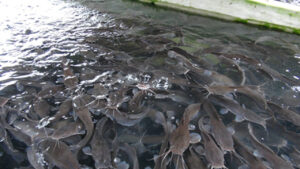
Before the practical steps, it helps to understand clearly why so many Nigerians are drawn to fish pond farming and why those who manage it correctly consistently earn well.
The demand is non-negotiable. Fish is not a luxury food in Nigeria. It is part of the daily diet across virtually every ethnic group, income level, and region. Nigerians eat catfish in pepper soup, in stews, fried, smoked, and grilled.
Restaurants, hotels, food vendors, supermarkets, and individual households all buy regularly. Unlike fashion or technology products whose demand rises and falls with trends, the demand for fish in Nigeria never declines.
Catfish reaches market size in 4 to 6 months. Compared to cattle, which takes 18 to 24 months to mature, or snails, which take 12 to 24 months, catfish gives you your first harvest within a single growing season.
This relatively fast turnaround means quicker return on investment and the ability to run multiple production cycles per year.
Fish farming is scalable from very small beginnings. A beginner can start with a single tarpaulin pond holding 300 to 500 fish and invest as little as N200,000 to N400,000.
As skills and capital grow, additional ponds are added and the operation scales. This gradual progression is one of the most sensible pathways into commercial agriculture in Nigeria.
The government has declared fish farming a priority. The Federal Government of Nigeria recently created the Federal Ministry of Marine and Blue Economy, a dedicated ministry focused on developing marine resources and aquaculture.
This signals institutional support for the sector and opens access to grants, training programmes, and policy incentives for fish farmers.
Point-and-kill restaurants create a stable local market. The popularity of point-and-kill catfish restaurants and bars across Nigeria provides a direct, high-demand buyer category for live catfish that many other agricultural products simply do not have.
Step One: Get Practical Knowledge Before You Invest
This is the step most people skip, and it is the reason so many fish pond businesses in Nigeria fail within the first production cycle. Fish farming looks simple from the outside but has many layers of technical knowledge that directly determine whether your fish survive and grow profitably.
Before you spend a single naira on ponds or fingerlings, take these steps:
Visit working fish farms. Find fish farms in your state or nearby and ask to observe their operations. Most established fish farmers in Nigeria are willing to show newcomers around.
What you see in person teaches you more than any article or video can. You will understand stocking density, feeding routines, water management, and the daily discipline the business requires.
Attend a short training course. Several agricultural institutions, NGOs, and private aquaculture companies offer catfish farming training programmes that run from one day to two weeks.
Organisations like Afrimash, FATE Foundation, and various state agricultural development programmes offer or facilitate training. Practical training from an experienced fish farmer before your first investment is not optional; it is essential.
Study the three-pond system. Commercial catfish farming in Nigeria works on a minimum of three pond cycle: a nursery pond for raising fingerlings through their most vulnerable early weeks, a grow-out pond for raising fish to market size, and a sorting pond for separating fish by size as they approach harvest.
Understanding this system before you build helps you plan your infrastructure correctly from the start.
Understand your local market before stocking your pond. Produce for the market, not for your ambition. Find out what size catfish your local buyers prefer, what price per kilogram they pay, and how frequently they buy.
Build your production plan around that information, not around theoretical profit calculations.
Step Two: Choose the Right Fish Species
Nigeria’s commercial fish pond farming is dominated by two species, and beginners should make a deliberate, informed choice between them.
Catfish (Clarias and Hybrid)
Catfish is the undisputed king of Nigerian aquaculture. It accounts for the vast majority of fish farming activity in the country, and for very good reason.
Catfish is tolerant of low oxygen levels in water, can breathe atmospheric air through a special organ, and is therefore far more resilient to poor water quality than most other species.
This resilience makes it the safest choice for new farmers who are still learning water management.
There are three types of catfish raised in Nigeria. Clarias (the local catfish) is the original species. It is hardy, disease-resistant, and does not require constant water flow into the pond. However, it grows more slowly than the hybrid.
The Hybrid (Heteroclarias, a cross between Clarias gariepinus and Heterobranchus bidorsalis) is the most popular choice for commercial grow-out because it grows faster and achieves market weight sooner. Heterobranchus (Hetero) is large-bodied but requires more careful management.
For most beginners and commercial farmers, the Hybrid catfish is the recommended species. It combines the hardiness of the Clarias with faster growth characteristics, and it is what most buyers in Nigerian markets are accustomed to.
Catfish reaches market size of 1 kilogram in approximately 5 to 6 months under good management, feeding, and water conditions. In cities, fresh catfish currently sells for N3,500 to N4,500 per kilogram, with prices varying between urban and rural markets.
Tilapia
Tilapia is the second most commercially farmed fish in Nigeria. It is a fast-growing, hardy species that is well-suited to Nigeria’s climate and tolerates a wide range of water conditions.
Tilapia has a slightly faster growth rate than catfish with a better Feed Conversion Ratio (FCR) of 1.5 to 1.8, meaning it converts feed into body weight more efficiently.
However, tilapia has one significant management challenge: it reproduces prolifically and uncontrollably in mixed-sex ponds.
Overcrowding from uncontrolled breeding leads to stunted growth across the entire population. Managing this requires either growing mono-sex (all-male) tilapia populations, which requires careful sourcing, or using specific pond management techniques to control reproduction.
For beginners in Nigeria, catfish is the recommended starting point. It has the stronger market demand, greater consumer familiarity, and is more forgiving of the management imperfections that come with learning.
Step Three: Choose Your Pond Type
Your pond type determines your startup cost, the number of fish you can raise, your management complexity, and your long-term scalability. There are four main pond types used in Nigerian fish farming, each with distinct advantages and limitations.
Earthen Pond
An earthen pond is dug directly into the ground and relies on the natural clay content of the soil to hold water. It is the oldest and most natural form of fish pond, and it remains widely used for large-scale commercial operations.
Advantages: Lowest construction cost per unit of water volume. Fish in earthen ponds benefit from natural food organisms (plankton, insects, worms) that grow in the pond environment, which supplements feed and supports growth. Natural temperature regulation from the surrounding soil keeps water conditions stable.
Disadvantages: Requires soil with at least 20 to 25% clay content. Predators like birds, snakes, frogs, and monitor lizards are harder to exclude from open earthen ponds. Harvesting is more complex.
Disease management is more challenging because the pond cannot be drained and refilled as easily as constructed ponds.
Earthen ponds are best suited for: large-scale commercial operations with the land and technical resources to manage them properly. Not recommended for urban or semi-urban backyard fish farmers.
Construction cost: Varies widely by size. A medium earthen pond of 10 by 20 metres costs approximately N150,000 to N400,000 to excavate and prepare, depending on soil conditions and location.
Concrete Pond
A concrete pond is built from cement blocks and plastered to create a watertight enclosure. It is the most common pond type for medium to large-scale commercial catfish farming in Nigeria because of its durability, ease of cleaning, and precise water control.
Advantages: Long-lasting and easy to drain, clean, and disinfect between production cycles. Precise stocking density management. Better protection from predators. Works in any soil type and can be built in urban backyards.
Disadvantages: Higher construction cost than earthen or tarpaulin options. Concrete can crack over time from water pressure and soil movement. Requires proper plumbing of inlet and outlet pipes from the beginning.
A minimum of three concrete ponds is recommended for a proper commercial operation (nursery, grow-out, sorting). A standard commercial concrete pond measuring 3 by 2.5 metres by 1.4 metres deep can hold approximately 500 to 1,000 catfish at grow-out density.
Construction cost: A single concrete pond of this standard size costs approximately N200,000 to N400,000 when you factor in blocks, cement, sand, gravel, labour, and plumbing. A borehole or dedicated water supply adds significant cost.
Tarpaulin Pond (Collapsible/Mobile Pond)
The tarpaulin pond has become the most popular entry point for new fish farmers in Nigeria because of its low cost, portability, and ease of setup. It is a reinforced canvas structure that is assembled on a frame (usually galvanised iron pipe or timber), filled with water, and used as a fish pond.
Advantages: Low cost. No construction required. Portable and can be moved or reconfigured. Works in any location including indoor spaces, rooftops, and small backyards. Easy to drain and clean between cycles.
Disadvantages: Less durable than concrete. The canvas degrades over time, especially under intense sunlight, and may need replacement every two to four years.
Fish in tarpaulin ponds are entirely dependent on the farmer for temperature and water quality management since there is no natural buffering from surrounding soil.
Tarpaulin pond sizes and capacities vary significantly. A standard 17 by 15 foot tarpaulin pond comfortably holds 500 to 1,000 catfish fingerlings or juveniles at grow-out density. A pond designed for 1,000 mature catfish is larger.
Cost: Tarpaulin pond kits in Nigeria range from N70,000 for a 300-fish capacity pond to N250,000 and above for a 1,000-fish capacity pond, depending on quality and size.
Plastic Tank Pond
Large plastic tanks (1,000 litres to 20,000 litres) are used by small-scale and backyard farmers, particularly those who are just starting and want to test the business with minimal investment. They are also commonly used as nursery ponds for raising fingerlings before transferring to larger grow-out ponds.
Advantages: Very affordable entry point. Zero construction required. Easy to manage and monitor.
Disadvantages: Limited capacity. Not viable for commercial-scale production. Fish in plastic tanks reach optimal density quickly and require frequent management intervention.
Cost: A 5,000-litre plastic tank suitable for 200 to 300 catfish costs N80,000 to N150,000.
Beginner recommendation: Start with one or two tarpaulin ponds. They give you the real experience of managing water quality, feeding, and fish health at a manageable scale without the large capital commitment of concrete construction.
Once you successfully complete your first or second production cycle, reinvest profits into concrete pond construction for your long-term commercial operation.
Step Four: Choose and Prepare Your Location
Location is critical in fish pond farming for reasons that go beyond the land cost alone.
Water availability is your most important site requirement. Fish farming requires a reliable, consistent supply of clean, fresh water. A pond with poor water management is a pond full of sick and dying fish.
Your water source options include borehole (the most reliable and recommended for serious operations), river or stream water (viable but requires filtration and monitoring), and municipal tap water (expensive for large operations but usable for small-scale tarpaulin setups).
Borehole water is the gold standard for Nigerian fish farms because it is independent, controllable, and not subject to the contamination risks that surface water carries. Factor borehole drilling into your startup budget if you are planning a serious commercial operation.
Proximity to market matters enormously. Catfish is highly perishable once harvested. The closer your farm is to your primary buyers, the lower your transport costs, the lower your post-harvest losses, and the fresher your product reaches the buyer.
A farm located 2 kilometres from a busy market operates with significant advantages over one located 40 kilometres away.
Avoid waterlogged or flood-prone areas. Flooding destroys pond infrastructure, introduces predators and disease organisms, and can wipe out an entire production cycle in hours. Conduct a proper assessment of the seasonal water behaviour of any site you are considering before building.
Security cannot be ignored. Fish theft is a genuine and costly problem on Nigerian fish farms. A farm in an area with poor security may lose significant stock, particularly at night. Choose a location you can monitor reliably or where trustworthy caretaker staff can be positioned.
Consider electricity or generator access. While catfish can survive without aeration in many conditions due to their ability to breathe atmospheric air, aeration significantly improves growth rates and survivability, especially at high stocking densities. Aerators require electricity or a generator. Factor the cost of power into your location decision and operating budget.
Step Five: Source Quality Fingerlings and Juveniles
Your fingerlings or juveniles are the starting stock of your fish farm. The quality of this initial stock has more impact on your final harvest weight and profitability than almost any other single factor. Farmers who buy poor-quality fingerlings from unreliable sources spend the same amount on feed but harvest significantly less fish at significantly lower weights.
Fingerlings vs. juveniles: what to stock:
A fingerling is a young catfish approximately 3 to 4 weeks old, measuring roughly 10 to 15 centimetres in length. A juvenile is 6 to 8 weeks old and slightly larger.
Most experienced Nigerian fish farmers recommend starting with juveniles rather than fingerlings because juveniles have already passed through the most vulnerable stage of early life and have a significantly lower mortality rate during the adaptation period when they are first introduced into your pond.
Current fingerling and juvenile prices:
Fingerlings currently cost between N80 and N150 each depending on size, breed quality, and the hatchery. Juveniles typically cost N150 to N250 each. When you factor in the higher survival rate of juveniles versus fingerlings, the slightly higher per-unit cost is almost always worth it for the reduced risk.
Where to source quality stock:
Reputable hatcheries in your state are your best source. Afrimash connects farmers with verified fish breeders across Nigeria. Your state’s Agricultural Development Programme (ADP) often maintains a list of certified hatcheries in the area. Established fish farmers in your area can recommend trusted hatchery sources they use personally.
What to look for when buying fingerlings or juveniles: they should be active and responsive, swimming strongly when you tap the container. Their bodies should be uniform in size.
Avoid stock that shows any visible deformities, unusual colouration, or sluggish behaviour. When possible, buy a small test batch from a new supplier before committing to a large order.
The importance of size uniformity:
Always buy stock of similar size for each pond. Catfish are cannibalistic. Larger fish will eat smaller fish in the same pond if there is a significant size disparity. Size sorting as the fish grow is an important ongoing management task for exactly this reason.
Step Six: Water Quality Management
Water quality is the single most important ongoing management responsibility in fish pond farming. Neglecting water management is the number one cause of fish death, disease outbreaks, and stunted growth in Nigerian fish farms.
Key water quality parameters to monitor:
Dissolved Oxygen (DO): Fish need dissolved oxygen in the water to breathe. Catfish are more tolerant of low oxygen than many species, but optimal growth happens at DO levels above 5 mg/L. Signs of low oxygen include fish gulping at the surface of the water, particularly in the early morning. Aeration through paddlewheel aerators or air pumps raises dissolved oxygen levels. Regular partial water changes also help.
Ammonia: This is a toxic compound continuously produced from fish waste, uneaten feed, and decaying organic matter. High ammonia levels are a leading cause of disease and mass mortality in fish ponds.
The solution is regular water changes (removing 20% to 30% of pond water and replacing with clean water every 3 to 5 days), avoiding overfeeding, and removing uneaten feed promptly.
pH: The ideal pH range for catfish is 6.5 to 8.5. Extremely acidic or alkaline water inhibits growth and causes stress. Lime (calcium carbonate) can be applied to raise pH if needed. Regular water testing with a basic pH kit is a worthwhile investment.
Water temperature: Catfish grow best at water temperatures between 25°C and 30°C. Nigeria’s climate generally keeps pond water within this range for most of the year, but the harmattan season can drop temperatures significantly in northern regions, slowing growth.
Water change routine:
For concrete and tarpaulin ponds, a partial water change every 3 to 5 days is the standard management practice. Remove 20% to 30% of the pond volume through the drain outlet and replace with fresh water.
Complete water changes should be done at the beginning of each new production cycle after thorough cleaning and disinfection of the pond.
Washing and cleaning:
Expert fish farmers recommend washing the fish pond weekly and changing water daily for operations at high stocking density. This may seem intensive, but it is what keeps disease outbreaks from destroying production cycles.
Step Seven: Feeding Your Fish Correctly
Feed is your largest recurring cost in fish farming. It typically accounts for 60% to 70% of all production expenses. Getting your feeding strategy right is therefore the most direct lever you have on your profitability.
Commercial fish feeds for catfish in Nigeria:
Imported feeds such as Coppens (Netherlands), Durante (Belgium), and Skretting are considered the highest quality options and produce the best growth rates, but they are also the most expensive.
Quality local alternatives have improved significantly and offer a more cost-effective option for the grow-out phase, particularly after the first two months of the production cycle when the fish are past the most sensitive developmental stage.
A common strategy among experienced Nigerian fish farmers is to use high-quality imported feed for the first 6 to 8 weeks when the fingerlings or juveniles are establishing growth, then transition to quality local feeds for the remainder of the grow-out period. This balances growth optimisation with cost management.
Feeding schedule and quantities:
Catfish should be fed once to twice daily. Many experienced farmers feed once in the morning and once in the late afternoon or early evening. Feed only what the fish will consume within 5 to 10 minutes. Uneaten feed that sinks to the bottom of the pond decomposes and drives up ammonia levels, which damages water quality and fish health.
The Feed Conversion Ratio (FCR) for catfish is typically 1.8 to 2.0. This means it takes 1.8 to 2.0 kilograms of feed to produce 1 kilogram of fish weight gain. Keeping your FCR low through precise feeding quantities, quality feed, and proper water management is how you protect your profit margin.
For 1,000 catfish through a 6-month grow-out cycle to market weight, you will need approximately 80 to 100 bags of feed. At current market prices for quality local feed, budget N400,000 to N600,000 for feed alone for a 1,000-fish cycle.
Never overfeed. Overfeeding is one of the most damaging mistakes beginners make. Excess feed wastes money and destroys water quality at the same time. It is far better to slightly underfeed than to leave decomposing feed on the pond bottom.
Alternative and supplementary feeds:
Maggots (Black Soldier Fly larvae) are gaining popularity as a high-protein, low-cost supplementary feed for catfish. They can be cultured at home or purchased from specialist producers.
Duckweed, earthworms, and other organic protein sources can reduce feed costs when incorporated correctly. These supplements should complement, not replace, commercial feed during critical growth phases.
Step Eight: Disease Prevention and Health Management
Fish disease is far less common in well-managed ponds than in poorly managed ones. The relationship between water quality and fish health is direct: clean, well-oxygenated, properly pH-balanced water produces healthy, fast-growing fish. Neglected water produces stressed, slow-growing, disease-prone fish.
Common diseases in Nigerian catfish farms:
Bacterial infections are the most frequent problem, often presenting as skin lesions, red patches, fin rot, or swollen abdomens. These are almost always secondary to poor water quality or physical injury.
Improving water quality is the first response. Bacterial infections can be treated with appropriate aquaculture-approved antibiotics, but diagnosis by a knowledgeable fish health professional is strongly recommended before any medication is applied.
Parasitic infections from gill flukes, anchor worms, and other external parasites cause fish to scratch against pond walls or jump erratically. Salt treatments and aquaculture antiparasitics are used for control.
Fungal infections appear as white cotton-like growths on the skin or fins, typically following physical injury or in ponds with poor water quality.
Prevention is your primary strategy:
Remove dead fish from the pond immediately. A single decomposing fish left in the pond can trigger a disease outbreak that spreads to the entire stock. Check your ponds at least twice daily and remove any mortalities promptly.
Maintain strict biosecurity. Do not allow outside water, equipment, or animals to enter your pond environment without proper sanitisation. Workers who have been on other fish farms should wash and disinfect footwear before entering your farm.
Quarantine new stock before introducing it to existing ponds. Hold newly purchased fingerlings or juveniles in a separate small quarantine pond for 3 to 5 days before transferring to your main production ponds.
Sort fish regularly by size. As fish grow at different rates, the size disparity between individuals in the same pond increases over time. Cannibalism by larger fish destroys smaller ones. Regular size sorting reduces mortality losses from this cause significantly.
Step Nine: Harvesting
Harvesting is the moment when months of management effort translate into income. How you handle harvest determines your revenue and your product quality at the point of sale.
When to harvest:
Catfish reaches the standard Nigerian market size of 1 kilogram in approximately 5 to 6 months under good management. Some markets prefer smaller fish of 0.7 to 0.8 kilograms, while point-and-kill restaurants and premium buyers prefer fish of 1.2 kilograms and above. Know your market’s size preference before you stock and manage your feeding programme accordingly.
Do not wait too long after fish reach market size. Fish that remain in the pond beyond optimal market weight continue consuming expensive feed but gain weight at a declining rate.
The feed cost per additional kilogram of weight gain increases significantly as fish mature, eroding your profit margin.
Harvest methods:
For concrete and tarpaulin ponds, partial draining followed by netting is the most common approach. Reduce the water level to 20 to 30 centimetres using the drain outlet, then use a seine net to collect the fish efficiently.
Catch your fish early in the morning when temperatures are cooler, as this reduces stress-related mortality during the harvest process.
For earthen ponds, full drainage and harvesting using sweep nets and hand collection is the standard method.
Handling harvested fish:
Transfer harvested fish quickly to aerated holding tanks or containers with fresh, oxygenated water if selling live. Live fish commands significantly higher prices in Nigerian markets than iced or processed fish.
Point-and-kill restaurants and serious buyers specifically want live fish. The ability to sell live catfish rather than being forced to sell iced or smoked fish gives you both price leverage and market access.
If you cannot sell immediately, ice storage maintains quality for up to 48 hours for fresh fish. Smoking catfish extends shelf life significantly and adds value, particularly for supply to supermarkets, event caterers, and exporters.
How Much Does It Cost to Start a Fish Pond Business in Nigeria?
Here are realistic, current cost breakdowns at different entry levels.
Small-scale beginner farm (1 tarpaulin pond, 300 to 500 fish):
- Tarpaulin pond setup (frame and canvas): N80,000 to N150,000
- Fingerlings or juveniles (500 juveniles at N200 each): N100,000
- Feed for 5-month cycle (approximately 40 bags): N200,000 to N280,000
- Water supply (borehole contribution or municipal): N20,000 to N50,000
- Basic tools (nets, aerator, buckets, water test kit): N30,000 to N50,000
- Medications, lime, and contingency: N20,000 to N30,000
Total small-scale startup: N450,000 to N660,000
Medium-scale farm (3 concrete ponds, 1,000 to 1,500 fish):
- Construction of 3 concrete ponds: N600,000 to N1,200,000
- Borehole drilling and water infrastructure: N400,000 to N700,000
- Fingerlings or juveniles (1,500 juveniles): N225,000 to N375,000
- Feed for 5 to 6 month cycle (100 bags): N400,000 to N600,000
- Aerators, pumps, and electrical connection: N100,000 to N200,000
- Tools, medications, and contingencies: N80,000 to N120,000
Total medium-scale startup: N1,805,000 to N3,195,000
Commercial-scale farm (5 to 10 earthen or concrete ponds, 5,000 to 10,000 fish):
Starting a basic catfish farm with 5 earthen ponds and 10,000 juveniles costs between N5.5 million and N6 million including setup, feed, and labour.
A well-managed 10,000-capacity catfish farm can yield profits of N2 million to N4.8 million annually, depending on survival rate, feed cost, and market price per kilogram.
How Much Can You Earn From Fish Pond Farming?
Let us work through a realistic profit projection for a medium-scale operation.
Scenario: 500 hybrid catfish, one tarpaulin pond, 5-month grow-out cycle
Starting stock: 500 juveniles Assuming 95% survival rate: 475 fish survive to harvest Average market weight per fish: 1 kilogram Total harvest weight: 475 kilograms Current market price: N3,500 to N4,500 per kilogram in cities
At N3,500 per kilogram: 475 x N3,500 = N1,662,500 gross revenue
Production costs for this cycle:
- Juveniles: N100,000
- Feed: N200,000 to N280,000
- Pond setup (amortised over multiple cycles): N30,000 to N50,000
- Water, electricity, medications: N30,000 to N50,000
Total production cost: N360,000 to N480,000 Estimated net profit: N1,182,500 to N1,302,500 per cycle
Running two cycles per year (with a 2 to 3 week turnaround between harvest and restocking), this single-pond operation can generate N2.3 million to N2.6 million in annual profit.
These figures assume good management, quality fingerlings, quality feed, and reliable market access. Poor water management, disease outbreaks, or delayed sales compress these margins significantly. But the numbers demonstrate clearly why fish pond farming in Nigeria, done properly, is one of the most financially compelling agricultural businesses available.
Where to Sell Your Fish
Building reliable market relationships before your harvest is one of the most important things you can do for the long-term health of your fish farming business.
Point-and-kill catfish restaurants and bars. These are the most direct and consistent buyers of live catfish in Nigeria. They need fresh, live fish daily or weekly and pay premium prices for them.
Approach the owners or chefs of these establishments weeks before your harvest, offer sample fish, and negotiate supply terms. A restaurant that commits to buying 50 kilograms of live fish weekly is an anchor client worth protecting.
Local fish markets. Fish market traders are the highest-volume buyers in Nigeria. The prices they pay are typically lower than restaurant or direct consumer prices, but the volume they absorb in a single transaction can clear a significant portion of a harvest quickly.
Build relationships with two or three reliable market traders rather than relying on selling to whoever is available on harvest day.
Supermarkets and grocery stores. Modern supermarkets like Shoprite, Spar, and well-stocked independent grocery chains buy processed (smoked or iced) catfish in consistent quantities.
Getting a supply agreement with a supermarket requires meeting their hygiene and quantity standards, but the price premium and volume commitment makes it worthwhile for medium to large farms.
Hotels, restaurants, and corporate catering companies. Establishments that cater events and operate large-scale food services are excellent recurring buyers. Hotels with active restaurants, event centres, and wedding catering companies all buy fish regularly and in meaningful quantities.
Direct consumer sales through social media. Instagram, WhatsApp Business, and Facebook have enabled fish farmers to sell directly to households and small food businesses at retail prices.
Live catfish delivered to a customer’s home commands close to market retail price. Building a social media following for your fish farm takes time but eliminates the middleman and significantly improves your margin per kilogram.
Fish processors and smoked fish traders. If you cannot sell your entire harvest as live fish within the optimal window, smoked catfish traders are a reliable secondary market. Smoked fish has a longer shelf life and reaches markets that fresh fish cannot.
Challenges of Fish Pond Farming in Nigeria
Honest disclosure of the challenges that affect fish farmers in Nigeria is as important as understanding the profit potential.
Feed cost and price volatility. Feed is your largest operating cost, and feed prices in Nigeria are subject to significant volatility driven by exchange rate movements (most quality feed ingredients are imported), fuel costs, and agricultural commodity prices. Instability in feed costs directly compresses margins.
Experienced farmers manage this by buying feed in bulk when prices are lower, exploring supplementary local feed options, and maintaining tight FCR discipline to minimise feed wastage.
Water management failure. Poor water quality is the leading cause of fish death and disease in Nigerian fish farms. Many beginners underinvest in water infrastructure (boreholes, aerators, drainage systems) and pay for it through mass mortality and stunted growth. Budget adequately for water supply and management from the start.
Power supply. Aerators and water pumps depend on electricity. Nigeria’s unstable power supply means generators are often necessary, adding significant fuel costs. Many fish farmers use solar panels to power aerators, reducing dependence on grid electricity or generator fuel.
Cannibalism and size disparity. Without regular sorting of fish by size, larger individuals consume smaller ones, leading to progressive population loss and revenue reduction. Sort fish every three to four weeks and use separate ponds for different size groups.
Disease outbreaks. A disease outbreak in a poorly managed pond can kill hundreds of fish within days. Prevention through water quality management and biosecurity is far more effective and less costly than treatment after disease has already spread.
Market access and price negotiation. First-time harvesters often find themselves at a disadvantage when negotiating with experienced market buyers who know that a fish farmer with a full pond of harvest-ready fish cannot wait.
Building buyer relationships early, having multiple buyer options, and being able to store live fish in aerated holding tanks for a few extra days gives you significantly more pricing leverage.
Key Takeaways
The gap between Nigeria’s domestic fish production and national consumption demand is one of the largest and most persistent supply deficits in the country’s agricultural sector.
Fish pond farmers who produce consistently, manage their operations professionally, and build reliable buyer relationships are filling a gap that will not close for many years to come.
Start with catfish. The demand is established, the market is everywhere, the growth rate is fast, and the resilience of catfish to management imperfections makes it the right species for learning the business before diversifying.
Start with a tarpaulin pond if you are a beginner. Complete one or two successful production cycles before committing to concrete construction. The knowledge you gain from your first cycle is worth more than any consultant or guide.
Feed is your biggest cost and your biggest management responsibility. Track feed consumption, enforce a strict no-overfeeding discipline, and transition to quality local feeds for the grow-out phase to manage your cost per kilogram of fish produced.
Water quality is your most important daily management task. Neglect it and everything else you do correctly becomes irrelevant.
Build your buyer base before you harvest. A fish farmer with ready buyers harvests at the optimal time, at market price. A fish farmer without buyers harvests at a discount under pressure.
Keep detailed records of every production cycle. Your feed costs, mortality rates, final harvest weights, selling prices, and expenses from one cycle become the data that helps you improve profitability in the next one. Fish farming rewards the farmer who treats it as a data-driven business, not just a physical activity.
Disclaimer
All cost estimates, income projections, fish price data, and production figures in this article are based on publicly available market research, reported industry data, and information from active Nigerian fish farmers at the time of writing.
Actual costs and revenues vary significantly based on location, scale, management quality, feed prices, market access, and other factors specific to each farming operation. Fish farming, like all agricultural businesses, carries risk including stock loss, feed price increases, disease outbreaks, and market price fluctuations.
Income figures cited reflect specific scenarios and conditions and are not guarantees of earnings. This article is for general informational purposes only and does not constitute agricultural, financial, or business advice.
Consult experienced fish farmers, agricultural extension services, and relevant professionals before making investment decisions. The author and publisher accept no liability for outcomes resulting from decisions made based on information contained in this article.
What You Need to Check Before Starting
Before spending money, compare the requirements, starting costs, ongoing expenses, risks, and realistic earning or investment potential. Figures can vary by location, provider, market conditions, and the size of the operation, so treat examples as planning estimates rather than guaranteed results.
A Practical Way to Get Started
Start with a small, measurable plan. List what you need, estimate the total cost, identify your first customers or users, and decide how you will track income and expenses. Review the results before committing additional money.
Risks and Mistakes to Avoid
Do not assume that a business, investment, platform, or strategy will produce guaranteed returns. Check important claims against official or authoritative sources, keep financial records, and avoid paying anyone who promises effortless or guaranteed profits.
Related MoneyX Guides
Continue with these related guides for practical information that can help you make a better-informed decision:
- How to Start Affiliate Marketing in Nigeria: A Practical Beginner's Guide
- 25 Profitable Business Ideas in Nigeria: Startup Costs, Demand and How to Choose
- 20 Businesses to Start With ₦500,000 in Nigeria: Costs, Profit Potential and Risks
- 18 Businesses to Start With ₦200,000 in Nigeria: Practical Startup Guide
