If you are thinking about how to start a POS business in Nigeria, you have picked one of the smartest, most reliable ways to earn daily income in this country right now. Walk through any busy street, market, bus stop, estate gate, or motor park and you will find POS agents doing steady business from morning to evening. The demand never stops.
People need to withdraw cash, transfer funds, pay utility bills, and buy airtime every single day, and they would rather pay a small fee to an agent around the corner than fight traffic to get to an ATM or queue inside a crowded bank.
According to Nigeria Inter-Bank Settlement System (NIBSS), over 8.3 million POS terminals were registered across the country as of early 2025, and that number continues to rise. Yet despite the competition, the right location and the right approach still guarantee daily income for POS agents across Nigeria.
This guide will walk you through everything you need to know about how to start a POS business in Nigeria from scratch.
We will cover what the business actually involves, the requirements you must meet, how much capital you need, the best providers to partner with, how to choose the right location, how the fees and commissions work, and exactly how to protect yourself from the risks that end many POS businesses before they hit their potential.
What Exactly Is a POS Business in Nigeria?
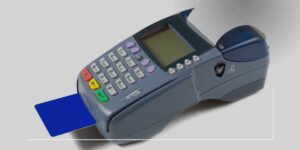
Before we get into how to start, let us make sure we are completely clear on what the POS business is, because many people have a surface understanding of it but miss the depth of what a well-run POS operation actually does.
A POS (Point of Sale) agent in Nigeria serves as an extension of the formal banking system. The Central Bank of Nigeria’s agent banking framework empowers licensed agents to offer financial services on behalf of banks and fintech companies to customers in their communities.
As a POS agent, you are not just a cash dispenser. You are a financial service point offering withdrawals, deposits, fund transfers, airtime purchases, data subscriptions, electricity bill payments, cable TV subscriptions, and in some cases account opening assistance and BVN registration.
The reason the POS business works so well in Nigeria is that formal banking infrastructure has not kept pace with the country’s population and the spread of people across urban and rural areas.
There are millions of Nigerians with bank accounts and debit cards who live or work in areas where the nearest bank branch or functional ATM is far away, unreliable, or constantly congested. POS agents solve that problem every single day, and they earn a fee for every transaction they process.
This is what makes the POS business one of the most genuinely resilient businesses in Nigeria. It does not depend on import costs, fashion trends, crop seasons, or consumer taste. It depends on the simple, daily need to access money, and that need will exist as long as a cash economy exists.
Requirements to Start a POS Business in Nigeria
Understanding the requirements is the first practical step in how to start a POS business in Nigeria. The regulatory framework is set by the Central Bank of Nigeria under its Agent Banking guidelines, and individual fintech companies and banks add their own onboarding requirements on top of the CBN baseline.
Here is what you will need:
Valid means of identification. You will need at least one government-issued ID. Accepted forms include your National Identity Card (NIN slip), International Passport, Permanent Voter’s Card (PVC), or Driver’s Licence. Your BVN (Bank Verification Number) is also required by most providers during the registration and onboarding process.
Two recent passport photographs. These are required for your agent profile documentation during registration.
Proof of address. Most providers ask for a utility bill (electricity, water) in your name or your landlord’s name showing your address, or a letter confirming your business location. Some providers may ask for a photograph of your shop or kiosk with its signage visible.
Bank account in your name. You must have an active personal or business bank account. This is the account your commissions and settlements will be paid into.
CAC business registration (Business Name). The Corporate Affairs Commission business name registration is required by most major providers and is strongly recommended even where it is not strictly enforced.
Registration costs between N10,000 and N25,000 depending on whether you handle it yourself or use a registration agent. You will also need to obtain a Tax Identification Number (TIN) from the Federal Inland Revenue Service (FIRS), which is linked to your CAC registration.
A physical business location. You need a fixed address where your POS will operate. This could be a market stall, a kiosk, a shop, or a dedicated corner in an existing business. Mobile POS agents exist, but a fixed location builds significantly more customer trust and repeat patronage.
Working capital (float). This is the cash or digital balance you maintain to fund customer withdrawals and other cash-out transactions. Float is not a cost. It stays with you and cycles as customers transact. However, the size of your float directly determines how many withdrawal transactions you can handle before needing to replenish.
How Much Capital Do You Need to Start a POS Business?
One of the most common questions about how to start a POS business in Nigeria is how much money you actually need. The answer depends on your chosen provider, your location type, and the scale at which you plan to operate.
Here is a realistic breakdown:
POS terminal cost: Entry-level machines now start at approximately N15,000 to N22,500, depending on the provider and terminal type. Opay’s Mini POS starts at around N8,500, while Moniepoint’s Mpos terminal is priced at approximately N15,500 and their Android POS at N22,500.
Some providers offer lease arrangements rather than outright purchase. Some banks offer free terminals, but these often come with strict weekly or monthly transaction targets.
CAC registration: N10,000 to N25,000 depending on how you handle the process.
Kiosk, stall, or space setup: If you are operating from a fixed location, your rent deposit and basic setup (table, chair, canopy or small kiosk structure, signage) will cost between N20,000 and N80,000 depending on your city and location type.
Signage and branding: Simple but visible signage that clearly identifies your service point is important. Budget N5,000 to N15,000 for a basic branded banner or painted signage.
Starting float: This is your most important capital component. The CBN and most providers recommend a minimum float of N50,000, but a realistic working float for a moderately busy location is N100,000 to N200,000. In a very busy market or estate location, you may need N300,000 or more to avoid running out of cash during peak periods.
Total realistic startup cost: An entry-level POS business with a modest kiosk setup and a reasonable float can be started for N100,000 to N250,000. A more established setup in a premium location with strong float capacity can require N300,000 to N500,000.
The float itself is important to understand correctly. It is not money you lose. Every naira of your float returns to you plus the fees you charge. The risk with float is liquidity management, specifically running out of cash at peak times, not losing the money itself.
Choosing the Right POS Provider
Your choice of POS provider is one of the most consequential decisions you will make in this business. It affects your terminal cost, your transaction fees, your commission rate, your customer service access, and the reliability of your network in your specific location. Here are the major providers operating in Nigeria right now and what you need to know about each.
Moniepoint
Moniepoint is one of the most widely used and consistently rated POS providers in Nigeria. Their terminal options include the Mpos at approximately N15,500 and the Android POS at N22,500.
Transaction charges work as follows: withdrawals are charged at 0.5% for amounts between N1 and N20,000, and a flat N100 for withdrawals above N20,000. Transfers attract a flat N20 per transaction, which is among the lowest in the market.
Moniepoint’s commission structure shares a portion of transaction fees with agents. Their platform is known for relatively stable network uptime and has a strong support network. New agents on the leased terminal model are required to meet a weekly transaction target of N140,000 to keep their terminal active.
Moniepoint is a strong choice for agents in busy commercial areas due to its low transfer fee structure and reliable customer dispute resolution.
Opay
Opay is another dominant player with a large agent network across Nigeria. Their Mini POS starts at approximately N8,500, making it the most affordable entry point in the market.
Their Traditional POS costs around N35,000 and the Android version around N50,000. For withdrawals, Opay charges 0.5% on amounts below N20,000 and a flat N100 above that, similar to Moniepoint. Transfer fees are N50 for amounts of N10,000 and above.
Opay operates a volume-based reward system where agents who process higher transaction volumes attract lower per-transaction charges over time.
Opay’s large registered user base of over 35 million app users means that many of your customers may already have Opay accounts, making transfers smoother.
PalmPay
PalmPay has grown rapidly into one of Nigeria’s largest fintech platforms with over 25 million users. Their POS offering is competitive and their agent onboarding process is relatively straightforward.
PalmPay’s transaction fees are similar in structure to Moniepoint and Opay. Agents using PalmPay often cite competitive commission payouts and a growing user base as key advantages.
Baxi (Capricorn Digital)
Baxi is a CBN-licensed fintech that has built a strong agent banking network, particularly in smaller cities and semi-urban areas where Moniepoint and Opay competition is less intense.
Baxi charges 0.55% on withdrawals between N1,000 and N20,000 and a flat N100 above N20,000. Transfers attract a flat N30 fee. Baxi is a solid choice for agents setting up in towns and communities outside major urban centres.
Bank POS Terminals
Traditional commercial banks including First Bank, Access Bank, GTBank, UBA, and others also operate agent banking programmes and offer POS terminals to agents.
Bank terminals sometimes come at lower or zero acquisition cost, but they typically come with stricter transaction targets, less flexible customer support, and often slower settlement compared to fintech providers.
Bank POS is a viable option if you already have a strong banking relationship or if your target location has customers who prefer traditional bank-branded services.
Key rule when choosing your provider: Before signing up, speak with at least three to five existing agents using the provider you are considering in your specific area. Network reliability varies significantly by location and by provider.
The best POS provider in Surulere Lagos may not be the best in Nnewi or Kaduna. Local intel from active agents is irreplaceable.
Step-by-Step: How to Register as a POS Agent
Now that you understand the requirements and providers, here is the step-by-step process for registering and getting your business operational.
Step 1: Register your business with CAC. Visit the Corporate Affairs Commission portal at cac.gov.ng and register a business name. Choose a name that is simple, memorable, and reflects your financial services focus.
Complete the online registration process, pay the applicable fee, and obtain your Certificate of Registration and Tax Identification Number. This process typically takes three to seven working days when done online.
Step 2: Choose your provider and visit their registration portal or office. For Moniepoint, visit moniepoint.com and complete the agent application form online. For Opay, download the Opay app and apply via the merchant application section, or email their agent support.
For PalmPay and Baxi, visit their official websites for agent registration portals. Prepare all your documents digitally (ID, passport photo, address proof, CAC certificate, bank account details).
Step 3: Submit your application and complete verification. Most providers conduct identity verification, location verification (sometimes a visit by a field agent), and review your application. Approval timelines range from same-day to three to five working days depending on the provider and the completeness of your documentation.
Step 4: Acquire your terminal. Once approved, you either pay for your terminal outright, activate a lease arrangement, or receive it through your provider’s acquisition process. Ensure you test the terminal thoroughly before relying on it for customer transactions.
Step 5: Fund your float account. Transfer your working capital into your agent wallet or designated float account with your provider. This is the balance from which customer withdrawals will be funded.
Step 6: Set up your physical location. Install your kiosk, signage, and workspace before launching. Make sure your location is visible, your signage is clear, and your space is clean and inviting. Customers assess the professionalism of your setup before they decide whether to trust you with their money.
Step 7: Launch and market locally. Tell your neighbours. Distribute simple flyers in your area. Use word of mouth aggressively. In a POS business, your first ten customers will tell twenty more people if your service is reliable and your charges are fair.
How Fees and Commissions Work
Understanding your income model is essential to running a profitable POS business. Your money comes from two sources: the service charges you collect from customers, and the commissions your provider pays you for processing transactions through their platform.
Customer service charges are the fees you collect directly from customers for each transaction. The market-standard charges vary by city and by competition density, but typical rates are:
Withdrawals of N1,000 to N5,000: N100 charge to customer Withdrawals of N5,001 to N10,000: N150 to N200 charge Withdrawals of N10,001 to N20,000: N200 to N300 charge Withdrawals above N20,000: N300 to N500 or more depending on your market Transfers: N50 to N100 per transfer Airtime purchases: N50 to N100 per transaction Bill payments: N100 to N200 per payment
These are not fixed rates. They are negotiable with the market in your area. Before setting your prices, spend time understanding what other agents near you charge. Charge too high and customers walk to your competitor. Charge too low and you work hard for little reward.
Provider commissions are what the fintech or bank pays you for volume. Both Moniepoint and Opay charge agents 0.5% of withdrawal amounts below N20,000 and N100 flat above that.
However, they also pay agents a share of the revenue from transactions. The net effect is that your true income from each transaction is the customer-facing charge minus any provider deductions, plus any commission credit.
From a real-world earnings perspective, a POS agent with daily transaction volumes of 20 to 70 transactions can expect daily income in the range of N3,000 to N12,000.
A high-traffic location with 100 or more transactions per day can generate N10,000 to N20,000 daily. Across a 25-day working month, that translates to N75,000 to N500,000, depending entirely on location and volume.
Important regulatory update: From January 2026, all transfers of N10,000 and above across platforms including Moniepoint, Opay, and PalmPay now attract a N50 stamp duty charged to the sender, in line with Nigeria’s Tax Act.
This is deducted from the sender’s account and is separate from your agent commission structure, but it is worth understanding and being able to explain to customers who may be confused by the deduction.
How to Choose the Right Location for Your POS Business
If there is a single factor that determines whether your POS business thrives or struggles, it is location. The right location can make a modest operation earn N15,000 daily. The wrong location will have you sitting idle regardless of how efficient your service is.
Here are the location types that consistently produce the strongest POS income in Nigeria:
Open markets. Market women, traders, and buyers handle significant cash daily. Many do not have time or inclination to visit a bank. A POS agent at a market entrance or within a busy market section will process transactions all day long.
Bus stops and motor parks. Commuters frequently need cash for transport, food, and small purchases. Bus stops with high daily foot traffic generate strong transaction volumes, especially during morning and evening rush hours.
Residential estates and gated communities. Middle-class estates in Nigerian cities are excellent POS locations because residents have disposable income, regular banking needs, and the convenience of a nearby agent is very attractive to them. Estate POS agents build strong loyal customer bases through consistent, trustworthy service.
Near hospitals and clinics. Medical emergencies and hospital payments frequently require cash that patients and families do not have on hand. A POS agent near a hospital or primary health centre serves a genuine, urgent need.
Near schools and universities. Students and parents regularly need cash for fees, food, and supplies. Areas around secondary schools and universities generate consistent transaction volumes, especially at the beginning of term.
Areas with limited bank branch access. This is the original purpose of agent banking. Communities with no nearby functional ATM or bank branch will rely entirely on POS agents for their cash needs. These locations often have less competition and higher transaction volumes per agent.
Near filling stations and churches. People who stop for fuel often need cash at the same time. Similarly, church locations generate strong transaction volumes on Sundays and during religious events.
What to avoid: locations already saturated with POS agents. If you count three or more POS operators within 200 metres of a potential spot, the competition will dilute your volume significantly unless you have a compelling service advantage.
Before committing to any location, spend at least two or three days observing foot traffic at different times of day. Count how many people pass through. Notice whether there are already POS agents nearby.
Ask people in the area whether they have a regular POS agent they use and what they think of the service. That on-the-ground intelligence is worth more than any market research report.
Float Management: The Skill That Separates Profitable Agents from Struggling Ones
Float management is the operational heart of a successful POS business, and it is the area most new agents underestimate until it costs them customers and income.
Your float is the cash you have available to pay out customer withdrawals. When your float runs out, you cannot process withdrawal requests. Every customer you turn away because you are out of cash is a customer who may not come back.
Here are the principles of good float management:
Start with a float that matches your location’s demand. A modest residential area might operate fine with N80,000 to N100,000. A busy market location may need N300,000 or more. Your first two weeks of operation will teach you the right float level for your specific spot.
Rebalance daily. At the end of each day, review your cash position versus your digital wallet balance. If cash is high and digital low, make deposits. If cash is low and digital high, withdraw from your wallet. Keeping both in healthy balance ensures you can serve all transaction types.
Identify your peak hours and pre-position cash accordingly. Most POS agents have two peak periods: morning (7am to 10am, when people head to work or market) and Friday afternoons (when people draw funds for the weekend). Make sure your float is at its highest before these periods.
Never let customers know your float is low. Simply inform them politely that you cannot currently process withdrawals and direct them to another service if needed. Transparency about operational limits without broadcasting weakness maintains trust.
Build relationships with nearby banks or banking agents who can provide quick float top-up in emergencies. Some agents maintain a small emergency credit arrangement with a trusted counterpart for exactly this situation.
Services You Can Offer to Maximise Income
Most new POS agents start with cash withdrawals and transfers, which is sensible. But the full range of services available through major POS platforms significantly increases your income potential per customer and per transaction.
Cash withdrawals are your bread and butter and will always be your highest volume service.
Fund transfers from one bank account to another are increasingly common as Nigerians conduct more of their financial activity digitally. Transfer fees are modest per transaction but volume adds up quickly.
Airtime and data purchases for all Nigerian networks are available through most POS platforms. Many customers who come to withdraw cash will also buy airtime at the same visit.
Electricity bill payments (EKEDC, IKEDC, AEDC, JED, and other DisCos) are in high demand, especially at the end of each month. A customer who pays their NEPA bill through you and gets smooth service will return every month.
Cable TV subscriptions (DSTV, GOtv, Startimes) are renewed monthly by millions of Nigerians. Offering this service makes you a one-stop convenience for financial needs.
BVN and NIN-related services are offered by some agent banking platforms in partnership with specific banks. This service attracts customers who need banking documentation assistance and often generates word-of-mouth referrals.
Account opening assistance is available through some platforms where agents can help customers open basic bank accounts on the spot using simplified KYC. This brings in new customers who then return for regular transactions.
The more services you confidently offer, the more reasons customers have to choose your agent point over a competitor who only offers withdrawals.
Risks in the POS Business and How to Handle Them
Knowing how to start a POS business in Nigeria is incomplete without understanding the risks that affect operators daily. These risks are manageable, but only if you know about them and prepare for them from day one.
Network failures and failed transactions. This is the most frequent operational challenge. A transaction appears to debit the customer but the cash was not dispensed, or the transfer fails after the customer’s account has been debited. Always check your terminal confirmation screen and printed receipt before handing over cash.
For transfers, confirm the provider’s transaction history shows success before telling the customer the transaction is complete.
For disputed transactions, your provider has a reversal and dispute resolution process. Document every failed transaction with the terminal reference number and contact your provider’s agent support immediately.
Fraudulent customers. Fraud is a genuine risk in the POS business. Common fraud attempts include presenting fake transaction alerts, claiming they transferred money to your wallet when they have not, using stolen debit cards, and social engineering tactics to confuse you during busy periods.
Never release cash based on a screenshot or verbal claim of a transfer. Always confirm through your own terminal or wallet that funds have been received before dispensing cash.
Robbery and cash theft. Handling significant amounts of cash daily makes POS agents targets for theft. Do not display large amounts of cash openly. Use a secured cash drawer or locked box. Be aware of your surroundings at all times.
Avoid counting large cash in full view of everyone around you. If your location is in a higher-crime area, consider early closing times or operating with another person present.
Provider network downtime. Some providers experience periods of extended network instability that prevent transactions from processing. Agents who work exclusively with one provider are completely exposed during these periods.
Running two terminals from different providers is a common and effective strategy among experienced POS operators. When one provider’s network is down, you switch to the other and continue serving customers without interruption.
Float exhaustion during peak periods. As covered in the float management section, running out of cash at peak times costs you income and customer loyalty. Build your float systematically as your income grows and always have a rebalancing plan for busy days.
Regulatory compliance. The CBN and NFIU require POS agents to maintain KYC records, report suspicious transactions, and adhere to daily and per-transaction limits. Failure to comply can result in terminal deactivation or legal consequences.
Familiarise yourself with the CBN Agent Banking Guidelines and your provider’s compliance requirements from the very beginning.
How to Grow Your POS Business Beyond One Terminal
Many of Nigeria’s most successful POS operators did not stay at one terminal. They used the income from their first point to fund a second, then a third, eventually running multiple POS locations simultaneously with hired attendants managing each point while they oversee the operation.
Here is the path that most growing POS businesses follow:
Month one to three: Focus entirely on your first location. Perfect your float management. Build your customer base. Learn the peak hours, the common transaction types, and the challenges specific to your spot. Reinvest all your profit back into building a stronger float.
Month four to six: Once your first location is stable and generating consistent income, begin identifying your second location. The second point should be in a different area to the first, not next door. Apply the same location selection rigour you applied to your first point.
Hiring attendants: When you open a second location, you need a trusted person to manage it. This is the stage that trips many POS business owners. Hire carefully.
Start with someone you know and trust. Implement clear daily reconciliation procedures where your attendant accounts for every naira at the end of each working day. Reconcile your terminal transaction history against your cash count daily.
Adding complementary services: As your business grows, adding a small provision store, recharge card sales, or photocopying services alongside your POS creates multiple income streams from the same location and increases daily foot traffic.
Scaling to an aggregator model: Some experienced POS operators eventually become aggregators themselves, signing up and supervising a network of sub-agents under their registration and earning a commission from their sub-agents’ transaction volumes.
Key Takeaways
The POS business in Nigeria works because it solves a daily, unavoidable problem for millions of people. Financial access is not optional. Cash is not going away.
And the gap between formal banking infrastructure and where people actually live and work will take many more years to close. POS agents sit right in that gap and earn every single day.
Location is the single most important decision you will make. A good location with modest service will outperform excellent service in a poor location every time. Spend as much time choosing your spot as you spend on any other aspect of setup.
Your float is your most important operational asset. Manage it daily, grow it steadily, and never let it run to zero during business hours.
Choose your provider based on network reliability in your specific area, not based on which brand is most popular nationally. What works in Lagos Island may not work in Enugu or Ilorin.
Learn every service your provider offers and make them available to customers. The more problems you solve for each customer, the more loyal and frequent their visits become.
Start with one location. Do it well. Then expand. The POS business rewards patience and consistency more than it rewards speed.
Register your business properly with CAC. Comply with the CBN’s agent banking guidelines. Protect yourself from fraud with discipline and clear transaction verification habits. And treat every customer, whether they are withdrawing N500 or N50,000, with the same respect and efficiency.
Done right, the POS business is one of the most dependable daily income businesses available to any Nigerian entrepreneur today. The market has room. The demand is real. The steps are clear. What you do with that information is entirely up to you.
Disclaimer
The information provided in this article, including provider pricing, transaction fees, regulatory requirements, and income projections, reflects current market conditions and publicly available data at the time of writing.
POS terminal prices, provider commission structures, and CBN regulatory guidelines are subject to change without notice. Always verify current requirements directly with your chosen POS provider and the Corporate Affairs Commission before making any financial commitments.
Income figures mentioned are estimates based on reported agent experiences and do not constitute a guarantee of earnings. Individual results will vary based on location, management quality, float size, and other factors.
This article is for informational purposes only and does not constitute financial, legal, or regulatory advice. The author and publisher accept no liability for outcomes resulting from decisions made based on this content.
What You Need to Check Before Starting
Before spending money, compare the requirements, starting costs, ongoing expenses, risks, and realistic earning or investment potential. Figures can vary by location, provider, market conditions, and the size of the operation, so treat examples as planning estimates rather than guaranteed results.
A Practical Way to Get Started
Start with a small, measurable plan. List what you need, estimate the total cost, identify your first customers or users, and decide how you will track income and expenses. Review the results before committing additional money.
Risks and Mistakes to Avoid
Do not assume that a business, investment, platform, or strategy will produce guaranteed returns. Check important claims against official or authoritative sources, keep financial records, and avoid paying anyone who promises effortless or guaranteed profits.
Related MoneyX Guides
Continue with these related guides for practical information that can help you make a better-informed decision:
- How to Start Affiliate Marketing in Nigeria: A Practical Beginner's Guide
- 25 Profitable Business Ideas in Nigeria: Startup Costs, Demand and How to Choose
- 20 Businesses to Start With ₦500,000 in Nigeria: Costs, Profit Potential and Risks
- 18 Businesses to Start With ₦200,000 in Nigeria: Practical Startup Guide
What Matters Before You Act
Evaluate startup cost, customer demand, operating expenses, competition, location, and expected cash flow before starting. A business can generate sales and still lose money if costs are poorly controlled. Test demand on a small scale where possible and keep separate records for business income and expenses.
