Picture this situation. It’s two weeks before your next allowance arrives, your data has finished, you have an assignment due that requires printing, and your account balance is sitting at a number that makes you uncomfortable to look at.
You’ve already borrowed from your closest friends this month and asking again feels genuinely awkward. You need a small amount of money urgently and you need it now.
This is the situation that drives many Nigerian students toward loan apps. And it’s a completely understandable position to be in. The question is not whether the need for emergency funds is real because it clearly is.
The question is which loan apps are genuinely safe and legitimate for Nigerian students, what the real costs of borrowing through them are, and how to use them responsibly without creating a financial problem that’s worse than the one you started with.
This guide covers loan apps in Nigeria that are relevant for students. The legitimate options, how they work, what they actually cost, the serious risks you need to understand before borrowing, and the alternatives to borrowing that are worth exhausting first.
Everything here is honest, including the parts that make loan apps less attractive than their marketing suggests.
What Loan Apps Actually Are and How They Work in Nigeria

Loan apps are mobile applications that provide quick personal loans directly through your smartphone without requiring you to visit a bank branch, fill out extensive paperwork, or wait several days for approval.
The entire process from application to receiving money in your account typically takes between five minutes and twenty-four hours depending on the app and whether you’re a first-time or returning borrower.
Nigerian loan apps work by accessing your phone data to assess your creditworthiness. When you download a loan app and apply for a loan, you typically grant the app permission to access your contact list, SMS history, call logs, and sometimes your phone’s location.
The app uses this data alongside your BVN, your bank transaction history, and your stated income to generate a credit score that determines whether you qualify for a loan and at what interest rate.
The loans offered through these apps are typically small amounts ranging from 1,500 naira to 500,000 naira or more for established customers with good repayment histories.
First-time borrowers almost always receive smaller amounts at higher interest rates, with limits and rates improving as you build a repayment track record with the specific app.
Repayment happens on a fixed schedule, usually between seven days and six months from disbursement, and the loan amount plus interest and fees is deducted from your linked bank account on the due date or you transfer the repayment manually depending on the app’s structure.
The Real Cost of Borrowing Through Loan Apps in Nigeria
Before looking at specific apps, you need to understand what borrowing through these apps actually costs because the numbers are significantly higher than most students realize when they first apply.
Nigerian loan apps charge interest and fees that translate to Annual Percentage Rates between 30 percent and over 300 percent when calculated on an annualized basis.
This sounds alarming because it is alarming when compared to traditional bank loan rates. The high rates reflect the high risk these lenders take by providing unsecured loans to borrowers with no collateral and often limited credit history.
A practical example makes this concrete. If you borrow 10,000 naira from a loan app at a thirty percent monthly interest rate with a thirty-day repayment period, you repay 13,000 naira at the end of the month. The 3,000 naira cost of borrowing 10,000 naira for thirty days is real money that comes out of your next month’s budget.
If your financial situation was already tight enough that you needed to borrow, it becomes tighter after repayment because you’re now repaying the loan plus interest from the same budget that couldn’t cover your needs last month.
Late repayment fees are an additional cost that escalates quickly. Most loan apps charge penalty fees for every day your loan is overdue. A loan that was manageable on time becomes significantly more expensive with even a few days of delay.
Understanding these costs does not mean loan apps should never be used. It means they should be used with clear eyes about what they actually cost and with a solid plan for repayment before you accept the money, not after.
CBN Regulations and What They Mean for You as a Borrower
The Central Bank of Nigeria regulates lending activities and has specific rules that legitimate loan apps operating in Nigeria must follow. Understanding these regulations helps you distinguish legitimate apps from predatory or outright fraudulent ones.
The CBN requires all legitimate lenders to be licensed either directly as a finance company or as a digital money lender under the FCCPC framework. Operating a loan app without the appropriate license is illegal in Nigeria.
Before using any loan app, check whether it is listed on the CBN’s website as a licensed institution or whether it has registration with the FCCPC as a digital lender.
The FCCPC, which is Nigeria’s consumer protection agency, has been particularly active in regulating loan apps and has published a list of approved digital lenders while actively pursuing unlicensed operators who use illegal collection practices. Checking the FCCPC’s approved list before using any loan app is a meaningful safety step.
The CBN and FCCPC have specific rules prohibiting certain loan collection practices including contacting borrowers’ family members, friends, or employers without the borrower’s consent, publicly shaming borrowers through social media or contact lists, and using threatening or abusive language in collection communications.
These practices were widespread among predatory loan apps until regulatory crackdown began, and while they still occur with unlicensed operators, legitimate licensed apps have largely ceased them.
Legitimate Loan Apps That Nigerian Students Can Consider
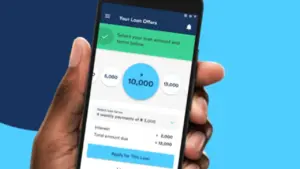
The apps in this section are established, relatively well-regulated options in the Nigerian digital lending space. None of them are presented as unconditionally recommended because borrowing always carries risk, but these are apps with legitimate operating status, transparent fee disclosure, and generally non-predatory practices compared to unlicensed alternatives.
Carbon (formerly Paylater)
Carbon is one of the oldest and most established digital lending platforms in Nigeria and has built a reputation as one of the more responsible operators in the space.
The platform combines banking features with lending and has been operating long enough to have refined its processes significantly from early versions.
Carbon offers loans ranging from 1,500 naira to 1,000,000 naira depending on your credit profile.
First-time borrowers typically qualify for smaller amounts that increase with successful repayment. The interest rates on Carbon loans range from 5 percent to 30 percent for the loan duration depending on your risk profile as assessed by the platform.
The platform’s credit assessment is relatively sophisticated compared to some competitors and considers your BVN history, your bank transaction history, and your repayment behavior on Carbon itself over time.
Building a positive track record on Carbon opens access to larger loans at better rates, which is how the platform incentivizes responsible repayment.
Carbon does not require collateral or guarantors for its loans, which makes it accessible to students who wouldn’t qualify for traditional bank loans. The application and disbursement process is entirely within the app and typically takes minutes for returning customers with good histories.
What students need to know: Carbon’s interest rates are high compared to traditional bank loans but relatively reasonable compared to some other Nigerian loan apps. The platform’s approach to lending is more transparent than many alternatives. Repay on time, every time, if you use it.
FairMoney
FairMoney is a CBN-licensed digital bank and lending platform that offers instant loans to Nigerians with loan amounts ranging from 1,500 naira to 3,000,000 naira. The platform has a large user base in Nigeria and is known for relatively fast disbursement and reasonably transparent fee structures.
Loan tenors on FairMoney range from sixty-one days to eighteen months depending on the loan amount and your credit profile. Interest rates vary from 10 percent to 30 percent per month depending on the specific loan terms.
As with other loan apps, first-time borrowers receive smaller amounts at higher rates with improvements available to reliable repayers.
FairMoney uses your BVN, bank statement data, and phone data to assess creditworthiness. The app is available on Android and has a relatively clean user interface that makes the loan application and management process straightforward.
FairMoney also offers banking features including a savings account with interest, which makes it a platform where you can build a financial relationship beyond just borrowing. Using FairMoney’s savings features alongside its credit products is a more balanced approach than using it purely as a borrowing tool.
What students need to know: FairMoney is a legitimate licensed platform with transparent terms. The monthly interest rates are high and you should calculate the total repayment amount before accepting any loan to ensure you can comfortably handle the repayment from your next income.
Branch
Branch is an international fintech company that operates in Nigeria, Kenya, Tanzania, and several other African markets. It offers personal loans in Nigeria ranging from 1,000 naira to 500,000 naira with loan durations of between four weeks and sixty-eight weeks.
Branch’s credit model uses phone data including your app usage, SMS history, and financial behavior patterns alongside your BVN and bank data to assess creditworthiness. The platform is known for relatively straightforward application processes and fast disbursement for approved applicants.
Interest rates on Branch vary based on your credit assessment and the specific loan product. The platform displays the total repayment amount clearly before you accept a loan, which allows you to make an informed decision about whether the cost of borrowing is manageable for your specific situation.
Branch has made consistent improvements to its collection practices and is generally considered one of the less predatory operators in the Nigerian loan app space. The international backing of the company provides some additional accountability compared to locally-operated apps with less transparent ownership.
What students need to know: Branch’s international operation and transparent fee disclosure make it one of the more trustworthy options in this space. The key caution is the same as with all loan apps: only borrow what you’re certain you can repay on the due date.
Palmcredit
Palmcredit is a Nigerian digital lending platform that offers quick loans with amounts ranging from 2,000 naira to 300,000 naira. The platform is known for its straightforward application process and relatively fast disbursement, usually within minutes of approval.
Palmcredit’s interest rates are presented per month and vary based on the loan amount and tenor. The platform allows flexible repayment periods ranging from ninety-one days to one year, which gives borrowers more time than some competitors that insist on very short repayment windows.
The longer tenor options on Palmcredit make the monthly repayment amounts more manageable for students who need to borrow a moderate amount but can’t repay the full amount plus interest within thirty days. Spreading repayment over three to six months makes the individual payment amounts smaller even though the total interest paid over the full period is higher.
What students need to know: Palmcredit’s longer tenor options are genuinely useful for students who need flexibility in repayment timing. However, borrowing for longer periods means paying more total interest, so shorter repayment periods are financially preferable when your cash flow allows.
QuickCheck
QuickCheck is a Nigerian digital lending platform that uses machine learning to assess credit risk and offers loans ranging from 1,500 naira to 500,000 naira. The platform is available on Android and processes applications quickly with disbursement typically within a few hours for approved first-time applicants.
QuickCheck’s loan assessment uses alternative data sources similar to other loan apps in the Nigerian market. The platform has worked to improve its transparency around fee disclosure and collection practices.
Loan durations on QuickCheck range from one month to six months with interest rates that vary by loan profile. The platform’s website and app provide clear information about rates and fees before you commit to borrowing, which supports informed decision-making.
What students need to know: QuickCheck is a functional option for students who need small emergency loans and have a clear repayment plan. As with all loan apps, the key is borrowing only what you genuinely need and can repay on time.
Aella Credit
Aella Credit is a Nigerian digital lending and financial services platform that offers personal loans alongside savings and investment products. The platform has been operating in Nigeria for several years and has developed a user base through both its lending and non-lending financial products.
Loan amounts on Aella Credit range from 1,500 naira to 1,000,000 naira with interest rates that vary based on creditworthiness assessment. The platform also offers a savings product with competitive interest rates, which makes it a more complete financial platform than pure-play lending apps.
Aella Credit has made efforts toward transparent disclosure of loan terms and has generally maintained non-predatory collection practices consistent with FCCPC guidelines.
What students need to know: Aella Credit’s combination of lending and savings products makes it worth considering as a platform where you build a financial relationship over time rather than using it only when you need a loan in an emergency.
Kiakia
Kiakia is a Nigerian peer-to-peer lending platform that operates slightly differently from the loan apps above. Rather than lending its own funds, Kiakia connects individual lenders with borrowers, with the platform facilitating the transaction and managing risk assessment.
Loan amounts and terms on Kiakia vary based on what lenders on the platform are willing to offer and your credit assessment. The peer-to-peer model sometimes produces more competitive rates than direct lender apps but also has more variability in terms and availability.
What students need to know: The peer-to-peer model means availability and terms can be less predictable than direct lender apps. Kiakia works best for borrowers with strong credit profiles who are likely to qualify for competitive offers from multiple lenders on the platform.
Loan Apps Nigerian Students Should Absolutely Avoid
Not every loan app operating in Nigeria is legitimate and the predatory ones can create serious problems that go far beyond the financial cost of the loan. Here’s how to identify apps to avoid.
Apps that are not on the FCCPC approved list:
The FCCPC publishes and updates a list of approved digital money lenders operating legally in Nigeria. Any app offering loans that is not on this list is operating without proper authorization. These unauthorized apps have no regulatory accountability and are free to use any collection method they choose including the most harmful ones. Never borrow from an app that isn’t on the FCCPC approved list.
Apps that demand access to your contacts upfront for their primary collection method:
While most loan apps request contact access, the legitimate purpose is for credit assessment. Apps whose terms explicitly state or imply that they will contact your friends, family, or colleagues if you default are using your social network as collateral in a way that is both psychologically coercive and a violation of FCCPC guidelines. If an app’s terms suggest contact-shaming as a collection method, do not use it.
Apps with completely opaque fee structures:
Any app that doesn’t clearly disclose the total amount you’ll repay, the interest rate, and all fees before you accept a loan is hiding information you need to make an informed borrowing decision. Legitimate lenders are required to disclose these terms clearly. Apps that obscure their true cost until after disbursement are not operating legitimately.
Apps that charge upfront fees before disbursing your loan:
Any loan app that asks you to pay a fee, often called a processing fee or insurance fee, before they disburse your approved loan is almost certainly a scam. Legitimate lenders deduct fees from the loan amount or collect them at repayment. Paying money to receive money is not how legitimate lending works.
Apps promising loans with no credit check and no BVN:
Legitimate lenders in Nigeria use BVN verification as a fundamental part of credit assessment. Any app claiming to offer loans without BVN verification is either operating outside regulatory guidelines or is a scam collecting your personal information without any intention of lending money.
The Serious Risks of Loan Apps for Nigerian Students
Using loan apps as a student carries specific risks that deserve honest discussion rather than minimization.
The debt cycle risk:
The most common harmful outcome of loan app use for Nigerian students is falling into a debt cycle. You borrow to cover a shortfall. You repay the loan from your next allowance but the repayment reduces your budget for that month. You encounter a shortfall again earlier in the next month. You borrow again, but more this time because the shortfall is larger. Each cycle makes the next shortfall larger and the next required loan bigger. Within a few months, a student who started borrowing 5,000 naira for genuine emergencies is borrowing 30,000 naira regularly and their entire monthly allowance is consumed by loan repayments before their real expenses are even addressed.
This cycle is genuinely difficult to escape once established. The only reliable exit involves either a significant one-time injection of funds to break the cycle or a period of extreme spending reduction while simultaneously stopping new borrowing, both of which are painful.
The data privacy risk:
Loan apps have access to significant amounts of your personal data including your contact list, SMS messages, and phone usage patterns. This data, once given, cannot be taken back. Understand what data you’re sharing and with whom before installing any loan app.
The contact harassment risk:
Despite regulatory prohibition, predatory loan apps and some marginally compliant legitimate ones still contact borrowers’ friends and family when loans go delinquent. Having your classmates, roommates, parents, and other contacts receive messages about your loan default is embarrassing in ways that affect your relationships and mental wellbeing beyond the financial situation.
The credit score impact:
Nigeria’s credit bureau system, particularly the Credit Bureau Association of Nigeria and partner bureaus, records loan defaults from registered lenders. A pattern of loan defaults on legitimate loan apps creates a negative credit history that can affect your ability to access financial products in the future including bank loans, mortgages, and business credit facilities after you graduate.
Better Alternatives to Loan Apps for Nigerian Students
Before reaching for a loan app, exhaust these alternatives which are either free, less expensive, or both.
Talk to your family:
The discomfort of telling your parents you’re short on money this month is real but temporary. Loan interest is real and financial. In most cases, your family would genuinely rather know you need help and provide it directly than have you pay 30 percent monthly interest to a loan app. A direct conversation with your parents is almost always financially preferable to a loan app regardless of the emotional discomfort.
Borrow from a close friend with a specific repayment date:
Interest-free borrowing from a trusted friend with a clear, honored repayment commitment is significantly better financially than borrowing from a loan app. The social obligation to repay is real but the cost is zero. Honor your commitment fully and on time to protect both the financial arrangement and the friendship.
Use your emergency fund:
If you’ve been building an emergency fund as recommended throughout this guide series, a genuine emergency is exactly what it’s for. Using your emergency fund means no interest, no debt, no risk to your relationships or data privacy. Rebuild the fund in subsequent months after using it.
Reduce spending to match available funds:
Sometimes the gap between what you have and what you need is closeable through spending reduction rather than income increase. Eating simpler food for a week, skipping non-essential expenses temporarily, and finding creative ways to extend your available funds can bridge short-term gaps without the cost of borrowing.
Find a small emergency earning opportunity:
A quick tutoring session, an emergency freelancing job, selling something you no longer need, or any other short-term income opportunity bridges financial gaps with earned income rather than borrowed money. The time investment of earning 5,000 naira to avoid borrowing 5,000 naira at 30 percent monthly interest is almost always worthwhile.
Approach your school’s student welfare office:
Some Nigerian universities have emergency funds or welfare programs specifically for students facing genuine financial hardship. These programs are underutilized because many students don’t know they exist or feel uncomfortable accessing them. A brief conversation with your school’s student affairs or welfare office is worth having when you’re in genuine financial difficulty.
If You Do Use a Loan App: Rules to Protect Yourself
If after considering the alternatives you decide that a loan app is your best option for a specific situation, these rules reduce the risk of the experience becoming harmful.
Only borrow what you need for the specific expense:
Calculate the minimum amount necessary to address the immediate need and borrow only that amount. Borrowing more because you qualify for more is how borrowing becomes expensive and habit-forming. Minimum necessary borrowing minimizes the cost and the repayment burden.
Calculate the total repayment before accepting:
Before you tap accept on any loan offer, know the exact total you’ll repay including all interest and fees. Then ask yourself honestly whether you can pay that exact amount from your next income without creating a new shortfall. If the answer is no, do not accept the loan.
Have a specific repayment source identified:
Know exactly which income will fund your repayment before you accept the loan. Whether it’s your next allowance, an expected payment from a client, or any other specific income, having a concrete repayment source identified prevents the discovery on repayment day that you don’t have what you need.
Set a reminder for repayment:
Set a phone reminder for two days before your repayment due date. This gives you time to ensure funds are in your account before the automatic deduction and avoids the late payment fees that come from insufficient funds on the due date.
Never use a loan to repay another loan:
Taking a new loan to repay an existing loan is the beginning of the debt cycle described earlier. If you can’t repay a loan from income, contact the lender to discuss options rather than compounding the problem with additional debt.
Read the terms fully before accepting:
Every word of the loan terms and conditions is your legal commitment. Read it completely before accepting. Pay particular attention to the total repayment amount, the due date, the late penalty structure, and the data usage terms. Understanding what you’re agreeing to is the minimum standard for responsible borrowing.
Understanding Your Rights as a Borrower
Nigerian regulations give you specific rights as a borrower from digital lending platforms and knowing them protects you from abusive practices.
You have the right to clear, upfront disclosure of all loan terms including interest rates, fees, total repayment amount, and due dates before you accept the loan. Any lender who doesn’t provide this information is violating disclosure requirements.
You have the right to privacy of your personal contacts. Lenders are prohibited from contacting people in your contact list, sending them messages about your loan status, or sharing your personal information with third parties without your explicit consent. If a lender violates this, you can report them to the FCCPC.
You have the right to be treated with dignity in collections. Threatening, abusive, or harassing collection communications are prohibited. If you experience this, document the communication and report it to the FCCPC through their consumer complaint portal.
You have the right to a fair and transparent complaint resolution process. Licensed lenders are required to have accessible complaint mechanisms. If your legitimate complaint isn’t resolved, the FCCPC provides an escalation pathway.
Reporting predatory or illegal lending practices to the FCCPC not only protects you but helps protect other Nigerian students from the same practices. The FCCPC takes enforcement action based on consumer complaints and has shut down multiple predatory loan apps based on aggregated complaints.
Building Credit Responsibly as a Nigerian Student
One legitimate benefit of responsible loan app use that rarely gets discussed is the opportunity to begin building a credit history as a student. Nigeria’s credit bureau system records loan repayment behavior and a pattern of small, timely repayments creates a positive credit profile that can benefit you later when you need larger credit facilities for business investment or major purchases.
The operative word is responsible. Building credit by borrowing amounts you can comfortably repay, repaying on time every time, and keeping your credit utilization low creates a positive profile. Building credit by borrowing more than you can repay, making late payments, and cycling through multiple loan apps creates a negative profile that has the opposite effect.
If credit building is part of your motivation for using loan apps, approach it as a long-term strategy rather than as immediate financial relief. Borrow small amounts you genuinely don’t need and could pay immediately, repay perfectly on time, and build a track record without taking on meaningful financial risk.
Frequently Asked Questions
Are loan apps in Nigeria safe for students?
Licensed, FCCPC-approved loan apps operating within regulatory guidelines are relatively safe in the sense that they’re legitimate financial products. They are not safe in the sense that using them irresponsibly carries significant financial risk.
The app itself being legitimate doesn’t protect you from the financial consequences of borrowing you can’t repay. Safety as a borrower depends more on your repayment plan than on which app you use.
What happens if I can’t repay a loan app in Nigeria?
Late repayment triggers penalty fees that accrue daily. The lender will attempt to collect through their standard collection process which may include repeated calls, SMS messages, and for some lenders contact with people in your network despite this being contrary to regulations. Your default is reported to credit bureaus.
Your account with that lender is negatively affected limiting future access. Contact the lender proactively if you anticipate difficulty repaying rather than going silent and waiting for the due date to pass.
Can loan apps in Nigeria access my contacts without permission?
Apps can only access data that you grant them permission to access during installation or first use. You are shown permission requests when you install a loan app and you can decline contact access.
However, declining required permissions sometimes prevents the app from processing your application. The question of whether to grant contact access is one only you can decide based on your comfort with the privacy trade-off.
Which loan app gives the highest amount to first-time borrowers in Nigeria?
First-time loan amounts across all Nigerian loan apps are deliberately small, typically ranging from 1,500 naira to 30,000 naira, as lenders assess your creditworthiness before extending larger credit. Carbon, FairMoney, and Branch tend to have relatively accessible first-time amounts for borrowers with reasonable BVN histories.
However, the amount you qualify for on your first application is not something you should try to maximize. Borrow the minimum necessary amount regardless of your maximum qualification.
Do loan apps in Nigeria affect my credit score?
Yes. Loans from registered lenders are reported to Nigerian credit bureaus. Timely repayment improves your credit profile.
Late payment or default negatively affects it. Some apps from unregistered lenders may not report to bureaus, which means neither positive nor negative repayment behavior is recorded, though those apps carry other significant risks.
Is it better to borrow from a loan app or ask my parents for money?
In almost every case, asking your parents is financially better. Parental support typically costs zero in interest compared to thirty percent or more monthly from loan apps. The emotional discomfort of asking your parents is real but temporary.
The financial cost of loan app interest is also real and directly reduces your future purchasing power. Choose the temporary emotional discomfort over the lasting financial cost whenever that option is available to you.
Conclusion
Loan apps in Nigeria for students occupy a genuinely complicated space. They address a real need, which is access to emergency funds without the barriers of traditional bank loans.
They carry real risks, including high costs, debt cycle potential, and data privacy concerns. And they exist in a regulatory environment that is improving but still imperfect in protecting borrowers from the worst practices.
The most important thing to take from this guide is not a list of apps to use but a framework for thinking about borrowing. Exhaust free options first. Calculate the real total cost before accepting any loan.
Only borrow what you can repay from a specific identified income source. Repay on time every time. And treat loan apps as an emergency tool of last resort rather than a routine financial supplement.
The Nigerian students who use loan apps responsibly are those who understand these rules and apply them consistently. The ones who experience the most harm are those who see loan apps as easy money without fully reckoning with the cost and the risk of the debt cycle they can create.
Build your emergency fund so you never need a loan app for the situations it’s designed to address. Develop your income through side hustles so the gaps that tempt you toward borrowing become rarer.
And when you do need emergency funds after exhausting all other options, use licensed regulated apps, borrow minimally, repay on time, and don’t repeat the experience unless genuinely necessary.
Your financial health as a student is worth protecting carefully. Loan apps, used poorly, are one of the fastest ways to undermine it. Used rarely and responsibly, they can bridge genuine emergencies without lasting harm. The difference lies entirely in how you approach them.
How to Decide What Fits Your Situation
Compare the options using the factors that matter to you, such as cost, time, eligibility, convenience, safety, and likely benefit. Do not choose an option only because it is popular or because an advertisement promises a particular result.
Steps You Can Take Today
Start with one manageable action. Check the requirements, prepare the information or resources you need, and keep a record of the result. If money is involved, set a limit that you can afford and review the terms before proceeding.
Problems to Watch For
Watch for unexpected charges, misleading claims, pressure to act quickly, and requests for sensitive account credentials. If something goes wrong, save transaction references or other evidence and contact the relevant official provider rather than relying on an unofficial intermediary.
Related MoneyX Guides
Continue with these related guides for practical information that can help you make a better-informed decision:
