Most people think forex trading is only for the rich. They imagine someone with a fat bank account sitting behind three monitors, executing million-dollar trades. That picture stops a lot of Nigerians from even trying.
But here is the truth: you can learn how to trade forex with small capital in Nigeria and build from there. Many traders across Lagos, Abuja, Port Harcourt, and Ibadan started with less than $50. Some started with as little as $10.
What separates those who succeed from those who quit is not the size of their starting capital. It is knowledge, discipline, and a smart strategy.
This guide will walk you through everything you need to know as a beginner. From understanding what forex trading is, to choosing the right broker, to managing risk when your capital is small. By the time you finish reading this, you will know exactly what to do and what to avoid.
Let us get into it.
What Is Forex Trading and Why Nigerians Are Interested
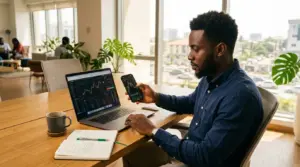
Forex stands for foreign exchange. It is the global market where currencies are bought and sold. When you exchange your naira for dollars at a bureau de change, you are participating in a basic form of forex activity.
In online forex trading, you speculate on whether one currency will rise or fall against another. For example, you might predict that the US dollar will get stronger against the euro. If you are right, you make profit. If you are wrong, you lose.
The forex market is the largest financial market in the world. It handles trillions of dollars in transactions every single day. It operates 24 hours a day, five days a week, which makes it very flexible for people in different time zones, including Nigeria.
Nigerians have become increasingly interested in forex trading for good reasons. The naira has faced significant pressure over the years, and many people are looking for ways to earn income in foreign currency.
Forex provides that opportunity. You can trade from your phone or laptop, set your own hours, and potentially earn in dollars while living in Nigeria.
But it comes with risks. That is why education must come before any real money.
How to Trade Forex with Small Capital in Nigeria: The Complete Step-by-Step Guide
Step 1: Learn the Basics Before Touching Real Money
This is non-negotiable. Do not skip it.
Many beginners in Nigeria rush into forex because they heard someone made quick money from it. They fund an account, start clicking buttons, and lose everything within a week. Then they say “forex is a scam.”
Forex is not a scam. But jumping in without knowledge is financial suicide.
Here are the basic concepts you need to understand:
Currency Pairs Forex trading always involves two currencies. For example, EUR/USD means you are trading the euro against the US dollar. The first currency is called the base currency. The second is the quote currency. If EUR/USD is at 1.1000, it means 1 euro equals 1.10 US dollars.
Pips A pip is the smallest price movement in a currency pair. For most pairs, one pip equals 0.0001. If EUR/USD moves from 1.1000 to 1.1010, it moved 10 pips. Knowing how to count pips is important for calculating profit and loss.
Lot Sizes A lot is the unit of measurement for a trade. A standard lot is 100,000 units of the base currency. That sounds like a lot of money, but brokers offer smaller sizes. A mini lot is 10,000 units. A micro lot is 1,000 units. A nano lot is 100 units. With small capital, you will mainly use micro and nano lots.
Leverage Leverage allows you to control a larger trade with a smaller amount of money. For example, a 1:100 leverage means that with $10, you can control a $1,000 trade. This magnifies both profits and losses. It is powerful but dangerous when misused.
Bid and Ask Price The bid price is what the broker will buy from you. The ask price is what you pay when buying. The difference between these two prices is called the spread. Brokers earn from spreads.
Bull and Bear Markets A bull market is when prices are rising. A bear market is when prices are falling. Understanding market direction helps you decide whether to buy or sell.
Spend at least two to four weeks learning these concepts before you open a live account.
Step 2: Choose the Right Forex Broker for Small Capital in Nigeria
Not all brokers are created equal. Choosing the wrong one can cost you money even before you make a single trade.
What to Look for in a Broker When Starting with Small Capital
Regulation Only trade with regulated brokers. Look for regulation from reputable bodies like the UK’s Financial Conduct Authority (FCA), the Australian Securities and Investments Commission (ASIC), or the Cyprus Securities and Exchange Commission (CySEC). Regulated brokers are held to strict standards and are less likely to scam you.
Low Minimum Deposit Since you are starting small, look for brokers with low or no minimum deposit requirements. Some reputable brokers allow you to start with as little as $5 or $10.
Micro and Nano Accounts For small capital forex trading in Nigeria, you need a broker that supports micro and nano lot trading. This allows you to control your risk properly when your account is small.
Naira Deposit Options Some brokers support naira deposits through local Nigerian bank transfers or payment platforms. This saves you from losing money to exchange rate fees every time you fund your account.
Low Spreads For beginners with small capital, spreads matter a lot. Even a small spread can eat into a small account quickly. Compare spreads across brokers before choosing.
Good Trading Platform The most popular platform is MetaTrader 4 (MT4) or MetaTrader 5 (MT5). These are user-friendly, widely supported, and come with useful tools for analysis.
Some brokers commonly used by Nigerian traders include Exness, HFM (previously HotForex), FBS, XM, and OctaFX. Do your own research and verify their current regulation status before opening an account.
Step 3: Open a Demo Account First
A demo account gives you virtual money to practice with. It behaves exactly like a real account but no real money is involved.
This is where you should spend serious time, at least one to three months. Do not rush this stage just because the money is not real. Treat it as if it were real. The habits you build on demo will follow you to your live account.
On demo, you should practice:
- Placing buy and sell orders
- Setting stop loss and take profit levels
- Reading charts and identifying trends
- Testing different trading strategies
- Managing your virtual account size
When you can consistently make profit on demo for at least four to eight weeks without blowing the account, you may be ready to move to a small live account.
Step 4: Start Forex with Low Money on a Live Account
Now you are ready to fund a live account. But keep the amount small. This is intentional.
When real money is involved, your psychology changes completely. You will feel fear, greed, and anxiety in ways the demo account never showed you. Starting with a small amount, say $20 to $50, teaches you to control those emotions without risking too much.
Many successful Nigerian traders started this way. Emeka from Lagos started forex trading with $30. He lost the first $15 making avoidable mistakes. He went back to demo for three more weeks, came back with another $30, and this time he was more patient. Within a few months, he grew that account to $150. Small start, steady growth.
Here is what to do when you fund your first live account:
- Only fund what you can afford to lose completely
- Start trading micro lots (0.01)
- Trade only one or two currency pairs at first
- Keep a trading journal to track your trades and emotions
- Do not increase your lot size until you are consistently profitable
Step 5: Learn Technical and Fundamental Analysis
To trade successfully, you need to understand why prices move and how to predict their next move.
Technical Analysis
Technical analysis involves studying price charts to find patterns and signals. You use tools called indicators to help you decide when to enter and exit trades.
Some popular technical analysis tools include:
Support and Resistance Levels Support is a price level where buyers tend to push the price up. Resistance is where sellers tend to push it down. Trading around these levels gives you a clear picture of where price might bounce or break.
Moving Averages A moving average smooths out price data to show the overall trend direction. The 50-period and 200-period moving averages are popular among traders. When the 50 crosses above the 200, it signals a potential uptrend.
RSI (Relative Strength Index) The RSI measures how overbought or oversold a currency pair is. A reading above 70 suggests the pair may be overbought and could reverse down. A reading below 30 suggests it may be oversold and could reverse up.
Candlestick Patterns Candlestick charts show price movement in a visual and intuitive way. Patterns like doji, pin bar, engulfing, and morning star signal potential price reversals or continuations.
Fundamental Analysis
Fundamental analysis looks at economic news and data to understand why currency prices move.
Key events that move the forex market include:
- Interest rate decisions by central banks (like the US Federal Reserve)
- Non-Farm Payroll (NFP) reports from the US
- Inflation data (CPI reports)
- GDP growth figures
- Political stability and major news events
As a beginner, you do not need to master fundamentals immediately. But you must know when major news events are scheduled. Avoid holding trades during high-impact news events until you have more experience. Prices can move extremely fast and stop you out in seconds.
Use an economic calendar (available free on websites like Investing.com or Forex Factory) to check for upcoming news events.
Step 6: Develop a Simple Trading Strategy and Stick to It
This is where most beginners fail. They jump from strategy to strategy, always chasing the “best” one. That approach never works.
You need one simple, clear strategy that you test, understand, and trust. Here is a basic trend-following strategy that works well for beginners:
Simple Trend-Following Strategy for Beginners
- Open a chart on the 4-hour or daily timeframe
- Add the 50 EMA (Exponential Moving Average) and 200 EMA to your chart
- When the 50 EMA is above the 200 EMA, the trend is up. Only look for buy signals
- When the 50 EMA is below the 200 EMA, the trend is down. Only look for sell signals
- Enter a trade when price pulls back to the 50 EMA and shows a rejection candle
- Set your stop loss below the recent swing low (for buys) or above the swing high (for sells)
- Set your take profit at a reward of at least 2:1 compared to your stop loss
This is not the only strategy. But it is simple enough for a beginner to understand and repeat consistently.
Whichever strategy you choose, backtest it first. That means going back in time on your chart and checking how the strategy would have performed in the past. If it wins more than it loses over at least 100 sample trades, it is worth trading.
Step 7: Master Risk Management When Trading with Small Capital
Risk management is the single most important skill in forex trading. Without it, even the best strategy will eventually wipe your account.
Risk Management Rules for Small Capital Forex Trading in Nigeria
The 1% to 2% Rule Never risk more than 1% to 2% of your account on a single trade. If your account is $50, your maximum risk per trade is $0.50 to $1.00. This sounds tiny, but it protects you from blowing your account on a bad streak.
Always Use a Stop Loss A stop loss is an order that automatically closes your trade if the price moves against you by a set amount. Never trade without a stop loss. Traders who skip stop losses are playing a dangerous game.
Risk-to-Reward Ratio For every trade, make sure your potential profit is at least twice your potential loss. This is called a 2:1 risk-to-reward ratio. With this approach, you can be wrong more than half the time and still be profitable.
Avoid Overtrading Beginners often feel the need to be in a trade at all times. That is a mistake. Some days the market is not giving clear signals. On those days, the best trade is no trade. Patience is a strategy.
Do Not Add to Losing Trades Some traders try to “average down” by adding more positions when a trade is going against them. This multiplies the loss. Accept the stop loss, learn from it, and move on.
Common Mistakes Nigerian Forex Beginners Make
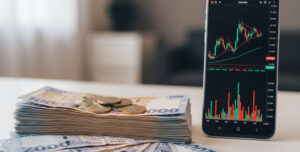
Learning from other people’s mistakes saves you money and frustration. Here are the most common ones:
Trading Without a Plan Entering a trade just because “it looks like it will go up” is gambling, not trading. Have a clear reason for every trade. Your entry, stop loss, and take profit should be defined before you click any button.
Using Too Much Leverage Brokers offer leverage up to 1:2000 in some cases. That does not mean you should use it. With a $50 account and 1:500 leverage, a single bad trade can wipe you out in minutes. Use leverage conservatively. For beginners, 1:10 to 1:50 is more than enough.
Chasing Losses You lose a trade. You feel angry and place another bigger trade to recover the loss quickly. You lose that too. This emotional cycle destroys accounts. It is called revenge trading, and it is one of the most common ways beginners blow their capital.
Trusting Every Signal Group on Telegram or WhatsApp Nigeria has thousands of Telegram and WhatsApp groups selling forex signals. Some are legitimate. Most are not. Be very careful. If someone is promising you 95% accuracy or guaranteed profits, they are lying. No one in the world has those results consistently.
Skipping the Demo Stage “I understand the theory, let me just start with real money.” This mindset leads to fast losses. The demo stage is where you develop muscle memory for trading. Skip it and you will pay for the education with real money.
Not Keeping a Trading Journal A journal is where you record every trade you take, why you took it, and what happened. Without it, you repeat the same mistakes without realizing it. With it, you can identify patterns in your behavior and improve quickly.
How to Fund Your Forex Account in Nigeria
Getting money into your forex account from Nigeria used to be complicated. Today it is more straightforward, though you still need to be aware of the options.
Dollar Cards You can use a virtual or physical dollar card from your Nigerian bank. GTBank, Access Bank, Zenith Bank, and several fintech companies offer naira-funded dollar cards that work for international payments.
Crypto Deposits Many brokers now accept cryptocurrency deposits (usually USDT or Bitcoin). You buy crypto from a local exchange in Nigeria, then transfer it to your broker. This is becoming increasingly popular.
Local Payment Methods Some brokers have partnered with local Nigerian payment processors. They allow you to deposit in naira and the broker converts to your account currency. Check your broker’s payment options carefully.
Third-Party Processors Services like Skrill, Neteller, and Perfect Money are accepted by many brokers. You can fund these wallets from Nigeria and use them to deposit.
Always check the fees involved with each deposit method. Some methods charge high conversion fees that eat into your already small capital.
Forex Trading Taxes in Nigeria
This is a topic many beginners overlook.
In Nigeria, income from forex trading is taxable. The Federal Inland Revenue Service (FIRS) classifies trading gains as income. If you are making consistent profits, you are expected to declare it and pay tax.
In practice, many small retail traders do not report forex income, especially at the beginner level. But as your account grows and you start withdrawing significant amounts, it becomes important to understand your tax obligations.
Consult a local accountant or tax professional if you become a serious trader. It is better to stay on the right side of the law.
Realistic Income Expectations for Small Capital Forex Traders in Nigeria
Let us be honest about this. A lot of people promote forex as a quick-rich scheme. It is not.
With a $50 account, even if you achieve a 10% monthly return (which is already excellent), you make $5. That is not life-changing money. But with consistent profit and gradual reinvestment, small accounts do grow.
Here is how realistic growth looks:
Starting with $50 at 10% monthly growth:
- Month 1: $55
- Month 3: $66.55
- Month 6: $88.58
- Month 12: $156.92
Still small. But the point is not immediate wealth. The point is building a skill, a track record, and the emotional discipline to manage a larger account.
Many Nigerian traders who are now managing $5,000 to $20,000 accounts started exactly this way. They spent one to two years building their skill with small money, then added more capital as their confidence and strategy proved themselves.
Best Currency Pairs for Beginners in Nigeria
When starting forex trading with low money, focus on major currency pairs. They have the tightest spreads, the highest liquidity, and the most available analysis and resources.
The best pairs for beginners are:
EUR/USD (Euro/US Dollar) This is the most traded pair in the world. Spreads are very tight, meaning you pay less to enter a trade. There is a huge amount of educational content available about this pair.
GBP/USD (British Pound/US Dollar) Slightly more volatile than EUR/USD. Good for beginners who want a bit more movement but still want to stay in major pairs.
USD/JPY (US Dollar/Japanese Yen) Known for cleaner trends. Many traders use this pair for trend-following strategies.
Avoid exotic pairs like USD/NGN or USD/ZAR when starting. They have wide spreads and unpredictable movements that are hard for beginners to navigate.
The Role of Psychology in Small Capital Forex Trading
Nobody talks about this enough.
Trading psychology is the mental and emotional discipline required to follow your strategy, even when things get hard. It is arguably more important than your technical skills.
When your account is small, the psychological pressure can actually be more intense because every naira feels significant. You will feel the urge to overtrade. You will feel fear when you should be executing a trade and greed when you should be taking profit.
Here is how to manage your trading psychology:
Detach from the money. Think in terms of pips and percentages, not naira or dollars. When you think “I just lost N8,000,” the emotional reaction is stronger than if you think “I lost 2% of my account as planned.”
Stick to your rules. Every time you break your own trading rules, write it down. The pattern of rule-breaking will shock you. Awareness creates change.
Take breaks. If you lose two or three trades in a row, step away from the charts. Tired or frustrated traders make expensive decisions.
Celebrate discipline, not just profit. If you followed your strategy correctly on a trade and it still lost, that is actually a win. The goal is consistent process. The profits follow.
FAQ: Forex Trading with Small Capital in Nigeria
1. Can I start forex trading in Nigeria with just N5,000?
Yes, you can. N5,000 is roughly around $3 to $5 depending on the current exchange rate. Some brokers accept deposits as low as $1. However, with N5,000, your position sizes will be extremely small. It is possible, but you should focus more on learning than on making money at this stage.
2. Is forex trading legal in Nigeria?
Yes, forex trading is legal in Nigeria. The Central Bank of Nigeria (CBN) and the Securities and Exchange Commission (SEC) oversee financial markets in Nigeria. Trading with an internationally regulated broker is your safest option. Always ensure your broker holds a valid license from a recognized regulatory body.
3. How much can I realistically make from forex trading with small capital?
This depends entirely on your skill level, strategy, and consistency. Beginners should not expect to replace their income quickly. A realistic target for a skilled trader might be 5% to 15% monthly return, though some months will be negative. Focus on building your skills first. Income will follow.
4. Do I need a laptop to trade forex in Nigeria, or can I use my phone?
You can trade forex on both a laptop and a smartphone. Most brokers offer mobile apps and the MetaTrader platform is available for Android and iOS. However, for analysis and strategy development, a laptop or desktop makes it significantly easier to study charts properly.
5. What is the best time to trade forex in Nigeria?
The best trading sessions for Nigerian traders are the London session (9 AM to 5 PM Nigerian time) and the overlap between the London and New York sessions (1 PM to 5 PM Nigerian time). These hours have the highest trading volume, tighter spreads, and more predictable price movements.
6. How long does it take to become profitable in forex?
Most traders take six months to two years to become consistently profitable. Anyone who promises you can do it in two weeks is misleading you. Treat forex as a skill like programming or medicine. It takes time to master.
7. Should I pay for forex signals or a mentorship program?
Be very careful here. There are legitimate coaches and educators in Nigeria and globally. But there are many more who are simply selling dreams. Before paying anyone for signals or mentorship, verify their trading track record, ask for verified results, and read reviews from real students. Free resources like YouTube, Babypips.com, and broker education centers can take you very far without spending anything.
Conclusion: Start Small, Think Big, Stay Consistent
Learning how to trade forex with small capital in Nigeria is completely achievable. Thousands of Nigerian traders have done it. The path is not a shortcut to instant wealth. It is a serious skill that rewards patience, education, and discipline.
Here is the simple roadmap to remember:
- Spend time learning the fundamentals
- Open a demo account and practice for at least one to three months
- Choose a regulated broker with low minimum deposits
- Start live trading with only what you can afford to lose
- Use tight risk management on every trade
- Keep a journal, review your trades, and keep improving
The market will be here tomorrow, and next week, and next year. There is no rush. The traders who succeed are the ones who take their time to build a real foundation.
Start small. Stay consistent. Grow steadily.
You have everything you need to begin.
Disclaimer
This article is for educational and informational purposes only. It does not constitute financial advice, investment advice, or trading advice of any kind. Forex trading involves significant risk of loss and is not suitable for all investors.
You could lose some or all of your invested capital. Never trade with money you cannot afford to lose completely. Past performance is not indicative of future results.
Always conduct your own due diligence and consider seeking advice from an independent licensed financial advisor before making any trading decisions.
The author and publisher of this article are not responsible for any financial losses incurred as a result of acting on information provided in this post.
What You Need to Check Before Starting
Before spending money, compare the requirements, starting costs, ongoing expenses, risks, and realistic earning or investment potential. Figures can vary by location, provider, market conditions, and the size of the operation, so treat examples as planning estimates rather than guaranteed results.
A Practical Way to Get Started
Start with a small, measurable plan. List what you need, estimate the total cost, identify your first customers or users, and decide how you will track income and expenses. Review the results before committing additional money.
Risks and Mistakes to Avoid
Do not assume that a business, investment, platform, or strategy will produce guaranteed returns. Check important claims against official or authoritative sources, keep financial records, and avoid paying anyone who promises effortless or guaranteed profits.
Related MoneyX Guides
Continue with these related guides for practical information that can help you make a better-informed decision:
