
Debt Management Tips in Nigeria has become one of the most urgent personal finance conversations happening right now.
Millions of Nigerians are caught in a quiet financial trap: salaries that arrived looking decent but disappeared before the month ended, loan app borrowing to cover basic expenses, and a cycle that restarts every 30 days with another credit alert and another round of clearing debt first before the money can even breathe.
If you are in debt right now, whether it is a loan app balance, a bank personal loan, an ajo contribution you missed, money borrowed from family, or a combination of all of these, this guide is for you. It does not promise miracles.
Getting out of debt takes time, discipline, and a clear plan. But it is entirely possible, and Nigerians do it every day. What makes the difference is not income level. It is strategy and consistency.
This guide covers how to understand and face your debt honestly, the two most powerful debt repayment strategies that actually work, how to stop accumulating new debt, how to handle the specific dangers of Nigerian loan apps, and how to rebuild your financial life once the debt is cleared.
The Honest Truth About Debt in Nigeria
Most debt conversations in Nigeria focus on blame. Spending too much on owambe. Sending too much money home. Not earning enough. While those things can be contributing factors, they miss a deeper issue.
The real reason most Nigerians stay in debt is not a single bad decision. It is a system that was never set up to help them get out.
Loan apps make it frighteningly easy to borrow. When your salary is five days away and your data is finished, tapping a button to get 10,000 naira in 60 seconds feels like a lifeline.
The problem is that those same apps charge interest rates that can run between 2% and 30% per month depending on the lender. At 10% monthly interest, a 50,000 naira loan costs you 65,000 naira after just three months if you only pay the minimum. At 20% monthly, it doubles.
The second problem is social: Nigerians face significant financial pressure from family, friends, events, and cultural expectations. Borrowing to meet obligations feels necessary in the moment but it adds invisible weight to an already stretched budget.
The third problem is that most Nigerian salary earners have no financial buffer. Without an emergency fund, every unexpected expense, medical bill, rent increase, or car repair, becomes a reason to borrow. And every borrowing episode makes the next one harder.
Understanding these dynamics is not about making excuses. It is about addressing the actual roots of the problem so the solution actually sticks.
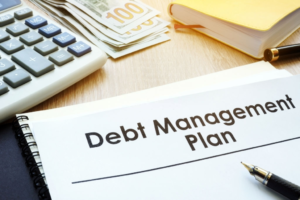
Step 1: Write Down Every Single Debt You Have
This step feels obvious but most people avoid it because facing the full picture is uncomfortable. They know roughly what they owe, but they do not sit with the exact number written in front of them.
Write down every debt. Include:
- Every loan app balance (FairMoney, Carbon, Branch, PalmCredit, Fairmoney, QuickCheck, any others)
- Any bank personal loan or overdraft balance
- Family or friends loans, even informal ones with no repayment date
- Cooperative or ajo debts
- Buy now pay later balances
- Any salary advance that has not been fully repaid
For each debt, record four things: who you owe, the total outstanding balance, the monthly repayment amount, and the interest rate if you know it.
This list is called your debt inventory. It is the only honest starting point. Many Nigerians discover when they do this exercise that their total debt is either smaller than the anxiety made it feel (which is encouraging) or larger than they admitted to themselves (which is sobering but necessary to know).
You cannot manage what you have not faced.
Step 2: Stop Borrowing New Money Before Doing Anything Else
This sounds harsh, but it is the most important rule in debt management for Nigerians: you cannot get out of debt while continuing to take on new debt.
Every new loan you take adds to the amount you owe and extends the timeline to being debt-free. Even a small loan app advance of 15,000 naira, taken because you are three days from salary, resets part of your progress.
The way to stop borrowing is not willpower alone. It is systems:
Delete the loan apps from your phone. The harder it is to access a loan, the less likely you are to take one in a moment of weakness. Reinstalling an app takes two minutes but the friction is often enough to break the impulse.
Build a small emergency float. The reason people borrow from loan apps repeatedly is not because they are irresponsible. It is because they have nothing to fall back on. Even 20,000 to 50,000 naira set aside in a Flex Savings account on PiggyVest or a Kuda flexible plan creates the buffer that eliminates the loan app justification in most situations.
Tell yourself the truth about what you are borrowing for. If you are borrowing for food or transport before salary, that is a budget problem and a cash flow problem that borrowing does not solve. It only moves the problem forward one month while adding interest charges.
Step 3: Understand What Your Debt Is Really Costing You
Most Nigerians have no idea what their loan app debt actually costs them annually. The interest rates are quoted monthly or weekly, which makes them sound small. They are not.
Here is the reality of loan app interest rates in Nigeria:
A loan at 10% per month equals approximately 120% per year in simple interest terms. That means a 100,000 naira loan, if left for a year, costs you 220,000 naira.
A loan at 20% per month equals approximately 240% per year. A 50,000 naira loan becomes 170,000 naira in just one year.
Even platforms considered “moderate” in Nigeria, which charge around 2% to 5% monthly, translate to 24% to 60% annual interest. For comparison, Nigerian treasury bills pay you 15% to 20% per year on the money you invest. Loan app debt at 30% monthly is the opposite of treasury bill investing. It is wealth destruction at an accelerated pace.
Once you understand the real cost of the debt you are carrying, the urgency to clear it becomes very concrete. You are not just paying back what you borrowed. You are paying a penalty every single month for the privilege of having borrowed it.
Step 4: Choose Your Debt Repayment Strategy
Once you have your debt inventory and you have stopped new borrowing, it is time to choose how to pay everything off. There are two proven strategies used globally and both work well in the Nigerian context.
The Debt Avalanche Method (Best for Saving the Most Money)
The avalanche method focuses on mathematics. You pay off your most expensive debt first, meaning the one with the highest interest rate, and make minimum payments on everything else. Once the highest-rate debt is cleared, you direct all that freed-up money to the next most expensive debt, and so on down the list.
How to use it in Nigeria:
List all your debts from highest interest rate to lowest. For most Nigerians, the loan apps with the highest monthly rates sit at the top. Bank personal loans or cooperative loans with lower rates sit below.
Make the minimum required payment on every debt except the one at the top. Put every extra naira you have that month onto the highest-rate debt. When that debt is cleared, take everything you were paying on it and add it to the payment on the next debt on the list.
Example in naira:
- Loan app A: 40,000 naira at 20% monthly (top priority)
- Loan app B: 25,000 naira at 10% monthly
- Bank loan: 150,000 naira at 3% monthly
- Family loan: 80,000 naira at 0% (no interest)
You pay the minimums on B, the bank loan, and the family loan. Every extra naira goes onto Loan app A until it is gone. Then you move to Loan app B with all the combined payments. Then the bank loan. Then the family loan.
The avalanche method saves you the most money overall because you are killing the most expensive debt first. It is the mathematically correct strategy for Nigerians dealing with high-interest loan app debt specifically.
The Debt Snowball Method (Best for Staying Motivated)
The snowball method ignores interest rates entirely. Instead, you focus on the smallest debt balance first, regardless of how much it is costing you. Pay off the smallest debt as fast as possible, experience the win of eliminating it completely, then roll that payment into the next smallest debt.
How to use it in Nigeria:
List all your debts from smallest balance to largest. Make minimum payments on everything except the smallest debt. Throw everything extra at the smallest balance until it is gone. Then take that payment and attack the next smallest.
Why it works: The psychological boost of completely eliminating a debt cannot be underestimated. When you see one loan app balance go from 8,000 naira to zero, it feels real. It proves to your brain that this is working. That motivation carries you forward when the plan gets difficult.
Which should you use? If your loan app debts all have similarly high rates, the snowball method works nearly as well as the avalanche and is easier to stay motivated with.
If you have one particular debt at a dramatically higher rate than the others, the avalanche method saves you more money over time. Many Nigerians use a hybrid: clear one or two small debts first for the psychological win, then switch to avalanche method for the remaining larger ones.
Step 5: Find Extra Money to Accelerate Debt Repayment
Paying minimums on debt means being in debt for years. Finding extra money to add to your repayment plan cuts that timeline dramatically.
Practical ways Nigerian salary earners find extra debt repayment funds:
Cut one major spending category. Review your budget and identify the single biggest non-essential spend. Eating out, food delivery, subscription services, entertainment. Cutting that one category often frees up 10,000 to 30,000 naira per month that can go straight to debt.
Sell what you are not using. Old phones, clothes, electronics, furniture. Jiji.ng and Facebook Marketplace are full of Nigerians buying these items. A weekend of decluttering can put 20,000 to 100,000 naira in your hand.
Start a side hustle. Even a small additional income of 20,000 to 50,000 naira per month directed entirely at debt repayment changes the timeline significantly. Data reselling, social media management for small businesses, tutoring, freelance writing. Any of the side hustles covered in our separate guide could work here.
Direct windfalls to debt first. Bonuses, gifts, eid or Christmas money, tax refunds, anything unexpected. Before that money gets absorbed into regular spending, direct a significant portion to your highest-priority debt.
The temptation to spend a windfall on something nice is real. Remind yourself that every naira used to pay off a 20% monthly loan is a guaranteed 240% annual return on that money.
Ask for a salary advance from your employer. Unlike loan apps, employer salary advances are often interest-free or carry minimal administrative fees. If you have an existing loan app balance, using a one-time employer advance to clear it and then repaying your employer interest-free over three to six months saves significant money.
Step 6: Negotiate Where You Can
Most Nigerians do not know this, but debt balances are often negotiable, especially informal ones.
Family and friends loans: These are typically the most flexible. If you owe money to family or a friend, have an honest conversation about a realistic repayment timeline. Most people would rather receive their money slowly than lose you as a family member over it. Set up a small monthly payment you can actually sustain and be consistent.
Cooperative and ajo debts: Cooperative officers and ajo group leaders generally prefer to work out a structured repayment rather than have a member default completely. Communicate early if you are struggling. Silence makes it worse.
Bank loans: If you are struggling to service a bank personal loan, contact the bank before you miss a payment, not after. Banks have hardship provisions and restructuring options that are not widely advertised. A missed payment damages your credit bureau record and makes future borrowing harder and more expensive.
Loan app debts: These are the hardest to negotiate because they are automated. However, some platforms allow you to request a repayment extension within the app.
Carbon and FairMoney have been known to offer restructuring options for long-term users with good repayment history. Attempt communication through official channels before your account goes to their recovery team.
The Danger of Nigerian Loan Apps: What You Must Know
The Nigerian loan app space has undergone significant regulatory changes. The FCCPC (Federal Competition and Consumer Protection Commission) and CBN have cracked down on predatory practices, and since early 2026, debt-shaming (where lenders contact your family, colleagues, or church members) is explicitly illegal under Nigerian consumer lending regulations.
If any lender contacts people in your phone contacts to shame or harass you, you can report them to the FCCPC at [email protected] and save evidence of the messages. This is a serious offense and lenders face fines up to 100 million naira for non-compliance.
However, the other side of the regulatory update is also important: the Global Standing Instruction (GSI) system means that if you default on a loan, lenders can automatically recover the debt from any bank account linked to your BVN, not just the account the loan was paid into.
This makes ignoring loan app debt increasingly dangerous because the recovery can happen from your GTBank account, your Kuda account, your OPay wallet, or any account associated with your BVN.
Additionally, defaulting on loans now damages your credit bureau record, which can affect your ability to get a mortgage, car loan, postpaid SIM, or even certain employment in the future.
The practical message: Do not ignore loan app debt. Even if you cannot pay in full, make partial payments, communicate with the lender, and keep the account active. Silence and avoidance are worse than any repayment conversation.
Only use regulated lenders. Before using any loan app, verify that it is registered with the FCCPC. Licensed apps must display their company name and license number within the app.
Unregulated apps with aggressive recovery tactics are still operating, particularly through APK files outside official app stores. Never download a loan app from a WhatsApp link or website link. Only from the official Google Play Store or Apple App Store.
Step 7: Build the Emergency Fund That Keeps You Out of Debt
The most important reason people fall back into debt after clearing it is the same reason they went into it in the first place: no financial cushion.
Building an emergency fund of three to six months of essential expenses is the single most powerful protection against future debt. It means that when your car breaks down, when a family member needs help, when your landlord raises the rent unexpectedly, you have a response that does not involve a loan app.
Three to six months of expenses for someone spending 120,000 naira per month on essentials means a target of 360,000 to 720,000 naira. That sounds large. But built at 15,000 to 20,000 naira per month into a PiggyVest Flex account or Cowrywise Stash, it is achievable within two years, even while paying down debt.
Where to keep an emergency fund: PiggyVest Flex Naira, Cowrywise Stash, or Kuda Flexible Savings. These earn interest (8% to 12% per annum) and allow you to withdraw within 24 hours. Do not lock your emergency fund. Do not invest it in T-bills or stocks. It must be accessible quickly when you actually need it.
Step 8: Address the Root Causes, Not Just the Symptoms
Getting out of debt and staying out requires honesty about what put you there. For most Nigerians, the causes fall into one of three categories:
Income is genuinely insufficient for your cost of living. If your salary cannot cover your basic needs without borrowing, the math problem is real. The answer is either increasing income (side hustles, skills development, job change) or reducing costs (accommodation, lifestyle, obligations). Usually both.
Spending exceeds income even when income is adequate. This is a budgeting problem. The solution is building and following a zero-based budget or pay-yourself-first system as covered in our budgeting guide. It requires tracking where money actually goes, not where you think it goes.
Social and family financial pressure exceeds your capacity. This is perhaps the hardest one because it involves relationships and culture. The solution is setting boundaries with financial clarity. You cannot support others from a position of debt. Every family member you support at the cost of your own financial health is a short-term solution that creates a long-term problem for everyone including them.
After Debt: What to Do With the Money You Free Up
The day your last debt balance hits zero is one of the best financial feelings you will ever experience. The next decision matters enormously: what do you do with the money you were using to repay debt every month?
The answer should not be “spend it on something nice.” That is lifestyle inflation by another name.
The answer is: redirect every naira of your former debt repayment into savings and investments immediately. If you were paying 40,000 naira per month across various loan apps and that money is now free, put 20,000 naira into completing your emergency fund and 20,000 naira into a T-bill investment or PiggyVest SafeLock.
You have already proven you can live without that 40,000 naira. You did it for months while paying off debt. Now let that same discipline build wealth instead of erasing it.
Final Thoughts
Debt management in Nigeria is not about shame. It is not about being bad with money. It is about being stuck in a system designed to keep you borrowing, without the right information or strategy to get out.
The steps in this guide work. They are not complicated. What they require is honesty about your situation, a clear plan, consistency over time, and the discipline to stop adding new debt while you clear the old.
Start today. Write your debt inventory. Delete the loan apps. Pick a repayment strategy. Find one extra source of cash to accelerate the plan. And protect yourself from returning to debt by building the emergency fund that makes loan apps unnecessary.
The peace of mind that comes from being completely debt-free is worth every difficult month it takes to get there.
Disclaimer: This article is for educational and informational purposes only. Interest rates mentioned are based on market conditions at the time of writing and are subject to change. For complex debt situations, consider consulting a qualified financial advisor. Report illegal loan app behaviour to the FCCPC at [email protected].
How to Make a Better Decision
Before choosing an option or taking action, compare the costs, requirements, risks, and likely benefits for your own situation. Do not rely on a headline claim alone. Check the provider’s current terms and official information before committing money or personal information.
Common Mistakes to Avoid
Avoid rushing into a financial decision because of pressure, promises of guaranteed results, or incomplete information. Keep records of important transactions and never disclose passwords, PINs, one-time passwords, or other security credentials to another person.
What to Do Next
Use the information in this guide as a starting point, verify important details with authoritative sources, and take the steps that match your circumstances. If a problem involves an account, payment, investment, or financial service, use the provider’s official support channel when you need help.
Common Problems and How to Handle Them
If results are poor, check the underlying cause rather than simply spending more money. Review your assumptions, records, pricing, eligibility, or process. Keep evidence of transactions and use official support where an account or financial service is involved.
How to Get Better Results
Track what you spend, what you receive, and what changes after each step. Use those results to improve your approach before committing additional money or time.
Related MoneyX Guides
Continue with these related guides for practical information that can help you make a better-informed decision:



Comments 1
[…] Banks gave loans based on relationships, collateral, and social standing. The idea of a three-digit score sitting in a computer somewhere, quietly determining your financial future, felt very American and very far away. […]
Leave a Comment
Your email will not be published.