
 MM Kolawole
Table of Contents Show
If your money is sitting in a savings account right now, it is losing value. Quietly, slowly, but surely. With inflation still running high in Nigeria and the naira continuing to weaken, every naira you keep idle is actually a naira shrinking in real purchasing power.
The Nigerian stock market, however, tells a very different story. The NGX All-Share Index rose more than 51% in 2025, one of the strongest single-year returns in recent memory.
In the first quarter of 2026 alone, the market added roughly 29% more, with market capitalisation growing from 99 trillion naira to over 129 trillion naira in just three months.
Investors who were in the market during this period were rewarded handsomely. Those who were waiting on the sidelines watched inflation eat their savings instead.
This is not to say the stock market is risk-free. It is not. But it is one of the most proven, legitimate wealth-building tools available to ordinary Nigerians today.
And the good news is that you no longer need a broker in a suit, a thick wallet, or a finance degree to participate. You can start investing from your phone with as little as a few thousand naira.
This guide explains everything you need to know as a complete beginner: what stocks are, how the Nigerian market works, how to open an account, which platforms to use, what stocks to look at, and how to invest in a way that actually builds wealth over time.
What is Stock Investing and Why Should Nigerians Care?
A stock (also called a share or equity) is a small unit of ownership in a company. When you buy a stock, you become a part-owner of that business. If the company grows and becomes more valuable, your shares become worth more.
If the company earns a profit and decides to share it with owners, you receive a portion of that profit as a dividend payment.
Think of it this way. If you bought MTN Nigeria shares a few years ago, you would own a tiny piece of the company that powers most of the phone calls and data usage in this country.
As MTN grew, your investment grew with it. And at dividend time, you received real cash payments into your brokerage account just for holding the shares.
There are two main ways you earn money from stocks:
Capital appreciation: The share price goes up over time. You buy at a lower price, the price rises, and when you eventually sell, you pocket the difference as profit.
Dividends: Some companies distribute a portion of their profits to shareholders regularly, usually yearly or quarterly. This is passive income you earn simply for holding the stock.

Understanding the Nigerian Exchange Group (NGX)
The Nigerian Exchange Group, commonly known as the NGX, is Nigeria’s primary stock market. It is where companies list their shares and where investors buy and sell those shares. The NGX operates under the supervision of the Securities and Exchange Commission (SEC), which ensures rules are followed and investors are protected.
The NGX has a number of indices that track the performance of different groups of stocks. The most referenced is the NGX All-Share Index (ASI), which tracks the performance of all listed stocks. When people say “the market went up 2% today,” they are typically referring to the ASI.
Other key indices include the NGX 30, which tracks the 30 largest companies by market capitalisation, and various sector indices covering banking, consumer goods, insurance, oil and gas, and industrial goods. These sector indices help you quickly understand how different parts of the economy are performing.
The NGX trades Monday to Friday from 10:00 AM to 2:30 PM. Outside of those hours, orders can be placed but will only be executed when the market opens.
Key Terms Every Beginner Must Know
Before you put a single naira into any stock, you need to understand these terms. They will come up constantly.
Share Price: The current market price of one unit of a company’s stock. This changes throughout the trading day.
Market Capitalisation: The total value of all a company’s shares combined. It tells you the size of the company in the market. Large companies like MTN Nigeria and Dangote Cement have market caps in the trillions of naira.
Dividend: A cash payment made by a company to its shareholders from profits. Usually expressed as a dividend per share (for example, 3 naira per share) or as a dividend yield (the dividend as a percentage of the share price).
Dividend Yield: If a stock pays a 5 naira dividend and the current share price is 50 naira, the dividend yield is 10%. This is a useful number for comparing how much income different stocks generate.
Earnings Per Share (EPS): A company’s profit divided by the number of shares. Higher EPS generally means the company is more profitable.
Price-to-Earnings Ratio (P/E Ratio): The share price divided by the EPS. It tells you how expensive a stock is relative to its earnings. A high P/E may mean the stock is expensive or that investors expect strong future growth. A low P/E may indicate the stock is undervalued or facing challenges.
Bull Market: A period when stock prices are generally rising. The NGX has been in a strong bull phase during 2025 and early 2026.
Bear Market: A period when stock prices are generally falling, usually defined as a 20% or more drop from recent highs.
Portfolio: The collection of stocks and other assets you own as an investor.
CSCS: The Central Securities Clearing System. This is the organisation that holds your shares electronically in Nigeria. When you buy shares, they are not physical certificates you collect. They are stored digitally in your CSCS account.
Stockbroker: A licensed intermediary that executes buy and sell orders on the NGX on your behalf. Today, many stockbrokers operate digital platforms and apps that make this seamless.
SEC: The Securities and Exchange Commission of Nigeria. The regulatory body that oversees the capital market, licenses brokers, and protects investor interests.
Step-by-Step: How to Start Investing in Nigerian Stocks

Step 1: Define Your Goals and Risk Tolerance
Before you choose a single stock, you need to know why you are investing. This shapes everything about how you should invest.
Ask yourself these questions:
- Am I investing for long-term wealth building, say 5 to 20 years?
- Am I saving for a specific goal like a house, education, or retirement?
- How would I feel if my portfolio dropped 20% in value temporarily?
- Can I afford to leave this money untouched for several years?
Your answers define your risk profile. A beginner with a long investment horizon (10 or more years) can generally take more risk, because there is time to recover from market downturns. Someone investing for a goal three years away should be more conservative and lean towards dividend-paying, stable stocks rather than volatile growth plays.
Rule number one for all Nigerian beginners: Never invest money you cannot afford to leave in the market for at least 2 to 3 years. The stock market can be volatile in the short term. Panic-selling during a dip is how most beginner investors lose money.
Step 2: Choose How You Want to Invest (Platform Type)
There are two main ways to access the Nigerian stock market in 2026:
Through a traditional stockbroker: You open an account directly with a licensed stockbroking firm, such as Meristem Securities, Stanbic IBTC Stockbrokers, Cordros Securities, Afrinvest, or Vetiva Capital. These firms assign you a relationship manager and give you access to research reports and deeper market support. Minimum investment amounts are often higher, starting from around 50,000 naira upwards, and some firms require you to visit a branch to open an account.
Through an investment app: This is the route most beginners take in 2026. Apps like Bamboo, Trove, and Chaka have simplified the entire process. You download the app, verify your identity, fund your account, and start buying stocks within minutes. All without leaving your house.
Each approach has its advantages. Apps are faster, more accessible, and beginner-friendly. Traditional brokers offer deeper research, better guidance for larger portfolios, and more direct market access.
Step 3: Open Your Brokerage Account
Whether you use an app or a traditional broker, the account opening process requires the same basic documents:
- A valid government-issued ID (NIN slip, international passport, or driver’s licence)
- Your Bank Verification Number (BVN)
- A utility bill or bank statement as proof of address
- A passport photograph (some platforms accept a selfie)
Your broker or app will also set up your CSCS account automatically. This is your unique digital record in Nigeria’s stock market infrastructure where your shares are stored. Protect your CSCS number. You will need it for all transactions.
Account opening on most investment apps takes less than 24 hours. Traditional stockbrokers may take one to three business days.
Step 4: Fund Your Account
Once your account is open and verified, you can fund it through bank transfer or USSD from your Nigerian bank account. Most apps support all major Nigerian banks.
The good news for beginners is that minimum investment amounts in 2026 are very low. Apps like Bamboo and Trove allow you to start with fractional shares, meaning you can buy a portion of a share even if you cannot afford a full one. Some stocks on the NGX trade at hundreds of naira per share. Fractional investing removes this barrier entirely.
A practical starting point for most Nigerian beginners is between 10,000 and 50,000 naira. This is enough to buy shares in two or three companies and start learning how the market works without putting too much at risk.
Step 5: Understand What You Are Buying Before You Buy
This is where most beginners make serious mistakes. They buy stocks based on WhatsApp group tips, Twitter recommendations, or the fact that the company has a familiar name. That is not investing. That is gambling.
Before you buy any stock, you should understand the company:
What does the company do? How does it make money? Is the business model solid and likely to remain relevant over the next 5 to 10 years?
Is the company profitable? Look at its recent financial results. Are revenue and profit growing year over year? Are earnings per share going up?
Does it pay dividends? If you want income from your investment, check the company’s dividend history. Has it paid consistently? Has the dividend grown over time?
What is the valuation? Is the current share price reasonable relative to the company’s earnings? A very high P/E ratio might mean the stock is already priced for perfection and has limited upside.
All of this information is publicly available. The NGX website lists company financial disclosures. Investment platforms like Meristem, Afrinvest, and NGX Pulse publish regular research reports. Business publications like BusinessDay, Nairametrics, and Stears Business cover Nigerian listed companies in detail.
Step 6: Choose Your First Stocks
For absolute beginners, the safest starting point in Nigeria is blue-chip stocks. These are large, well-established companies with long track records, strong balance sheets, consistent profits, and regular dividend payments. They are less exciting than speculative penny stocks but far more reliable for building real wealth over time.
Here are the sectors and companies that experienced investors most commonly look at on the NGX:
Banking Sector
Nigerian banks dominate the NGX in terms of market activity and have been some of the most consistent dividend payers. Tier-One banks like Zenith Bank, Guaranty Trust Holding Company (GTCO), United Bank for Africa (UBA), Access Holdings, and First HoldCo are the names most investors start with. In 2026, banking stocks are also benefiting from the Central Bank of Nigeria’s recapitalisation exercise, which is pushing banks to strengthen their balance sheets and attract fresh investor interest.
Zenith Bank, for example, posted a 14.89% gain in the first weeks of 2026 and has a history of paying some of the most generous dividends on the exchange.
Telecoms Sector
MTN Nigeria is the most prominent name here and one of the most actively traded stocks on the NGX. It crossed an all-time high of 605 naira per share in January 2026 and posted a 13.5% year-to-date gain in early 2026. Telecoms benefit from Nigeria’s growing smartphone and data usage, making it a sector with clear long-term growth drivers.
Oil and Gas
Seplat Energy is a key name in this space, gaining 15.34% year-to-date in early 2026. The oil and gas sector led all NGX sectors in Q1 2026 with a 64.22% return, driven by rising energy prices and expansion of domestic gas infrastructure.
Industrial Goods
Dangote Cement is Nigeria’s largest company by market cap and a reliable blue-chip stock. It is the company many beginners buy first because it is well understood and widely followed. Lafarge Africa (cement) also posted a 15.99% gain year-to-date in early 2026 driven by strong construction activity across the country.
Consumer Goods
Nestle Nigeria, Nigerian Breweries, and Unilever Nigeria are companies whose products most Nigerians use daily. Consumer goods companies can be good for dividend income though some have faced margin pressure from rising production costs and naira devaluation in recent years.
Important disclaimer: Mentioning these companies is not investment advice. The stock market is dynamic. A company that performed well last year may underperform this year. Always do your own research, read recent financial reports, and consider speaking with a licensed stockbroker before making significant investment decisions.
Step 7: Consider ETFs if Stock-Picking Feels Overwhelming
If researching individual companies feels like too much for now, there is a simpler option: Exchange Traded Funds (ETFs).
An ETF is a basket of multiple stocks bundled together and traded as a single unit on the stock exchange. Instead of picking one company, you buy a share of an ETF and instantly own a small piece of all the companies in it.
On the NGX, two popular ETFs for beginners are:
Vetiva Griffin 30 ETF: Tracks the performance of the top 30 stocks on the NGX. Buying this ETF gives you exposure to 30 of Nigeria’s biggest companies in a single transaction.
Stanbic IBTC ETF 40: Tracks the NGX 40 Index. Similar concept, broader exposure.
ETFs are low-cost, diversified, and require almost no research to manage. For most beginners, starting with an ETF while you learn more about individual stocks is a perfectly sensible strategy.
Step 8: Also Consider US Stocks for Dollar Diversification
In 2026, most Nigerian investment apps also give you access to US stock markets (the NYSE and NASDAQ). This is significant because it means you can hold assets in dollars, which protects part of your wealth from naira devaluation.
Apps like Bamboo, Trove, and Chaka all offer access to US stocks and ETFs alongside NGX stocks. You can invest in globally recognised companies like Apple, Microsoft, Amazon, and Alphabet, or buy US-listed ETFs that track the entire American stock market.
For Nigerians, holding a mix of NGX stocks (for naira-denominated growth and dividends) and US stocks (for dollar-denominated growth and naira hedge) is a sound diversification strategy that more investors are adopting in 2026.
The Best Investment Apps in Nigeria
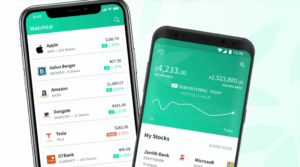
Here is a practical breakdown of the most popular platforms Nigerian beginners are using right now:
Bamboo: Over 500,000 registered users. Gives access to more than 3,500 US and Nigerian stocks and ETFs. Clean, user-friendly interface. Charges 1.5% commission per US stock trade (minimum $1). Good for beginners who want both NGX and US exposure.
Trove Finance: 400,000 registered users. Gives access to over 5,000 listed assets across NGX, US, and Chinese markets. Has processed over 500 billion naira in trades. Good for diversification across multiple markets.
Chaka: Praised for offering maximum NGX stock options. Ideal if you want the broadest selection of Nigerian stocks in one app.
Cowrywise: Over 500,000 active users. Primarily focused on savings and mutual funds but also offers stock investment features. Good for beginners who want to combine disciplined savings with investing.
Meristem Securities: A traditional stockbroker with a digital platform. Good for beginners who want access to professional research and guidance alongside their investment account. Better suited for slightly larger starting amounts.
i-invest (Parthian Partners): A regulated brokerage app built specifically for the Nigerian market with strong NGX access and educational resources for new investors.
When choosing a platform, confirm it is registered with the Securities and Exchange Commission (SEC) of Nigeria and that it is connected to the CSCS for proper custody of your shares.
Common Beginner Mistakes to Avoid
Buying based on tips and rumours: WhatsApp stock tips, Telegram pump-and-dump groups, and social media hype are how many beginners lose money fast. Always research before you buy.
Checking your portfolio every hour: The stock market moves up and down daily. Obsessively watching your portfolio leads to emotional decisions. Set a schedule to review your portfolio monthly or quarterly, not hourly.
Selling during market dips: Market corrections (temporary price drops) are normal. They are not a signal to sell everything. For long-term investors, dips are often buying opportunities, not emergencies.
Putting all your money in one stock: No matter how confident you feel about a company, never put all your investment money into a single stock. Diversify across at least 3 to 5 companies or sectors.
Trying to time the market: Nobody consistently predicts the perfect moment to buy or sell. The investors who built wealth on the NGX are the ones who invested consistently over long periods, not the ones who tried to be clever about timing. As the saying goes, it is time in the market, not timing the market.
Investing money you need soon: If you will need the money in less than 12 months, stocks are not the right place for it. Keep short-term money in savings accounts or treasury bills where it is safe and accessible.
Tax Treatment of Stock Investment in Nigeria
This is a pleasant surprise for many Nigerian investors. As of 2026, capital gains from the sale of shares on the NGX are exempt from Capital Gains Tax in Nigeria. This means if you buy Zenith Bank shares at 30 naira and sell at 60 naira, you keep the full profit with no capital gains tax owed.
Dividend income, however, is subject to withholding tax at a rate of 10%, which is deducted at source before the dividend is paid to you. This is automatic and handled by your broker.
These are genuinely investor-friendly tax rules that make the NGX more attractive relative to many other markets globally. Always consult a licensed tax professional for guidance specific to your situation as tax laws can change.
How Much Money Do You Need to Start?
Honestly, less than most people think.
Apps like Bamboo and Trove offer fractional shares, meaning you can technically start with as little as 1,000 naira. However, a more practical starting amount that gives you enough room to buy shares in two or three companies is 10,000 to 50,000 naira.
As you get comfortable and your understanding grows, you can increase your investment consistently. Many successful Nigerian investors started small and simply added to their portfolio every month, a strategy called dollar-cost averaging (or in our case, naira-cost averaging). You invest a fixed amount regularly regardless of whether the market is up or down. Over time, this smooths out the effects of volatility and builds wealth systematically.
Final Thoughts
The NGX has momentum. The market crossed 192,000 points on the All-Share Index and is posting strong sectoral returns across banking, oil and gas, and industrial goods. More Nigerians are entering the market through accessible apps than ever before.
Regulatory reforms are making the market more transparent and investor-friendly. And for the first time in years, there is a clear sense that the Nigerian capital market is being taken seriously by both local and international investors.
You do not need to be wealthy to participate. You do not need to understand everything before you start. You need a phone, a verified account on a licensed platform, some basic knowledge about the companies you are buying, and the discipline to stay patient.
The Nigerians building genuine wealth today are not the ones waiting for the “perfect time” to invest. They are the ones who started, stayed consistent, and let time and compounding do the heavy work.
Start small. Learn as you go. Stay patient. The NGX has room for you.
Disclaimer: This article is for educational and informational purposes only. It does not constitute investment advice. Stock market investments carry risk, including the possible loss of principal. Always conduct your own research and consider consulting a licensed financial advisor before making investment decisions. Past market performance does not guarantee future results.


 MM Kolawole







2 comments